If you thought the scariest thing about Stranger Things was the Upside Down, think again. The real nightmare was bringing its most infamous resident — the Demogorgon — to life without leaning too heavily on CGI. In an era when most TV monsters are rendered entirely through green screens and motion capture, the Duffer Brothers’ decision to build an animatronic Demogorgon feels almost rebellious. And yet, it’s this very choice that made Stranger Things feel so tactile, so real, and so chillingly nostalgic.
When the show first premiered in 2016, audiences didn’t know what to expect. The premise — kids on bikes, government labs, supernatural creatures, and synth-heavy soundtracks — felt like a time capsule from the 1980s. But beneath the nostalgia lay an astonishing amount of craft. Every flickering light, every bloodcurdling sound, and every glimpse of the Demogorgon was part of a carefully orchestrated dance between practical artistry and digital finesse.
As the Duffer Brothers later explained, their creative goal wasn’t to rely on technology for spectacle. It was to make viewers believe. “We wanted to create a tangible presence,” they said in an interview reflecting on their early design process. “Something that could actually be in the room with our actors.”
And that’s exactly what they did.
How Stranger Things Built Its Demogorgon In Season One
The making of the Demogorgon began as a love letter to the kind of creature design that defined classic horror and sci-fi. Think of the bone-white Xenomorph slinking through Alien, or the faun’s eerie grace in Pan’s Labyrinth. Those were the monsters that didn’t just scare you — they haunted your imagination long after the credits rolled.
The Duffer Brothers, both lifelong genre buffs, wanted to channel that feeling. They turned to an approach that was as ambitious as it was old-school: building a physical creature. They commissioned practical effects teams to construct an animatronic version of the Demogorgon — a towering, humanoid beast with articulated limbs and a nightmare-inducing petal-like head that opened like a monstrous flower.
The design drew heavily on the visual language of horror greats. Guillermo del Toro’s intricate, emotionally resonant monsters from Pan’s Labyrinth were a clear inspiration, as were H.R. Giger’s biomechanical designs in Alien. The Duffer Brothers wanted the Demogorgon to evoke the same mix of fascination and revulsion — something “grotesque and hauntingly human,” as one concept artist described it.
The decision to give the creature a flower-like head became the defining stroke of genius. Instead of eyes or a mouth, the Demogorgon’s “face” opened into a gory bloom of teeth and tendons, a symbol of unnatural beauty and horror intertwined. It wasn’t simply about shock value — it was about creating a creature that felt born from the Upside Down’s twisted ecology.
And it worked.
Every scene with the Demogorgon carried a sense of weight, of physicality. When it crept through the halls of Hawkins Lab or burst through a wall in Joyce Byers’ house, it felt real — because, in many shots, it was.
To pull off something this ambitious, the production team had to blend artistry with engineering. The animatronic Demogorgon wasn’t a single puppet but a collection of mechanical systems designed to mimic muscle movement and reaction. Its head alone required intricate servo mechanisms to control each “petal,” giving the illusion of organic movement as the mouth opened and snapped shut.
Standing inside this mechanical nightmare was a suit performer, whose movements gave the Demogorgon its eerie, human-like gait. “We wanted a man in a suit,” the Duffers explained, “because that gives you weight, presence, and physical interaction that CGI can’t replicate.”
The man behind the monster, actor and movement specialist Mark Steger, deserves as much credit as any computer program. Trained in physical theatre, Steger spent hours perfecting the creature’s distinctive movements — a mixture of predatory grace and unsteady unnaturalness. His performance was the bridge between horror iconography and real human fear.
But creating a monster this way wasn’t easy. The production had only six months to film the entire first season, meaning that every practical sequence had to be executed with precision and speed. The animatronic rig, though incredible, was temperamental. Heat, humidity, and lighting setups could all interfere with its mechanics.
So the Duffers did what smart directors have always done — they improvised. They used the animatronic model for as many scenes as possible, relying on CGI only when necessary. For example, in the now-famous scene where the Demogorgon bursts through Joyce’s wall, digital augmentation was essential to complete the effect. But whenever the creature loomed over a victim or stalked through the shadows, that was the animatronic in action.
The hybrid approach paid off spectacularly. The physical model gave actors something real to react to, while digital touch-ups preserved the illusion of supernatural power. The result was a creature that felt simultaneously cinematic and tangible — part 1980s monster flick, part modern sci-fi horror.
And fans noticed. From Reddit threads dissecting behind-the-scenes stills to fan art celebrating the creature’s design, the Demogorgon became an instant horror icon.
The Demogorgon’s DNA: Beauty, Terror, and the Duffer Vision
At its core, the Demogorgon represents everything that makes Stranger Things so magnetic. It’s scary, yes — but it’s also deeply symbolic. Like the Upside Down itself, it blurs the boundaries between science and mythology, between the familiar and the unknown.
The Duffer Brothers have always been open about their influences. In interviews, they’ve cited a cinematic upbringing steeped in Steven Spielberg, John Carpenter, and Stephen King. You can feel all three in the Demogorgon’s design. The creature has the unknowable menace of The Thing, the childlike awe of E.T., and the lurking terror of It.
Yet, it’s not a pastiche. It’s an evolution.
Giving the Demogorgon a partly practical body was about more than nostalgia — it was about empathy. A creature built by hand feels more tragic, more intimate. When viewers see it stalk through flickering lights or smash through walls, they’re not watching a digital phantom; they’re witnessing something that could, in theory, exist.
That’s what makes the Demogorgon such a brilliant creation. It’s horrifying because it feels possible.
Even the flower-head, with its delicate yet deadly design, tells a story. It suggests a predator that lures you with beauty before revealing its monstrous truth. It’s both an alien and an echo of human fear — the perfect mirror for Stranger Things’ world, where the line between science fiction and fairy tale is constantly dissolving.
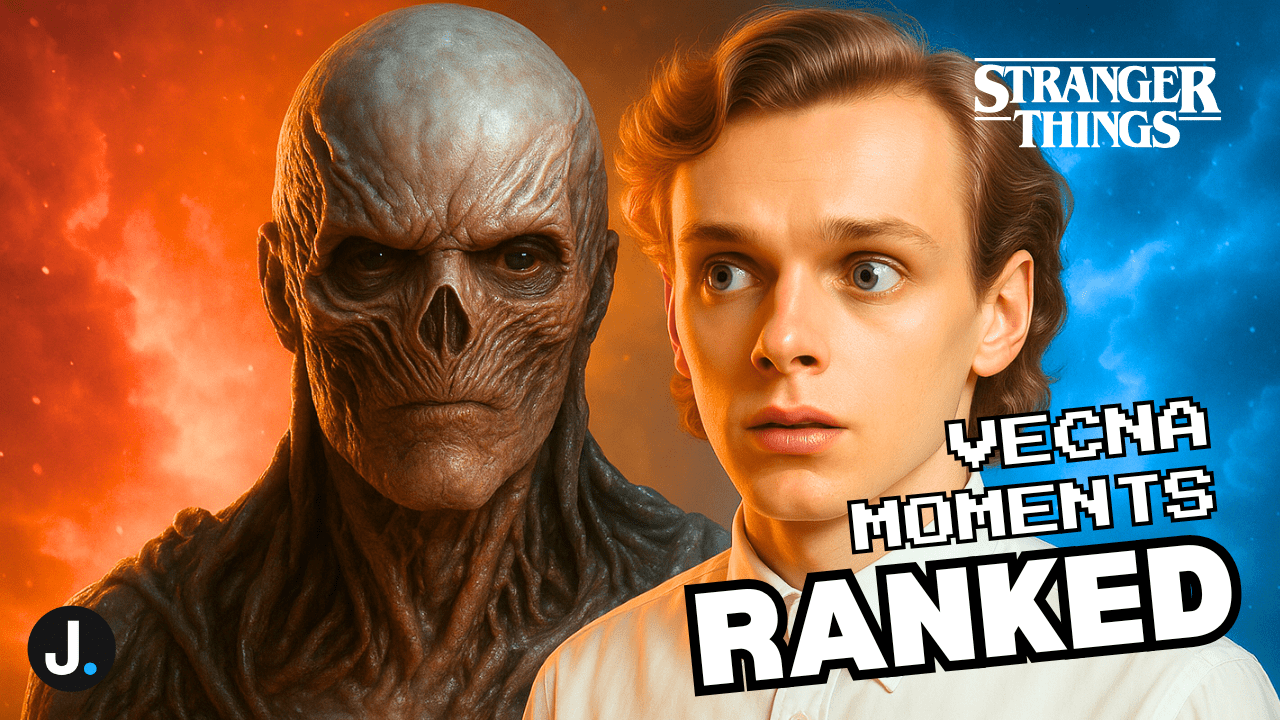
Nearly a decade later, the legacy of the animatronic Demogorgon is undeniable. While Stranger Things has introduced a host of new horrors — from the Mind Flayer’s sprawling shadow to Vecna’s sentient cruelty — the original creature still holds a special place in the show’s mythology. It’s the one that started it all, the being that crawled from the Upside Down and dragged Stranger Things into cultural immortality.
And the reason it endures has everything to do with that commitment to physicality. Fans who’ve attended Stranger Things: The Experience or Universal Studios’ Halloween Horror Nights know the thrill of facing a Demogorgon replica in person — the same mix of awe and terror that the animatronic first evoked on set.
The creature’s lasting influence also reflects a wider trend in modern filmmaking. As audiences grow weary of weightless CGI spectacle, practical effects are experiencing a renaissance. Films like The Shape of Water, Nope, and The Batman have all embraced the tactile realism that made classics like The Thing and Jurassic Park timeless.
The Duffers were ahead of the curve. Their Season 1 gamble on a part-animatronic monster helped redefine what television horror could look like. In doing so, they bridged generations of genre fans — from those who grew up on VHS-era creature features to Gen Z viewers discovering the magic of practical effects for the first time.
It’s a beautiful irony: a monster made with old-school craftsmanship helped shape the future of streaming television.
Today, as Stranger Things heads into its highly anticipated fifth and final season, the story of the animatronic Demogorgon has taken on almost mythic status among fans. Behind the polished Netflix branding and blockbuster budgets lies that same scrappy creative spirit — a reminder that the show’s beating heart is still powered by imagination and risk-taking.
The Duffer Brothers’ philosophy from day one was simple: keep it real, even when the story defies reality. Their decision to mix animatronics and CGI wasn’t about saving money or indulging nostalgia — it was about storytelling integrity. A physical monster could interact with its environment, cast shadows, drip slime, and make the actors flinch. Those visceral reactions are what made the first season so electrifying.
As the show prepares for its final act, fans continue to revisit that debut season, marvelling at how seamlessly the creature fits into the world of Hawkins. The animatronic Demogorgon wasn’t just a prop; it was a performance. It breathed, it lunged, it terrified. And in doing so, it set the tone for everything that followed — a universe where the unbelievable feels possible because it’s grounded in something real.
In a television landscape overflowing with digital monsters, the Demogorgon remains refreshingly analogue. A creature built by human hands, driven by human imagination, and fuelled by a love for cinema’s past. It’s a testament to what happens when filmmakers respect both the craft and the audience enough to make the unbelievable believable.
So the next time you rewatch Stranger Things and see that horrifying flower-faced beast crawl through the wall, remember: you’re looking at a piece of art — one that whirred, clicked, and breathed on set before it ever haunted your screen.
And that’s the real magic of Hawkins.