If there’s one thing Stranger Things does better than almost any other series on television, it’s playing in the sandbox of nostalgia while constructing something that feels entirely its own. Hawkins might be a fictional Indiana town, but the ghosts that walk its foggy streets are borrowed from every great horror and sci-fi paperback to ever sit on a 1980s nightstand. From The Thing to The Goonies, and from Poltergeist to Stand by Me, the Duffer Brothers have built a universe where homage is a language—and nowhere is that clearer than in the show’s affection for Stephen King.
In Chapter Six: The Monster from Season 4, the Duffers pay an especially poignant tribute to King’s Firestarter and Carrie, two tales that shaped an entire generation’s understanding of what happens when innocence collides with unchecked power. These aren’t mere Easter eggs scattered for the eagle-eyed; they’re deeply embedded story veins, carrying emotional and thematic weight that enrich the Stranger Things narrative.
Let’s step into the snowy haze of Hawkins, peek into the haunted corners of Terry Ives’ mind, and see how Stranger Things turned two of King’s most unforgettable heroines into the backbone of Eleven’s story.
To understand the Firestarter and Carrie threads in Stranger Things, we have to go back to one of the most quietly tragic figures in the show’s mythology: Terry Ives. In The Monster, Winona Ryder’s Joyce and David Harbour’s Hopper pay a visit to Terry, Eleven’s biological mother, whose mind is fractured by the sinister MKUltra experiments conducted in the 1970s.
MKUltra wasn’t a bit of creative flair dreamt up for the show—it was a real CIA programme that dabbled in drugs, hypnosis, and psychological control during the Cold War. By blending real-world conspiracy with supernatural fiction, the Duffers created a narrative steeped in paranoia and loss. Terry’s line about her daughter being “special” lands like a whisper from beyond the veil, her eyes vacant yet filled with desperate conviction.
It’s here that the story begins to echo King’s Firestarter. In that novel, young Charlie McGee develops pyrokinesis after her parents are subjected to a shady government experiment—an experiment eerily similar to the MKUltra-style tests that scarred Terry. Charlie’s parents, like Terry herself, were victims of state control, caught in a web of scientific hubris. The parallels are uncanny. Both stories ask the same question: what happens when innocence becomes weaponised?
But the emotional punch of Terry’s storyline lies not in the science, but in the maternal bond. Her broken mind replays the trauma of separation, muttering like a needle stuck in a record. It’s heartbreakingly Carrie-esque—the religiously repressed mother of King’s telekinetic teen might be monstrous in her own right, but both women are mothers undone by forces they can’t control. In Stranger Things, that grief is transmuted into horror: a mother frozen in time, her daughter lost to the void.
When Becky, Terry’s sister, asks Hopper and Joyce if they’ve read any Stephen King, it’s a cheeky wink to the audience, sure—but it’s also a mission statement. Stranger Things doesn’t just reference King; it channels his heart.
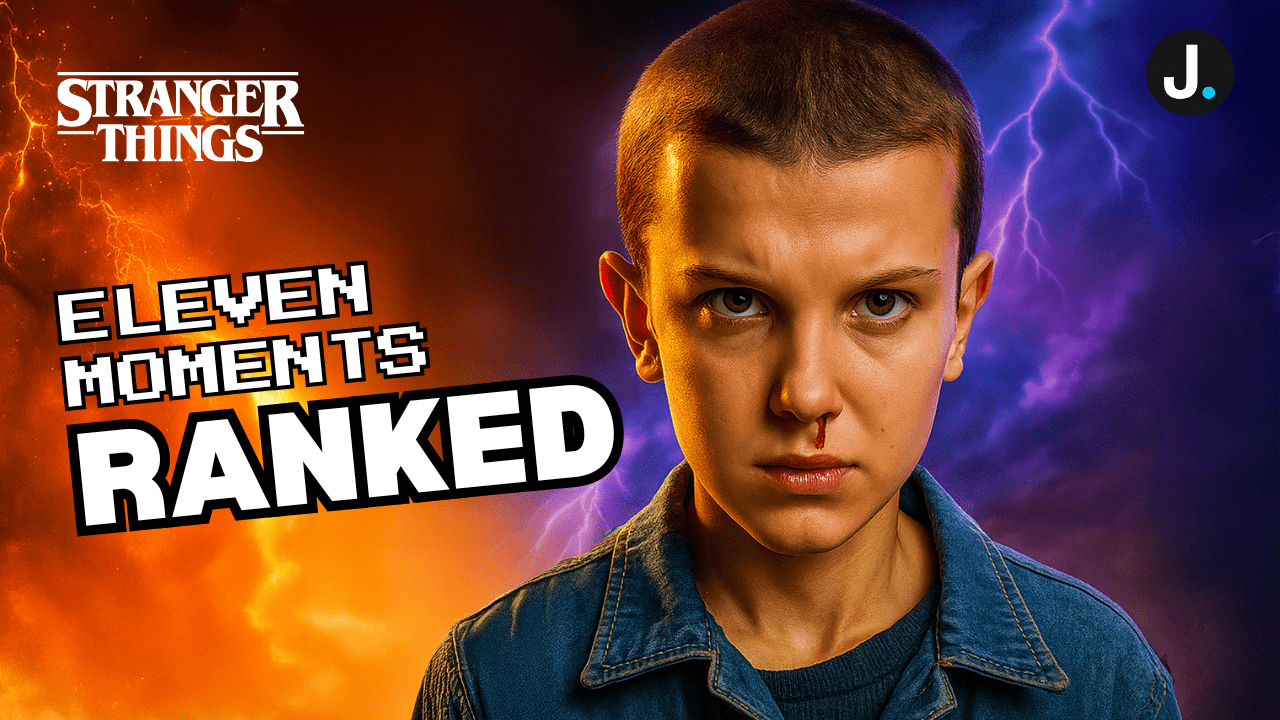
The DNA of Stranger Things has always been entwined with Stephen King’s storytelling sensibilities—kids confronting monsters, small-town secrets, trauma bubbling under the surface of nostalgia. But when it comes to Eleven, the connection goes far deeper than homage. She is, in many ways, the spiritual descendant of Charlie McGee and Carrie White.
In Firestarter, Charlie struggles to control her fire-starting powers, hunted by a shadowy government agency that sees her as both weapon and threat. In Carrie, a teenage girl’s telekinesis becomes the outlet for years of repression and humiliation, culminating in one of the most iconic prom-night massacres in horror history. Both are coming-of-age stories steeped in fear—fear of power, fear of difference, fear of becoming what others expect you to be.
Stranger Things picks up that emotional torch and runs with it. Eleven’s telekinetic outbursts—whether she’s flipping vans or crushing Demogorgons—carry the same volatile mixture of strength and fragility that made Charlie and Carrie so unforgettable. The Duffers understand what King did decades ago: power and pain are two sides of the same coin.
But the homage runs deeper still. Like Charlie and Carrie, Eleven’s story unfolds in a world determined to suppress her individuality. The lab confines her. Dr. Brenner manipulates her. Even when she escapes, society’s expectations follow her—first in Hawkins, then in California. When she’s bullied by her classmates in Season 4, her revenge (an ice cream-smeared humiliation gone wrong) plays like a softer echo of Carrie’s bloody vengeance.
By layering these emotional and narrative parallels, Stranger Things becomes more than a pastiche—it becomes an intertextual dialogue with King’s universe. The Duffers aren’t simply borrowing; they’re expanding upon the legacy, exploring what it means to grow up with power in a world built to fear it.
In both King’s works and Stranger Things, the message is clear: when society labels someone “monstrous,” it often says more about our own fears than about them. Eleven, Charlie, and Carrie are all mirrors held up to a culture terrified of female power.
With the fifth and final season of Stranger Things on the horizon, the show’s love affair with Stephen King is set to reach its most emotionally charged crescendo yet. The echoes of Firestarter and Carrie aren’t throwaway nods—they’re narrative scaffolding. As Eleven steps into what promises to be her greatest test yet, these literary parallels provide a framework for understanding what’s to come.
King’s heroines never emerge unscathed. Power, in his world, comes with a cost. For Charlie McGee, it’s isolation; for Carrie White, it’s annihilation. And for Eleven? That’s the haunting question. The Duffers have long teased that Season 5 will explore the full scope of her abilities and the consequences of using them. Will Eleven’s arc end in sacrifice, redemption, or something stranger still?
These references also anchor Stranger Things in its favourite playground: 1980s pop culture. Stephen King’s influence permeated every corner of that era, from paperbacks on spinner racks to the cinematic DNA of films like Firestarter (1984) and Carrie (1976). By weaving those themes into the show, the Duffers ensure that Stranger Things feels authentic—not as an imitation of the 80s, but as a product of it.
For fans, this kind of intertextual layering is catnip. It invites endless speculation, rewatches, and “wait, did you catch that?” moments. It’s the joy of decoding nostalgia and finding meaning beneath the references. When Hopper and Joyce’s visit to Terry ends with Becky’s offhand question—“Have you read any Stephen King?”—it feels like the writers are talking directly to us. Of course we have. And that’s precisely why Stranger Things works: because it knows its audience loves these stories as much as it does.
With Stranger Things 5 set for release in November 2025, the King parallels may hint at the emotional direction the series will take. Will Eleven’s journey mirror the fiery rebellion of Charlie or the tragic downfall of Carrie? Will Hawkins finally pay the price for its secrets, or will it rise from the ashes one last time?
Whatever the outcome, one thing is certain: Stranger Things was born from the pages of a Stephen King paperback, raised on VHS, and shaped by a generation that believed the monsters under the bed might be real. The Firestarter and Carrie references aren’t just clever storytelling—they’re the beating heart of why we keep returning to Hawkins, decade after decade, craving that same electric jolt of fear and wonder.
Stranger Things remains, at its core, a story about outsiders finding family in a world that doesn’t understand them. Whether through fiery rebellion or quiet resilience, Eleven’s journey continues the legacy of King’s heroines—girls who burned bright, terrified the world, and, in doing so, found their power.
So next time you rewatch The Monster, listen closely to Terry Ives’ haunting whispers. In her fractured voice and her unyielding love for her daughter, you might just hear the echo of Stephen King himself—still whispering across time, reminding us that horror and hope have always been two sides of the same, flickering flame.