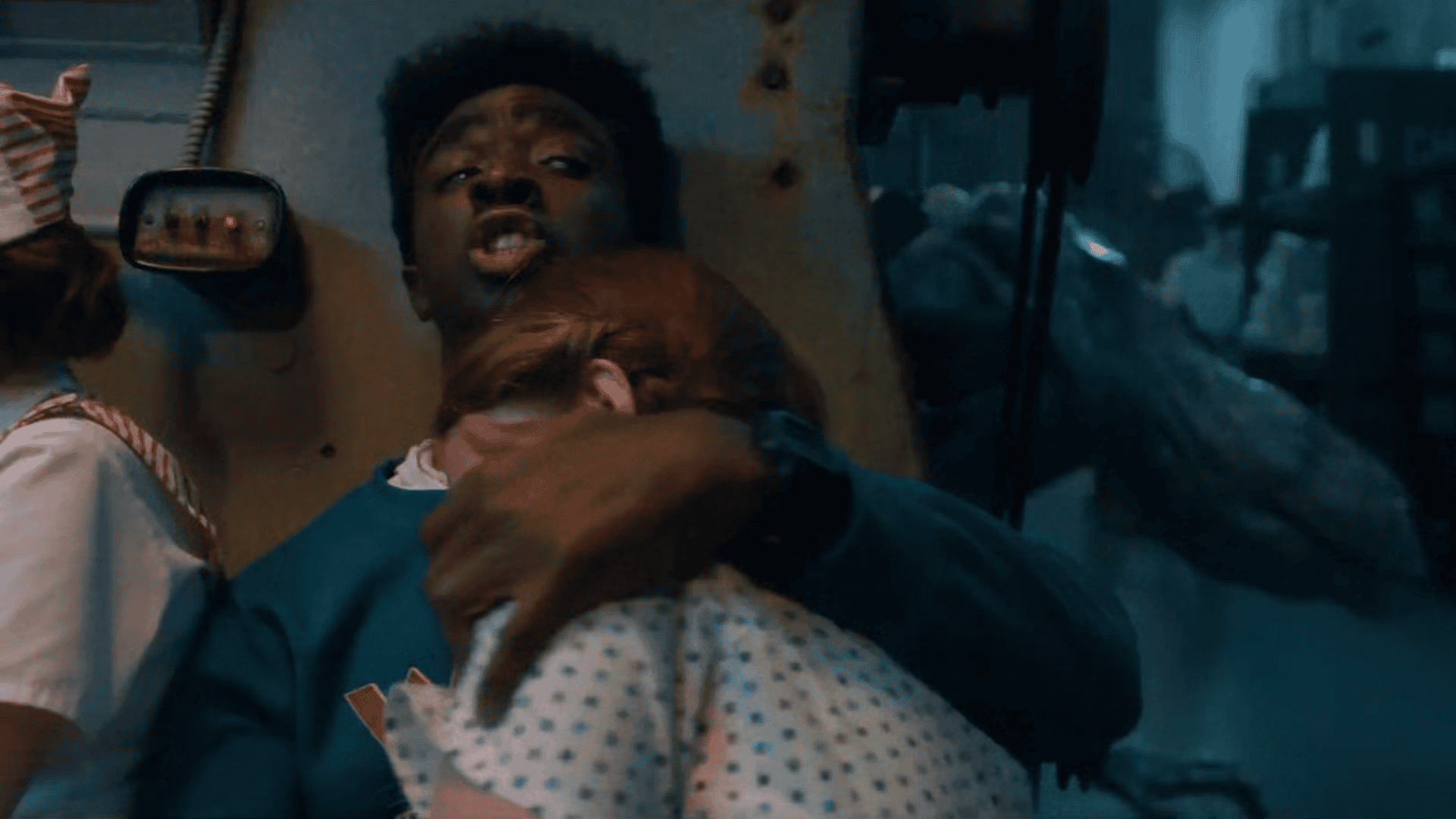
Few things are more delightful than catching a reference in Stranger Things that hits you squarely in your childhood geek-sense, and Dustin’s invocation of Lando Calrissian in Season 1, Episode 7 is a masterstroke. In the midst of chaos, as Hopper’s urgent walkie-talkie messages set the tone for tension, Dustin mutters “Lando.” At first glance, it might feel like a throwaway line, a small wink to diehard Star Wars fans. Yet it is far more layered than that.
For those who need a refresher, Lando, played by Billy Dee Williams, is remembered for his infamous betrayal of Han Solo in The Empire Strikes Back. In a moment that shocked fans in 1980, Lando hands Han over to Darth Vader, a treachery that forever cemented him as a symbol of the complex nature of trust and loyalty. By invoking Lando, Dustin isn’t just making a joke; he’s drawing a clear, evocative comparison to Hopper’s precarious position. The stakes in Hawkins are high, and trust is fleeting. Just as Han’s survival depended on hope and resourcefulness even after betrayal, Hopper—and by extension, the kids—must navigate loyalty, danger, and uncertainty.
This reference is especially telling about Dustin’s character development. Early on, he functions as comic relief, the lovable nerd with boundless curiosity and awkward charm. But the Lando comparison subtly signals his growing awareness of the world’s dangers and the nuanced realities of human behaviour. It illustrates a shift from childlike naivety to a perceptive understanding of friendship, loyalty, and the consequences of misplaced trust. In a show where monsters lurk in shadows, both literal and metaphorical, Dustin’s line encapsulates the broader tension: the real threat isn’t always the Upside Down, but the uncertainty of who to trust in a world that is constantly shifting beneath your feet.
Earlier in Chapter 6, Dustin deploys another Star Wars metaphor, this time likening the group’s mission to “R2-D2 going to fight Darth Vader.” There’s humour in the image—after all, it’s not exactly a showdown you’d expect—but beneath the comic veneer is a rich thematic parallel.
R2-D2, often underestimated within the Star Wars universe, consistently proves indispensable, representing the idea that courage and resourcefulness can come from unexpected places. By invoking this metaphor, Dustin underscores the strengths and limitations of his own group: Mike, Lucas, and himself are ordinary kids facing extraordinary circumstances, yet each brings unique qualities that might tip the scales in their favour.
The brilliance of this analogy lies in its layered storytelling. It emphasises that heroism is not always flashy; sometimes it is quiet, steadfast, and overlooked—much like R2-D2’s contributions throughout the original trilogy. Similarly, the children of Hawkins rely on one another, each member’s role critical to survival against the Upside Down’s terrors. Dustin’s insight mirrors the broader narrative strategy of Stranger Things: while monsters and alternate dimensions are the obvious threat, the survival of Hawkins’ youth hinges equally on human qualities—courage, intelligence, loyalty, and the capacity to trust one another.
What makes these Star Wars references genuinely fascinating is the metatextual sophistication that underpins them. Stranger Things does not randomly pluck names or situations from a galaxy far, far away. Each reference is carefully chosen, functioning both as nostalgic homage and as a narrative device that enhances character development and thematic resonance.
By likening Hopper to Lando or framing a mission as “R2-D2 going to fight Darth Vader,” the series connects two disparate universes—Hawkins and a galaxy far, far away—through shared emotional truths. Friendship, trust, courage, and the risk of betrayal become universal concepts, easily translatable between settings. This careful weaving ensures that references operate on multiple levels: younger viewers or casual fans might enjoy the humour, while aficionados of 1980s cinema revel in the clever nods to a beloved saga.
Additionally, these Easter eggs illuminate Dustin’s evolution from comic relief to strategic thinker. He is often the one making connections, spotting patterns, and articulating fears and possibilities that others might miss. By framing real-world stakes through Star Wars metaphors, Dustin bridges the fantastical and the tangible, helping his friends—and the audience—grasp the gravity of their situation in a familiar, entertaining framework.
The genius of the Duffer Brothers lies in their ability to layer these pop culture touchstones without letting them overwhelm the story. Instead, they serve as an additional lens through which to understand character motivations, thematic undercurrents, and the stakes of Hawkins’ extraordinary world. It is a form of storytelling that rewards attentiveness, encouraging fans to rewatch episodes and discover new layers, whether that’s noticing a well-placed Lando reference or spotting subtler nods hidden in set design, dialogue, or character behaviour.
As the series gears up for its fifth and final season, the potential for even more intricate, multi-layered references is tantalising. One can only imagine the delight of spotting future nods to classic franchises that deepen narrative meaning while evoking the rich tapestry of 1980s pop culture that has made Stranger Things a cultural phenomenon.
Ultimately, these Star Wars Easter eggs highlight one of the core strengths of Stranger Things: its ability to merge the fantastical with the familiar. Lando, R2-D2, and other cinematic icons exist not just as nostalgic nods but as instruments to explore human relationships, morality, courage, and the complexities of friendship. The Upside Down may be filled with monsters, but the real challenge often lies in navigating the murky waters of loyalty, trust, and teamwork—concepts as relevant in Hawkins as they are in a galaxy far, far away.
In the end, Dustin’s invocation of Lando Calrissian is more than a geeky wink; it’s a statement about growing up, making choices, and understanding the nuances of trust. Similarly, the R2-D2 metaphor underlines the value of every individual in the fight against evil, no matter how small or overlooked they may appear. By embedding these moments into the narrative, the Duffer Brothers not only pay homage to the films that shaped their generation but also craft a richer, more resonant story.
As we count down to November 2025, when Stranger Things Season 5 promises to conclude the saga of Hawkins, fans have every reason to keep their eyes peeled. Between the monsters, the suspense, and the supernatural thrills, the real joy often lies in spotting these carefully curated Easter eggs. Lando Calrissian, R2-D2, and countless other nods are reminders that the series thrives in the intersections of friendship, trust, and the fantastical—a universe where the ordinary and extraordinary coexist in perfect, nostalgic harmony.
The show’s genius is in its ability to simultaneously evoke laughter, suspense, and the warm glow of shared cinematic memory. When Dustin whispers “Lando,” it’s more than a reference; it’s a microcosm of the series’ heart: bravery, loyalty, and friendship in the face of overwhelming odds. In Hawkins, just as in Star Wars, it’s often the seemingly small moments and underdog heroes that make all the difference, leaving fans eagerly anticipating what nods, metaphors, and hidden gems Season 5 will unveil next.