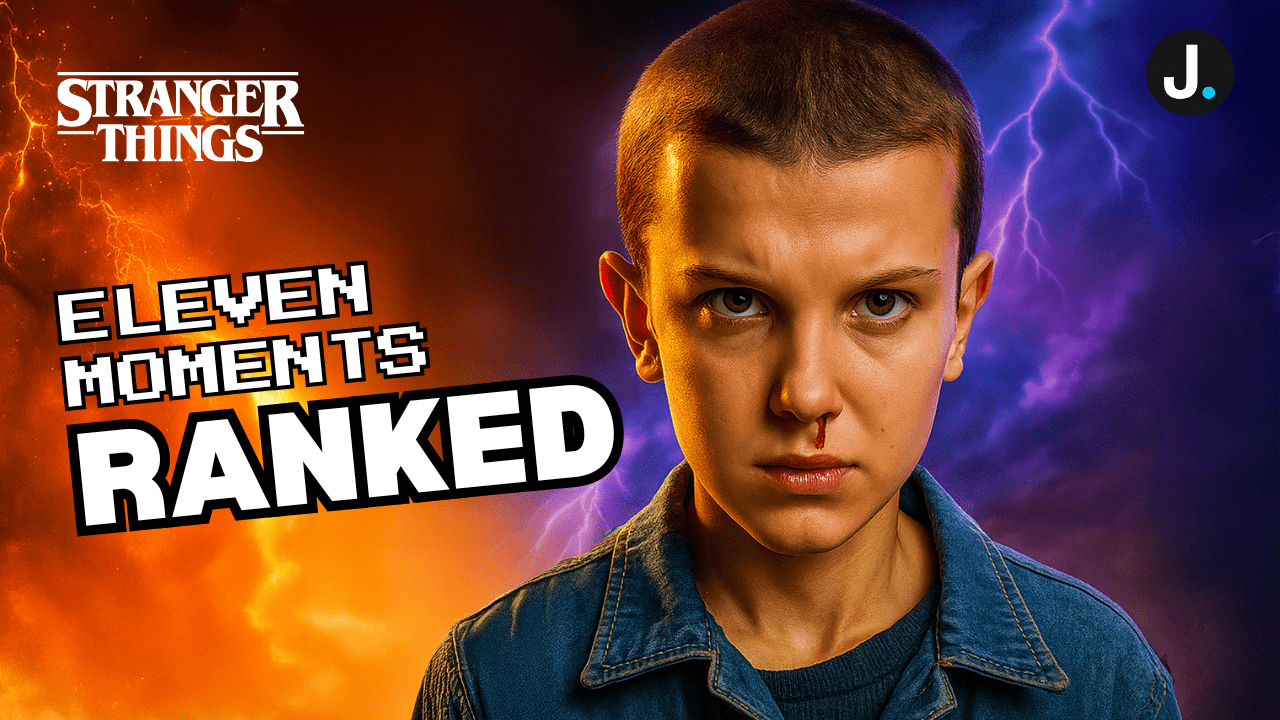
In the often chaotic world of Hawkins, Indiana, some of the most profound moments occur in quiet, seemingly mundane spaces. One such instance happens in Season 3, Episode 3, titled “Chapter 3: Holly, Jolly.” El, played by Millie Bobby Brown, wanders into Mike’s house while he is at school and his parents are away. This isn’t just idle curiosity; it’s a moment rich with symbolism, capturing her tentative exploration of freedom and selfhood.
While navigating the house, El’s eyes land on the opening sequence of He-Man and the Masters of the Universe. That first iconic exclamation, “I have the power!” isn’t just a catchphrase—it’s an anthem of empowerment, a call to action that resonates deeply with El’s own journey. For viewers who grew up with He-Man, the phrase carries echoes of adventure, courage, and the discovery of inner strength. For El, it mirrors her evolving relationship with her powers, her identity, and her understanding of the responsibility that comes with extraordinary abilities.
The brilliance of this Easter egg lies in its dual impact. On one hand, it’s a nostalgic wink for older audiences who remember Saturday mornings spent watching animated heroes battle villains in brightly coloured worlds. On the other, it’s an incisive piece of character development, showing El internalising lessons of heroism and moral courage. In a single frame, Stranger Things bridges generational gaps, linking childhood nostalgia to the profound narrative arcs unfolding in Hawkins.
Stranger Things and Masters of the Universe share more than just their 1980s origins; both explore the boundaries of fantasy, power, and morality. He-Man’s universe is defined by larger-than-life battles between good and evil, populated by heroes and monsters whose struggles are as personal as they are epic. El’s encounter with this animated world reinforces a thematic echo of her own story: she is navigating forces that threaten her friends, family, and her sense of self, just as He-Man faces Skeletor and other villains.
The setting of Mike’s house functions as a liminal space between El’s familiar world and the unknown. It contains reminders of ordinary life but also cues for imagination and empowerment, much like Castle Grayskull did for He-Man. In Season 3, as El observes the animated sequence, the juxtaposition of childhood innocence with the looming threat of the Upside Down becomes painfully clear. Both narratives—animated fantasy and supernatural thriller—confront monstrous forces, but through different lenses: one bright and stylised, the other dark and suspenseful.
This fusion of worlds allows Stranger Things to layer its storytelling. The horrors of the Upside Down don’t overwhelm the narrative; they exist alongside moments of wonder and inspiration, suggesting that the tools for facing fear—creativity, courage, and inner strength—are available to those who embrace them. El’s connection to He-Man’s world reinforces this message, subtly teaching viewers that heroism can be learned, mirrored, and enacted, even in the most unlikely of circumstances.
The Masters of the Universe Easter egg is emblematic of the show’s broader approach to pop culture: every reference has narrative and emotional weight. The Duffer Brothers’ writing demonstrates an acute understanding of how these touchstones resonate with audiences, and how they can be leveraged to deepen character arcs. In El’s case, the visual and verbal callback to He-Man doesn’t merely entertain—it encapsulates her evolving sense of agency and aligns her personal struggles with an archetypal heroic journey.
This careful interweaving of nostalgia and storytelling enriches the viewer experience on multiple levels. For older fans, it evokes a sense of reminiscence, a reminder of simpler childhood pleasures. For newer audiences, it underscores universal themes of empowerment, self-discovery, and moral courage. Each Easter egg acts as a narrative shorthand, conveying complex ideas through a single frame or line of dialogue, and encouraging fans to actively engage with the text.
Moreover, the integration of He-Man reflects a recurring motif in Stranger Things: the interplay between childhood imagination and the encroachment of darker realities. Just as Castle Grayskull represents both a sanctuary and a site of trials, Mike’s home becomes a stage for El’s exploration of autonomy, power, and the unknown. In tying her journey to a beloved animated hero, the show subtly reminds viewers that courage is both learned and inherited from cultural narratives.
Stranger Things has consistently demonstrated a remarkable ability to layer meaning, nostalgia, and suspense. El’s encounter with He-Man exemplifies how the series elevates seemingly minor moments into profound commentary on growth, empowerment, and the heroic journey. It shows that even amid the chaos of the Upside Down, there is room for reflection, inspiration, and connection to the cultural artifacts that shaped the childhoods of its audience.
As fans eagerly await the release of Stranger Things 5 this November, they can look forward to more intricate references, complex character arcs, and a continuation of the series’ skillful blend of nostalgia and innovation. The Masters of the Universe Easter egg stands as a reminder that storytelling is layered: it entertains, educates, and invites viewers to consider their own inner power, much like El does when she proclaims, silently, “I have the power!”
In the vast, richly constructed universe of Hawkins, these moments of cultural homage are far from incidental. They form the connective tissue that binds narrative, character development, and audience experience, demonstrating the Duffer Brothers’ mastery in crafting a show that is simultaneously thrilling, heartwarming, and intellectually engaging. El’s journey, mirrored through the lens of He-Man, invites every viewer to explore their own courage, confront their personal Upside Downs, and perhaps, just perhaps, channel their own inner hero.