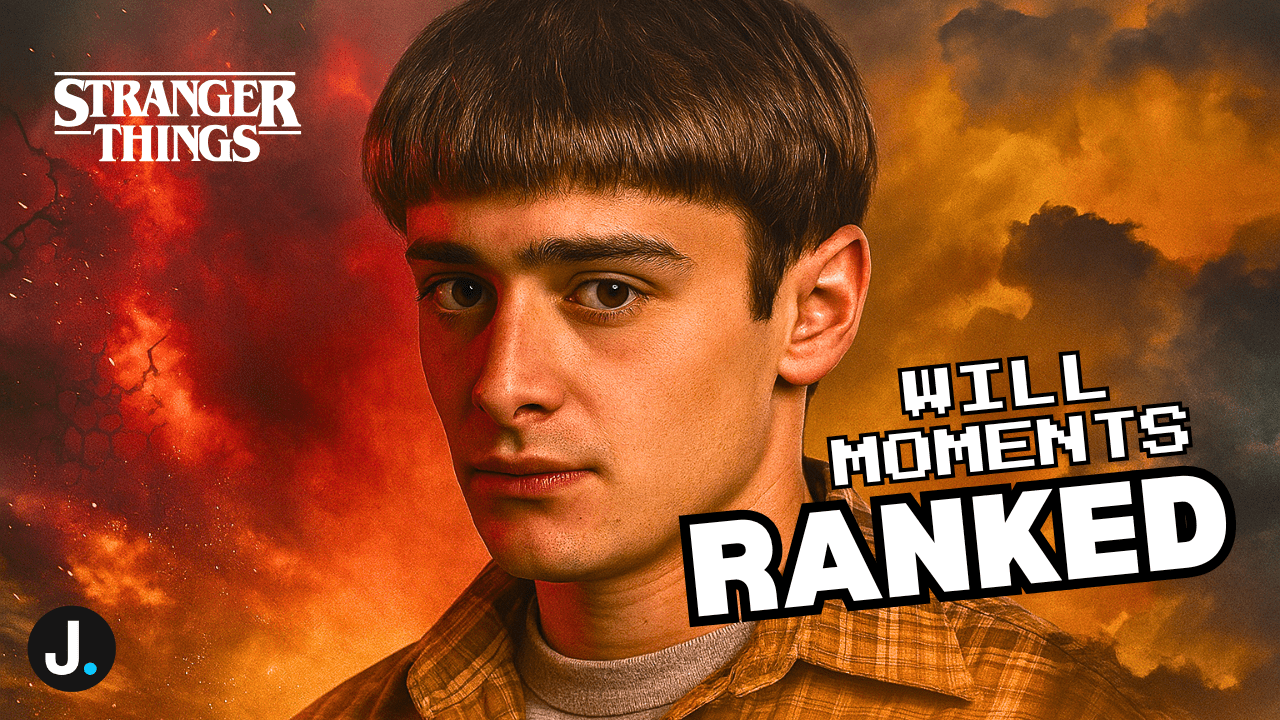
Nestled in the woods of Hawkins, Castle Byers is more than a simple childhood fort; it’s a microcosm of Will Byers’ world—safe, imaginative, and infused with personal meaning. In a flashback during Season 2, Joyce Byers surprises Will with a pair of tickets to see Poltergeist, the 1982 horror classic directed by Tobe Hooper. Will’s excitement is infectious as he gleefully notes that the film is rated-R, a cheeky nod to his eagerness to peek into the world of adult horrors.
This choice of film is significant. Poltergeist encapsulates suburban dread and the supernatural intrusion into everyday life, themes that resonate deeply within the Stranger Things universe. The Byers’ experiences navigating the horrors of the Upside Down mirror the terrifying disruptions faced by the Freeling family, making this moment more than a nostalgic Easter egg. The pairing of Castle Byers’ childlike refuge with the adult horror of Poltergeist underscores the tension between innocence and menace—a tension central to Will’s character arc and to the series’ broader emotional narrative.
By including this nod, the Duffer Brothers aren’t simply referencing a classic film; they’re layering meaning. Will’s fascination with horror and Joyce’s protective love converge in this small, intimate moment, highlighting the enduring bond between mother and child amid encroaching supernatural threats. It’s an early example of how the series intertwines personal stakes with homage, ensuring that each reference serves a narrative purpose rather than a mere nostalgic wink.
The tribute to Poltergeist doesn’t stop at Castle Byers. Shortly after this tender scene, the show plunges into tension as Will disappears into the Upside Down, leaving Joyce grappling with fear and uncertainty. Her attempts to contact him through the supernatural medium of the wall strongly echo Carol Anne’s eerie interactions with the Freeling family in Poltergeist. Just as Carol Anne’s voice comes through the static-filled television, Will’s presence is felt in fleeting, spine-chilling ways that drive the narrative forward and keep viewers on edge.
This parallel is more than stylistic; it reinforces the series’ thematic concerns. Both Joyce and Diane Freeling confront the impossible: the idea that loved ones can exist beyond our immediate perception, trapped in a terrifying unknown. The series uses these mirrored interactions to heighten suspense while deepening emotional resonance. Fans often comment on the effectiveness of this homage, noting that the tension and dread in Joyce’s scenes are palpable precisely because the audience subconsciously recognises the Poltergeist reference. It’s a clever storytelling technique: by drawing on collective cultural memory, the Duffer Brothers amplify the horror while keeping the stakes deeply personal.
Moreover, the Upside Down itself functions as a narrative echo of the Freeling house’s haunted dimension, complete with unseen forces, distorted reality, and a looming sense of menace. This subtle layering shows the creative care in the series’ visual and narrative design, linking its supernatural framework to cinematic traditions in a way that enhances both familiarity and innovation.
Stranger Things thrives on nostalgia, but it’s a nostalgia that serves storytelling rather than overshadowing it. By incorporating Poltergeist, the Duffer Brothers tap into a shared cultural lexicon of horror, making the supernatural elements of the series resonate on multiple levels. For viewers who grew up watching Hooper’s film, the reference evokes memory and emotion, adding texture to the viewing experience. For younger fans, it functions as an introduction to classic horror, enriching their understanding of genre lineage and narrative techniques.
The interplay between homage and narrative innovation is key. The series respects the original source material while adapting it to the context of Hawkins. This approach allows Stranger Things to explore complex themes—family, fear, innocence, and resilience—through the lens of familiar cultural touchstones. The show demonstrates that horror can be both thrilling and emotionally profound, that suspense can coexist with tenderness, and that nostalgia can amplify rather than diminish the stakes of storytelling.
The Castle Byers scene and subsequent Upside Down sequence exemplify the series’ broader strategy of embedding meaning into every reference. These nods encourage viewers to revisit earlier seasons, notice details they may have missed, and discuss interpretations with other fans. In doing so, Stranger Things transforms passive viewing into active engagement, creating a participatory fan culture where Easter eggs like the Poltergeist connection serve as points of communal discovery and conversation.
As the countdown to Season 5 continues, fans will undoubtedly revisit this moment, reflecting on how the series has carefully constructed its world to blend 1980s pop culture, horror homage, and emotionally resonant storytelling. The Duffer Brothers’ ability to intertwine these elements ensures that Stranger Things remains both a celebration of the past and a compelling, contemporary narrative.
The inclusion of Poltergeist within Stranger Things exemplifies the series’ layered approach to storytelling, where each reference, nod, or Easter egg carries emotional, narrative, and aesthetic weight. Joyce and Will’s bond, heightened by cinematic homage, demonstrates the show’s commitment to creating multidimensional characters whose experiences resonate across generations. It also highlights how horror can function as a vehicle for exploring love, loss, and resilience.
In the end, moments like the Castle Byers flashback and Joyce’s haunting encounters with the Upside Down remind us why Stranger Things captivates audiences so thoroughly. It’s a series where nostalgia meets innovation, horror meets heart, and homage meets originality. As Season 5 looms on the horizon, fans can eagerly anticipate not only new supernatural thrills but also further nods to the cinematic giants that have inspired the Duffer Brothers’ vision, ensuring that Hawkins, Indiana remains a place where past and present, fear and wonder, seamlessly intertwine.