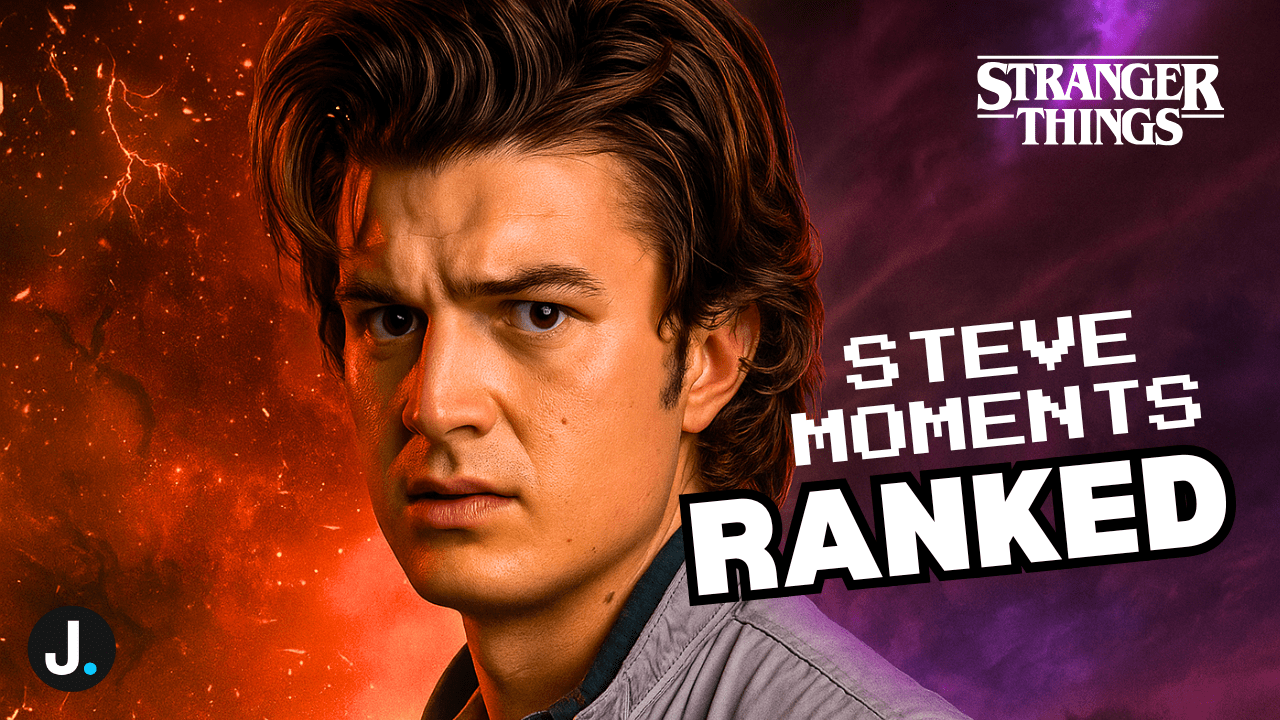
When fans first met Eddie Munson, portrayed with irresistible charm by Joseph Quinn, he was Hawkins High’s self-styled rockstar, a boisterous and often irreverent figure. His antics and flamboyant personality made him immediately memorable, but beneath the leather jacket and devil-may-care attitude lies a story with roots in something far darker than the Upside Down.
The Duffer Brothers, in crafting Eddie’s character, drew inspiration from the tragic real-life events surrounding Damien Echols, a member of the West Memphis Three. In 1994, Echols and his friends Jason Baldwin and Jessie Misskelley Jr. were wrongfully convicted of murdering three young boys. Their conviction wasn’t based on clear evidence but on societal prejudice — their love for heavy metal music, their unconventional appearance, and the fear-driven speculation that they were part of a satanic cult.
This case became a cultural flashpoint, highlighting how quickly society can condemn those who deviate from the norm. The documentary Paradise Lost chronicled their ordeal, offering a searing look at injustice, bias, and public hysteria. The parallels to Eddie Munson are striking: Hawkins’ version of societal judgment mirrors the real-world fears and assumptions that once nearly destroyed innocent lives. Eddie’s heavy metal obsession, his role as Dungeon Master, and his rebellious spirit are all treated with suspicion and scorn within the narrative — a creative homage to the prejudices Echols faced.
By embedding these elements into Eddie’s character, the Duffer Brothers transform him from a mere teenage outcast into a symbol of resilience in the face of societal misjudgment. His narrative is grounded in reality, showing that even in a fantastical town plagued by monsters and portals, human prejudice and misunderstanding remain potent forces.
Eddie Munson’s connection to Damien Echols extends beyond thematic inspiration; it invites audiences to confront the consequences of wrongful judgment and societal fear. The West Memphis Three were eventually exonerated after nearly two decades, but the psychological and social scars endured by Echols and his co-defendants resonate deeply. Similarly, Eddie’s journey within Hawkins explores the fragility of reputation and the challenges of asserting one’s humanity in a community eager to condemn the different or the misunderstood.
In Stranger Things, Eddie becomes a lens through which viewers can explore these complex dynamics. He is a character constantly navigating the tension between societal labels and his own moral compass. The SPD — the fictional analogue for law enforcement in Hawkins — embodies the prejudiced attitudes that mirror those of real-world authorities. Eddie’s story, therefore, is not just a coming-of-age tale but a broader commentary on the human cost of misjudgment.
His loyalty, courage, and integrity shine brightest when Hawkins’ children and townsfolk underestimate him. He risks his safety to protect others, demonstrating that true heroism often arises from compassion and moral clarity rather than recognition or approval. Eddie’s narrative arc, infused with echoes of Echols’ real-life ordeal, presents a meditation on belonging, justice, and the enduring struggle to be understood.
The series uses Eddie to probe the deeper questions of empathy and redemption. His life, framed against the supernatural chaos of Hawkins, asks viewers to consider how many "Eddies" exist in the real world — individuals condemned by fear, appearance, or misunderstood passions. His story underscores the stakes of societal judgment: misinterpretation can devastate lives, while acceptance and understanding can empower and heal.
Eddie Munson’s significance in Stranger Things extends far beyond his rocking riffs and sharp wit. His character is a study in how fiction can illuminate real human experiences, merging the fantastical with the painfully familiar. The Duffer Brothers, by drawing on the harrowing experiences of the West Memphis Three, elevate Eddie’s arc from entertaining subplot to cultural commentary.
The resonance of Eddie’s story lies in its accessibility: while viewers may not have faced a literal trial for being a heavy metal enthusiast, the universal themes of rejection, misjudgment, and the struggle to belong strike a chord. His loyalty and bravery — whether in navigating supernatural threats or simply standing by his friends in the face of societal scorn — render him a multidimensional hero.
As Stranger Things 5 approaches, Eddie’s legacy continues to influence the narrative fabric of Hawkins. He embodies a truth the show has repeatedly explored: those who appear unconventional or "misfit" often carry the deepest reservoirs of courage, empathy, and integrity. Through Eddie Munson, the series underscores that heroism is not always visible on the surface, and that those who suffer under prejudice may, in fact, be the most resilient among us.
For fans, Eddie’s story is a reminder of the power of empathy and the necessity of challenging assumptions. His journey mirrors the real-world implications of the West Memphis Three’s ordeal, offering a fictional avenue to confront injustice, fear of the other, and the enduring hope for redemption. Eddie Munson, in all his leather-clad glory, becomes more than a character — he becomes a touchstone for reflection on morality, society, and the courage required to stand apart in a world eager to conform.
By interweaving real-life inspiration with narrative drama, Stranger Things affirms its commitment to characters who resonate emotionally, intellectually, and culturally. Eddie Munson’s arc stands as a compelling reminder that behind every outsider is a story of resilience, that prejudice can obscure heroism, and that understanding and compassion remain the most powerful forces against societal injustice.
As Hawkins prepares for its next chapter, Eddie Munson’s presence — grounded in the trials of Damien Echols and the West Memphis Three — ensures that Stranger Things remains a series that entertains while provoking thought, blending supernatural thrills with profound human truths in ways that are as heart-wrenching as they are unforgettable.