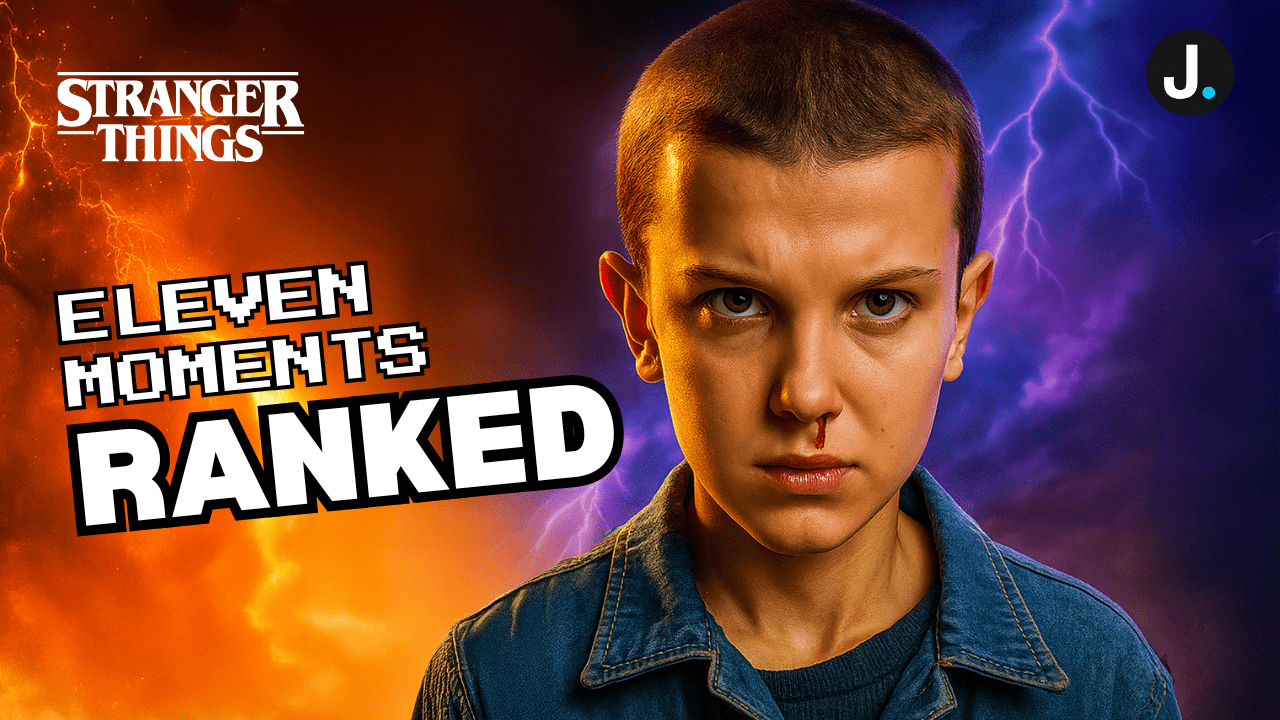
Originally named Jane Ives, Eleven’s story begins under grim circumstances, entwined with the dark history of MKUltra, a government program infamous for experimenting on the human mind. Her mother, Terry Ives, participated unknowingly in these experiments while pregnant, affecting Eleven’s development even before birth. Once born, she was kidnapped by the sinister Dr. Martin Brenner and designated “Eleven,” the eleventh test subject in his series of grotesque experiments. Life at Hawkins National Laboratory was a blend of fear, manipulation, and isolation. She grew up surrounded by other children, referred to as her “brothers” and “sisters,” who shared her predicament, though their fate often differed.
The Duffer Brothers have described Eleven as “not a normal girl…she has unpredictable supernatural powers that will most definitely put our boys in jeopardy.” This captures the tension inherent in her character: she is simultaneously vulnerable, manipulated, and extraordinarily powerful. Eleven’s formative years in captivity cultivate an intense longing for connection, normalcy, and love—a desire that becomes a driving force for her choices and relationships once she escapes.
Her escape on November 6, 1983, marks a turning point. Meeting Mike Wheeler, Lucas Sinclair, and Dustin Henderson, she experiences real friendship for the first time. These bonds catalyse her transformation from a mere lab subject to a central figure in the fight against supernatural threats, underscoring one of the series’ core themes: even the most powerful beings thrive through connection.
Eleven’s extraordinary abilities—psychokinesis and telepathy—are inextricably linked to the trauma she endures. In 1979, she confronts Henry Creel, later known as One, who manipulates her to regain his powers. When Eleven refuses to join him, he murders the other test subjects, leaving deep psychological scars. The resulting coma and amnesia complicate her understanding of herself, forcing her into a journey of self-discovery that resonates with audiences.
Her relationship with the Upside Down evolves alongside her personal growth. From the first battle with the Demogorgon to confronting the Mind Flayer, each encounter challenges her sense of identity and morality. After the apparent death of her adoptive father, Jim Hopper, she is taken in by the Byers family and relocates to Lenora Hills. Here, she grapples with isolation, bullying, and the temporary loss of her powers. This phase of her life highlights her resilience, as she learns to adapt, reclaim her abilities, and stand strong against emerging threats.
Her romantic bond with Mike adds layers of relatability to her extraordinary life. Teenage romance, with all its awkwardness and intensity, humanises Eleven, reminding viewers that beneath the psychic powers lies a young girl navigating love, friendship, and trust. These relationships anchor the narrative, ensuring that her victories and struggles carry emotional weight beyond the spectacle of her abilities.
Eleven’s evolution is a masterclass in character development. Her involvement in the experimental “Nina” program reflects both the cyclical nature of her trauma and the process of healing. Revisiting her past, confronting the consequences of genetic manipulation, and enduring repeated confrontations with evil, she emerges more self-aware, courageous, and determined. Her identity—shaped by suffering, love, and discovery—illustrates the show’s nuanced approach to storytelling.
From Jane Ives to Eleven, and now Jane Hopper, her journey resonates with themes of loss, friendship, and self-determination. The lessons she learns, the bonds she forges, and the enemies she faces all contribute to the complex portrait of a heroine who refuses to be defined solely by her powers or her past. Her iconic motto, “friends don’t lie,” encapsulates the moral compass guiding her actions and decisions, reinforcing the series’ broader commentary on loyalty, trust, and the transformative power of connection.
As the release of Stranger Things Season 5 approaches, audiences are left to speculate: how will Eleven navigate her powers, past trauma, and evolving relationships? Will she fully reconcile her identity as Jane Hopper with her extraordinary abilities? The anticipation is electric, as fans eagerly await the next chapter in a story that has spanned decades in its timeline yet remains immediate and emotionally resonant.
Eleven’s narrative reflects the series’ signature blend of horror, adventure, and heartfelt storytelling. She embodies the human spirit confronting both internal and external darkness, providing a lens through which the audience experiences the peril, excitement, and emotional resonance of Hawkins. Her journey serves as a reminder that even in a world filled with Demogorgons, Mind Flayers, and shadowy laboratories, connection, courage, and resilience remain the most powerful forces of all.
From the sterile corridors of Hawkins Lab to the chaotic streets of Lenora Hills, Eleven continues to evolve. She is a testament to the enduring appeal of Stranger Things: a show that balances supernatural thrills with deeply human stories. Fans, critics, and newcomers alike are captivated by her journey, drawn to her strength, vulnerability, and unyielding determination to protect those she loves. As Eleven braces for the final battles in Hawkins, the world waits with bated breath, ready to witness the next stage of her remarkable story.