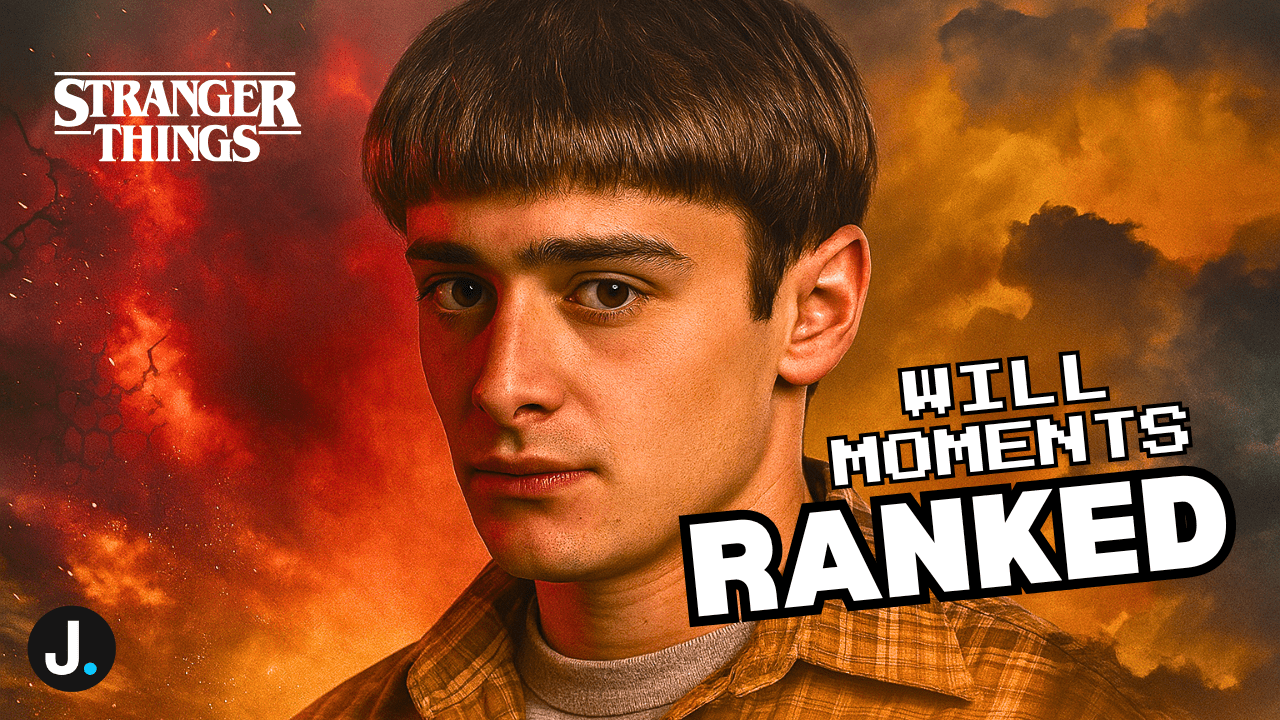
William “Will” Byers enters Stranger Things as a shy, creative boy whose world feels safe—at least until November 6, 1983. Played with exceptional depth by Noah Schnapp, Will is instantly recognisable as the quintessential “good kid”: compassionate, thoughtful, and brimming with imagination. He sketches, tells stories, and dives headfirst into Dungeons & Dragons campaigns with his closest friends—Mike, Dustin, and Lucas—revealing both his creativity and his ability to dream beyond the ordinary confines of Hawkins.
But that ordinary life shatters when Will encounters the Demogorgon, plunging him into the terrifying Upside Down. Stripped from his familiar surroundings and thrust into a grotesque, shadowy alternate dimension, Will navigates both physical dangers and psychological terror. Fans quickly connect with his plight: trapped, isolated, and witnessing unimaginable horrors, Will’s journey evokes empathy while setting the stage for the emotional complexity he will carry throughout the series.
Even in captivity, Will demonstrates remarkable resilience. He reaches out to his mother, Joyce, through flickering lights—a simple yet haunting method of communication that reinforces his ingenuity and determination. These early trials establish the duality that defines him: a vulnerable, traumatized child and a survivor capable of courage and resourcefulness.
Returning from the Upside Down is never easy. Joyce and Chief Jim Hopper rescue Will, but the trauma lingers, shaping his interactions and colouring his world. In Season 2, Will’s connection to the Mind Flayer becomes apparent, manifesting as visions and physical symptoms that isolate him further. Nicknamed “Zombie Boy” by peers, Will confronts not only supernatural horrors but also the weight of social alienation.
The show captures the subtle, insidious effects of trauma with precision. Will’s struggles illustrate how survival does not erase fear or suffering; instead, it transforms it into an ongoing psychological challenge. The protective instincts of his mother and brother, combined with the dismissive attitudes of some friends, create a sense of alienation that resonates with anyone who has felt misunderstood or left behind. This tension between safety and persistent vulnerability adds remarkable emotional depth to the series.
Season 3 amplifies these themes. While his friends explore first romances and teenage milestones, Will faces an acute sense of loss—not just of innocence, but of relevance. He attempts to rekindle the camaraderie of Dungeons & Dragons, only to be met with indifference. The longing for the past and the feeling of being left behind creates a poignant narrative of adolescence intersecting with supernatural trauma. Will’s journey challenges viewers to consider the long-term impact of extraordinary events on young minds, emphasizing how trauma can shape identity and relationships.
Will’s story in Stranger Things increasingly explores themes of identity and self-acceptance. His emerging feelings for Mike Wheeler, highlighted in Season 4, add a layer of vulnerability and authenticity rarely depicted in young male characters in genre television. When Will confides in Mike that he feels like a “mistake,” the scene resonates with honesty and emotional complexity, confronting issues of alienation, sexuality, and the desire for acceptance.
The series uses Will’s perspective to explore the evolution of friendship under duress. Bonds forged in childhood—through Dungeons & Dragons, adventures, and shared trauma—are tested as the characters mature and face both human and supernatural challenges. Will’s sensitivity and introspection contrast with the often outward bravado of his peers, creating a tension that is both realistic and relatable.
Additionally, his artistic nature and imaginative storytelling function as coping mechanisms, enabling him to navigate fear while maintaining a sense of self. These traits illuminate the show’s central theme: even in a town plagued by otherworldly horrors, the core of human experience—friendship, love, loss, and identity—remains central. Will’s journey exemplifies how one can confront darkness externally and internally while retaining hope and compassion.
Across seasons, Will serves as a living conduit to the Upside Down, embodying the lingering effects of trauma and the insidious reach of evil. The Mind Flayer’s connection to him demonstrates how past horrors can persist, shaping not only behaviour but also perceptions of reality. His experiences force both him and viewers to consider the intersection of fear, memory, and resilience.
Stranger Things highlights the nuanced reality of psychological struggle through Will’s lens. Each encounter with the Upside Down or its manifestations is not merely action-driven but deeply character-driven, emphasising the personal stakes involved. Will’s ability to persevere, even when ostracised or misunderstood, creates a compelling arc that transcends the series’ supernatural elements.
Furthermore, Will’s evolution challenges traditional depictions of young male heroes in science fiction and horror. He embodies sensitivity, creativity, and emotional intelligence while maintaining courage and resilience. This multidimensionality enriches the narrative, offering fans a character whose journey is both thrilling and profoundly human.
As Stranger Things Season 5 approaches, anticipation grows around Will’s role in Hawkins’ final battles. Will’s connection to the Upside Down, combined with his personal growth and emerging self-awareness, positions him as a pivotal figure in the series’ climax. Will viewers see him reconcile his trauma while embracing his identity fully? How will his relationships with Mike, Eleven, and the Party evolve as they confront the ultimate threats?
His journey encapsulates the series’ heart: navigating fear and darkness while cherishing bonds, love, and individuality. In Will Byers, fans witness a character who, despite enduring incomprehensible horrors, continuously seeks understanding, acceptance, and connection. His story reinforces the emotional resonance that has made Stranger Things a cultural phenomenon, bridging supernatural spectacle with the profoundly human.
From the first flickering lights in Joyce’s living room to confronting the malevolent forces that stalk Hawkins, Will’s path illustrates that courage manifests in many forms. Whether through resilience in trauma, navigating identity, or maintaining friendships against all odds, Will Byers embodies the essence of Stranger Things: adventure, fear, love, and ultimately, the light that persists in even the darkest shadows.
As the town of Hawkins braces for its final showdown, Will’s narrative remains central—a reminder that even the most extraordinary circumstances cannot eclipse the human need for connection, understanding, and hope. He likes it cold, yes, but beneath that quiet exterior burns a spirit resilient, compassionate, and ready for whatever comes next.