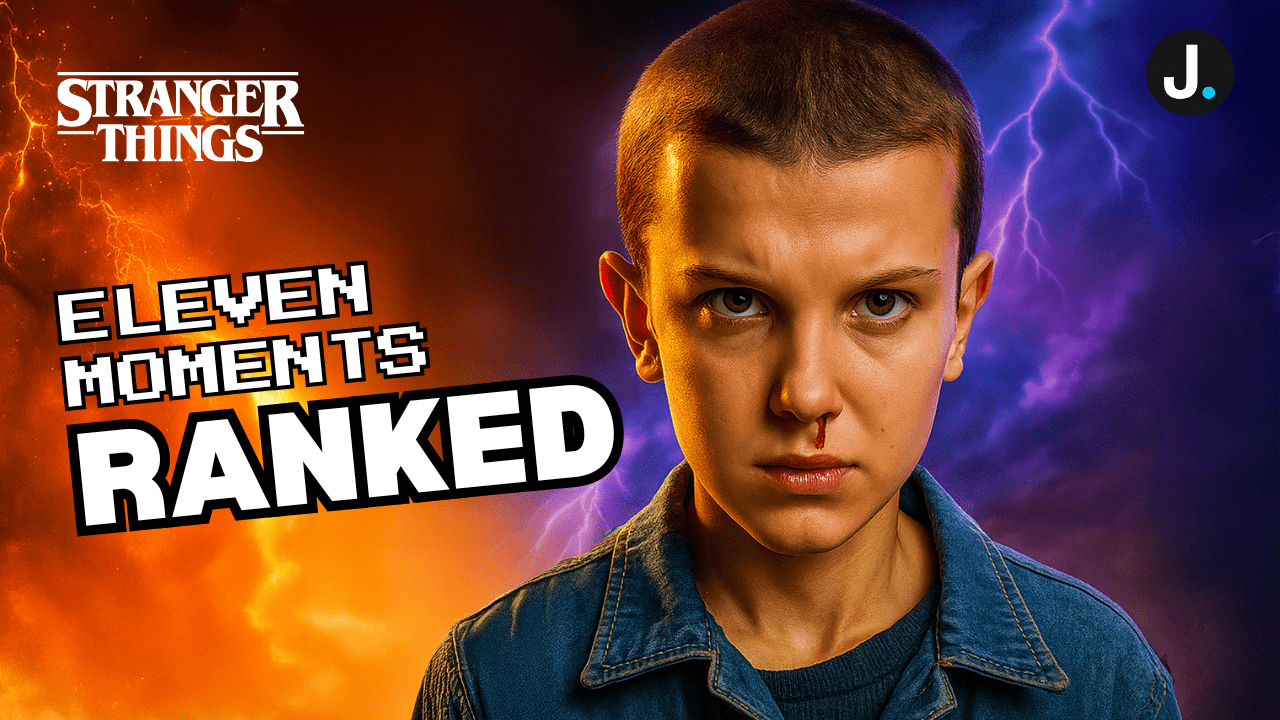
Few fans realise that the creation of Eleven owes a nod to Japanese anime, particularly the 2004 series Elfen Lied. In a 2016 interview with the Daily Beast, Matt Duffer remarked that he “had seen an anime called Elfen Lied” and that it had been inspired by Akira. He continued, “There were a lot of things in [Elfen Lied] that I really liked and that made their way into the show, particularly related to the character of Eleven.”
The Influence of Elfen Lied on Eleven
The parallels between Eleven and Lucy, the protagonist of Elfen Lied, are striking. Both characters wield extraordinary powers in worlds that seek to contain and control them. Lucy is a Diclonius, a humanoid species distinguished by horn-like appendages and psychokinetic abilities, held captive in a government facility for experimentation. Eleven’s narrative mirrors this: a child raised in a lab, stripped of normal socialisation, and subjected to testing until she eventually escapes. Both characters are forced into chaotic confrontations with authority figures, highlighting the emotional and moral stakes of captivity.
The comparison becomes even more intriguing when considering the tonal differences. Elfen Lied takes a visceral, often brutal approach, emphasising extreme violence and the psychological toll of isolation. Stranger Things maintains a darker tension and horror but tempers it with nostalgia, friendship, and the warmth of Hawkins, Indiana. The result is Eleven’s story, which is emotionally intense without venturing into the graphic territory of her anime counterpart, giving viewers a mix of empathy, fear, and admiration for her resilience.
Eleven’s experiences also echo the narrative of another Elfen Lied character, Nana. Both are subjected to dehumanising experimentation, identified by numbers rather than names, and struggle with social integration. Their journeys explore fundamental questions about human connection, trust, and autonomy, themes that resonate deeply with viewers and anchor the supernatural elements of Stranger Things in relatable emotional truth.
The Duffer Brothers’ decision to draw inspiration from Elfen Lied demonstrates an international storytelling sensibility, bridging Western television narratives with Japanese anime philosophies. By examining these parallels, fans gain insight into Eleven’s layered character development, understanding that her powers and her vulnerabilities are inseparable from her formative trauma and longing for human connection.
Akira in Stranger Things
While Elfen Lied shaped characterisation, Akira, the 1988 landmark anime film, provided thematic and aesthetic inspiration for the series’ broader narrative canvas. Renowned for its cyberpunk dystopia, chaotic cityscapes, and explorations of human nature under pressure, Akira created a template for storytelling that challenges authority, probes the ethics of scientific experimentation, and interrogates societal collapse.
The Duffer Brothers have acknowledged Akira as an indirect influence through Elfen Lied, noting how the anime’s visual and thematic intensity informed their depiction of Hawkins’ darker elements. The film’s portrayal of unchecked scientific ambition and the consequences of extraordinary power finds echoes in Stranger Things, particularly in the depiction of Hawkins Lab and the morally ambiguous experimentation on children with psychic abilities.
The aesthetics of Akira—its decaying urban sprawl, shadowed alleyways, and neon-infused chaos—translate differently in Stranger Things. Rather than a neon-drenched metropolis, Hawkins presents a 1980s suburban landscape, complete with small-town charm and warm nostalgia. Yet beneath this veneer lies darkness, exemplified by the Upside Down and Eleven’s harrowing backstory. The Duffer Brothers harnessed Akira’s thematic depth, juxtaposing normality with extraordinary danger, and creating suspense by placing the supernatural against the familiar.
The film also explores questions of identity and moral responsibility, motifs that resonate in Stranger Things. Just as Kaneda and Tetsuo grapple with power, trauma, and societal expectations, Eleven navigates her abilities, ethical dilemmas, and the consequences of violence, both intentional and coerced. The intersection of personal growth, power, and existential threat becomes a recurring motif, amplified through the lens of anime-inspired narrative structures.
By referencing Akira, the Duffer Brothers signal their understanding of storytelling as a global, intertextual conversation. They take lessons from dystopian, morally complex narratives and translate them into accessible television, allowing Western audiences to experience thematic sophistication alongside nostalgic entertainment.
Bridging Anime and American Television
Stranger Things occupies a unique space where anime influences meet 1980s Americana, producing a hybrid storytelling approach that rewards fans of multiple mediums. Eleven’s journey, inspired by Lucy and Nana, and the series’ dystopian undertones, drawn from Akira, demonstrate how Japanese anime can inform character arcs, ethical dilemmas, and aesthetic sensibilities in a Western television context.
Both Elfen Lied and Akira grapple with questions of identity, alienation, and the consequences of extraordinary abilities in oppressive environments. Stranger Things adapts these themes with warmth, injecting humor, friendship, and a nostalgic aesthetic that softens the raw intensity of its inspirations. This fusion allows viewers to experience the thrill and dread of anime narratives while remaining grounded in a familiar, relatable setting.
Eleven’s struggle for autonomy mirrors Lucy’s and Nana’s, emphasizing the importance of human connection amid trauma. The Duffer Brothers amplify these themes through careful characterisation, dialogue, and interactions, showing that extraordinary abilities are inseparable from emotional stakes. By exploring these anime-derived motifs, the series encourages audiences to reflect on questions of empathy, resilience, and the moral complexities of power.
Additionally, the series demonstrates how visual storytelling techniques from anime—such as expressive character design, dynamic action sequences, and symbolic imagery—can enhance Western television. For example, Eleven’s psychic battles, her telekinetic control, and the visual cues of her powers are reminiscent of anime action sequences, providing kinetic energy and emotional intensity that elevate the narrative.
The integration of anime influences also invites cultural cross-pollination, exposing audiences to global storytelling traditions while enriching the viewing experience. Fans familiar with Elfen Lied or Akira can trace thematic and aesthetic echoes throughout Stranger Things, deepening appreciation for the series’ artistry. For newer viewers, these inspirations manifest as nuanced characterisation, layered world-building, and suspenseful storytelling that transcends conventional genre expectations.
In essence, Stranger Things demonstrates the value of international influence in modern television. By blending anime’s psychological and visual intensity with Western narrative structures and 1980s nostalgia, the Duffer Brothers have created a hybrid universe that appeals to fans of multiple mediums, encouraging curiosity, analysis, and emotional engagement.
What makes the anime connection particularly compelling is its contribution to the emotional core of Stranger Things. Eleven’s struggles with confinement, trust, and identity gain depth when viewed through the lens of Elfen Lied and Akira. These influences provide a framework for understanding her trauma, her fear of loss, and her longing for connection, rendering her victories and setbacks emotionally potent.
The show’s handling of moral dilemmas, ethical experimentation, and societal oversight reflects Akira’s dystopian complexity, inviting audiences to ponder questions of power, responsibility, and humanity. By embedding these considerations in a format accessible to a wide audience, the series balances sophistication with entertainment, ensuring that viewers remain emotionally invested while navigating the thrills of supernatural horror and 1980s nostalgia.
Moreover, the narrative depth afforded by anime inspiration allows secondary characters to resonate more profoundly. Relationships between friends, familial bonds, and rivalries are heightened by the thematic richness, with each character reflecting the stakes of their universe and the consequences of choices made under duress. The result is a fully realised world where character motivations, emotional arcs, and supernatural elements are intertwined in ways reminiscent of the layered storytelling found in anime.
As fans eagerly anticipate the release of Stranger Things Season 5, recognising the anime lineage embedded in the series enriches the viewing experience. Eleven’s arc, from captive subject to empowered heroine, and the show’s exploration of dystopian scientific experimentation, draw clear parallels to Lucy, Nana, and Akira’s Neo-Tokyo. These influences reinforce the series’ commitment to layered storytelling, emotional resonance, and complex world-building.
The Duffer Brothers’ careful blending of anime motifs, 1980s nostalgia, and Western television sensibilities creates a universe that feels both familiar and profoundly innovative. By examining these influences, fans can anticipate the final season with a deeper understanding of character motivations, thematic stakes, and the narrative machinery that drives Hawkins’ supernatural mysteries.
Whether through Eleven’s psychic battles, the moral consequences of experimentation, or the haunting aesthetic of hidden laboratories, the anime-inspired DNA of Stranger Things remains a key ingredient in its storytelling alchemy. It is a testament to the Duffer Brothers’ commitment to cross-cultural storytelling, intertextual depth, and emotionally compelling narratives that resonate across generations and mediums.
As the countdown to the final episodes continues, fans can reflect on how the series stands as a bridge between Japanese anime and Western television, offering thrills, nostalgia, and emotional weight in equal measure. By tracing the threads of Elfen Lied and Akira through Hawkins, Indiana, viewers gain a richer appreciation for the series’ artistry and an even greater excitement for what lies ahead in the Upside Down.