How Can Eleven Speak Full Sentences In Stranger Things 4 Flashbacks?

Stranger Things

Eleven’s ability to speak full sentences in Season 4 flashbacks of Stranger Things has sparked lively fan debates and analysis. While she struggled with limited language in Season 1, the flashbacks reveal a fluency that raises questions about memory, trauma, and narrative intent. These sequences are best understood as reflections of Eleven’s internalised experiences rather than strict historical reenactments, highlighting the series’ sophisticated approach to storytelling. Exploring this apparent discrepancy offers insight into how Stranger Things navigates character development, the impact of trauma on memory, and the psychological depth behind its supernatural thrills, keeping fans engaged and theorising ahead of Season 5 in November 2025.

Why Can Eleven Speak Full Sentences in Stranger Things 4?

Key Information:

    Eleven’s speech in Season 4 flashbacks contrasts sharply with her limited vocabulary in Season 1, prompting discussions about memory, trauma, and narrative interpretation in Stranger Things.
    Fans and commentators suggest that these flashbacks reflect internalised memories shaped by trauma, rather than literal depictions of past events, enriching Eleven’s character development.
    The debate underscores Stranger Things’ thematic focus on identity, resilience, and the psychological dimensions of its supernatural universe, keeping viewers deeply engaged.

Eleven Speaking Full Sentences Stranger Things

Eleven’s ability to speak full sentences in Season 4 flashbacks of Stranger Things has sparked lively fan debates and analysis. While she struggled with limited language in Season 1, the flashbacks reveal a fluency that raises questions about memory, trauma, and narrative intent. These sequences are best understood as reflections of Eleven’s internalised experiences rather than strict historical reenactments, highlighting the series’ sophisticated approach to storytelling. Exploring this apparent discrepancy offers insight into how Stranger Things navigates character development, the impact of trauma on memory, and the psychological depth behind its supernatural thrills, keeping fans engaged and theorising ahead of Season 5 in November 2025.

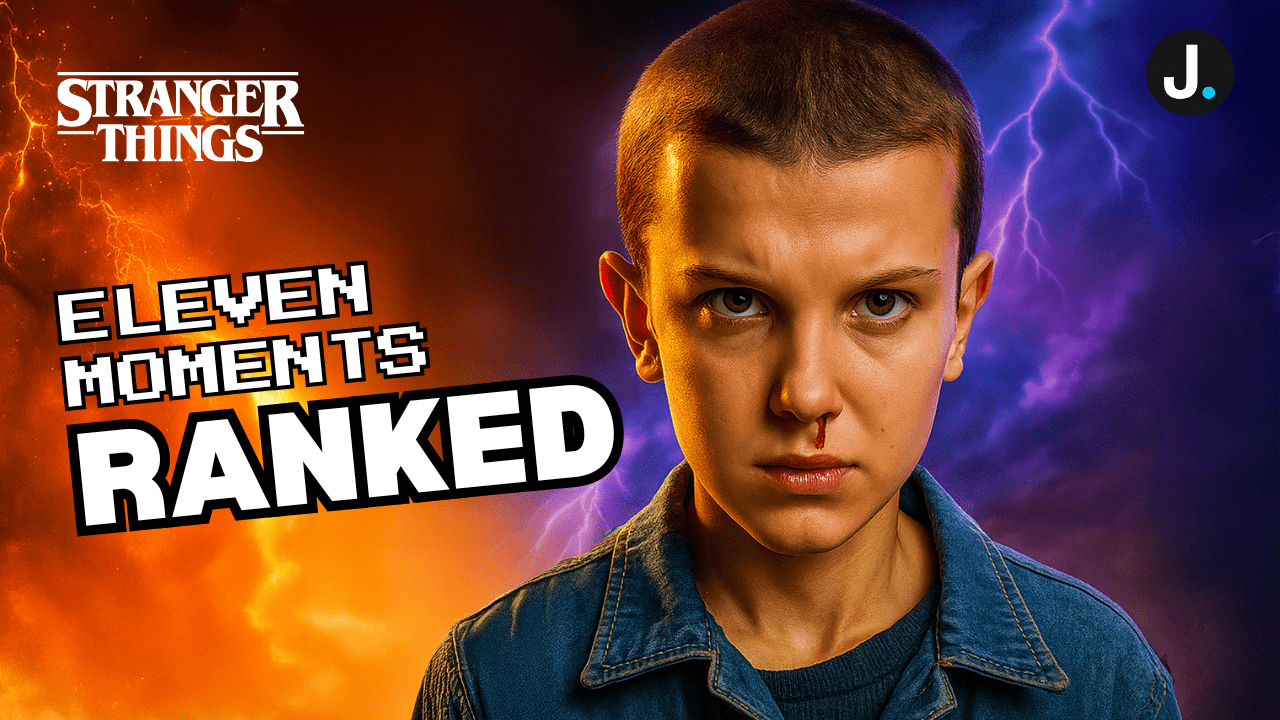
When Stranger Things returned with Season 4 on May 27, 2022, fans were immediately swept up in the intricate web of Hawkins, Indiana, and the chilling dynamics of the Upside Down. Beyond the nail-biting suspense and nostalgic homages, one detail caught viewers’ attention: how Eleven, played by Millie Bobby Brown, spoke full sentences in flashbacks set during Season 1, despite her well-documented struggle with language at the time.

In Season 1, Eleven is essentially a product of her environment. Raised in isolation by Hawkins Lab, her exposure to the outside world—and language itself—was minimal. Fans quickly noticed that she speaks only 246 words across the entire season, highlighting the profound social and cognitive gap between her and other children her age. So, when she appears in flashbacks articulating thoughts fluently, it triggered a flurry of speculation and debate. One Twitter user questioned, “Why did Eleven speak perfect English in the flashbacks from Season 1, if when the show started she literally didn’t know how to say a single word?”

This apparent contradiction has fascinated fans, creating an opportunity to examine the psychological underpinnings of memory and trauma. Could it be that these flashbacks are less about literal history and more about Eleven’s perception of her own past? Trauma often distorts memory, reshaping experiences to match internalised understanding. Another Twitter user noted, “Traumatic experiences can alter memory and speech patterns. I don’t see it as a ‘huge plot hole’ at all,” reflecting a common interpretation among attentive viewers and theorists.

The discrepancy in Eleven’s speech opens the door to exploring narrative intent. Flashbacks in Stranger Things are not necessarily rigid reconstructions of past events. Instead, they can serve as psychological mirrors, reflecting how Eleven has internalised her experiences over time. Being isolated from birth, she may have retained the latent capacity for language but lacked the environmental stimuli to fully develop it.

PopSugar suggested that Eleven’s flashback dialogue could be understood as a creative device merging memory and narrative. This approach allows viewers to experience not only her past but also the growth she has undergone since leaving Hawkins Lab. The duality of trauma and development paints a layered portrait of Eleven: a girl grappling with identity and self-expression while navigating a world filled with supernatural danger.

By interpreting the flashbacks as filtered through memory, the sequences gain emotional resonance. They are not errors in storytelling but intentional explorations of how trauma shapes perception. Eleven’s ability to speak in these scenes becomes a narrative tool, highlighting both her vulnerability and her emerging agency as she moves toward a fuller sense of self.

The debate over Eleven’s speech in Season 4 illuminates broader themes in Stranger Things: identity, resilience, and the intersection of human psychology with supernatural events. While some fans initially perceived a continuity error, others view it as a deliberate choice that deepens her characterisation. The show consistently uses its sci-fi and horror elements to probe the internal worlds of its characters, offering a blend of suspense and emotional depth rarely seen in genre television.

As Hawkins continues to reveal its mysteries, discussions around Eleven’s cognitive and emotional development demonstrate how invested the fanbase has become in the series’ universe. The flashbacks serve as a reminder that Stranger Things is as much about character exploration as it is about monsters and parallel dimensions. The series challenges viewers to reflect on memory, perception, and the resilience of those shaped by trauma—an approach that keeps the community theorising, dissecting, and emotionally engaged.

With Season 5 set to arrive in November 2025, the conversation around Eleven’s speech is far from over. Fans are eager to see how her journey will conclude, and whether the narrative will continue to explore these intricate psychological layers. Ultimately, the flashbacks in Season 4 demonstrate that Stranger Things thrives on ambiguity, memory, and emotional resonance, transforming what could have been a simple plot inconsistency into a conversation about trauma, identity, and the human mind.

Continue Reading about Eleven Speaking Full Sentences Stranger Things:


More about Eleven Speaking Full Sentences Stranger Things

As anticipation builds for the release of Stranger Things 4's second volume, viewers are left grappling with various unanswered questions following the premiere of Vol. 1 on May 27. Among the myriad details that fans have dissected, a significant discrepancy concerning Millie Bobby Brown’s character, Eleven, has emerged. The timeline of these flashbacks appears to align with events from season one, but they show Eleven speaking in complete sentences, which sharply contrasts with her initial portrayal as a mute character with minimal language skills. Originally, when Eleven escapes Hawkins Lab, she struggles to communicate and uses a mere 246 words, according to a Reddit user. This inconsistency has prompted viewers to question the logic of these flashbacks, generating discussions across social media platforms as fans ask, “Why did Eleven speak perfect English in the flashbacks from season 1 if when the show started she literally didn’t know how to say a single word?” The emerging theories surrounding this narrative inconsistency suggest a possible exclusion of plot holes and instead posit that these moments might reflect Eleven’s memories rather than her actual experiences. Critics argue that memory can be influenced by trauma and that Eleven’s current recollections may not accurately portray her early struggles with communication. A member of the online community noted, “Many people are talking about Eleven not being able to speak in season 1, while in flashbacks in season 4 she has full speech. Traumatic experiences can alter memory and speech patterns." This uncertainty leaves viewers pondering whether the discrepancies are intentional narrative choices or oversight within the series, as they eagerly await further developments in the unfolding mystery of Stranger Things.

What’s your favorite theory on how Eleven's speech evolved throughout the series, and why do you think it matters for her character development?

We’d love to hear your perspective! Share your opinions in the comments below.

Stranger Things