On December 31, 2018, as the New Year’s Eve crowd braved Times Square, an unusual video loop flickered across the giant screens: a commercial for the fictional Starcourt Mall. This clever piece of marketing, completely in-universe, teased a special announcement on the Indiana-based ABC affiliate WIYZ. At the stroke of midnight, Netflix released a teaser revealing the release date for Stranger Things Season 3: July 4, 2019.
The advertisement perfectly blended celebration with suspense. It opened with footage from Dick Clark’s New Year’s Rockin’ Eve 1984 before shifting into Hawkins’ eerie world. Mike’s voice called out for Eleven, framed against a cascade of MS-DOS screens—a signature nod to the series’ 1980s tech aesthetic. Simultaneously, Netflix unveiled the first Season 3 poster, featuring a menacing creature looming over fireworks. The imagery encapsulated the perfect marriage of nostalgia and danger that Stranger Things fans crave, teasing a season that promised thrills, suspense, and a healthy dose of retro charm.
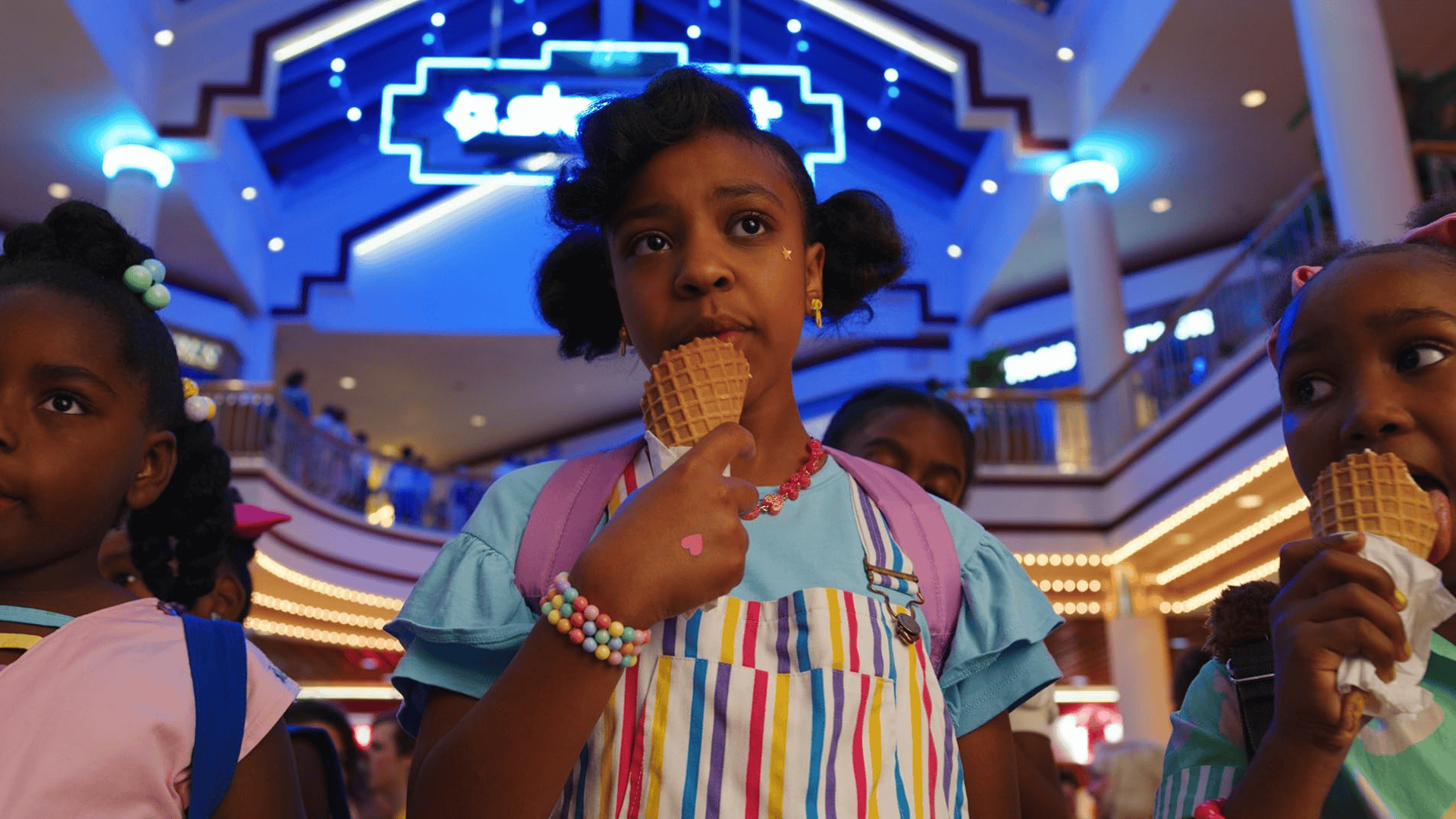
Netflix went beyond traditional trailers and posters, creating a fully immersive universe for Starcourt Mall. The first teaser trailer, released on July 16, 2018, masqueraded as a real advertisement for the mall, highlighting its food court and stores. Fan-favourite characters Steve and Robin appeared front and centre, delivering a cheerful “Ahoy!” as they promoted Scoops Ahoy, the ice cream parlor that would become a season-long highlight.
This strategy achieved more than simple advertising. It created a world that fans could step inside. Starcourt Mall wasn’t just a backdrop—it was a character, an emblem of 1980s nostalgia, and a tangible destination within the show’s lore. By tapping into collective memories of food courts, neon lights, and mall culture, Netflix allowed both older viewers and a new generation to feel at home in Hawkins. The campaign reinforced the sense that Stranger Things isn’t merely a series to watch but an experience to inhabit, an ethos that would carry through every promotional decision leading up to the premiere.
Netflix fully leveraged social media to generate buzz, creating an ecosystem of teasers, interactive content, and event-based promotions. One standout moment occurred during the 2018 Comic Con Experience in São Paulo. Cast members Noah Schnapp, Sadie Sink, and Caleb McLaughlin shared behind-the-scenes stories, revealed episode titles, and interacted with fans, merging real-world appearances with the series’ fictional universe.
Online campaigns were equally shrewd. Clips like rats scurrying through a decaying industrial landscape, captioned “It’s almost feeding time,” sparked speculation and excitement. When the first official trailer dropped on March 19, 2019, it garnered 22 million YouTube views in a single week, proving the strategy’s effectiveness. Beyond video content, Netflix created tangible interactive experiences such as retro arcade replicas at events, allowing fans to physically immerse themselves in Hawkins’ world.
The combination of nostalgia, storytelling, and cutting-edge marketing cemented Starcourt Mall’s status as a pop culture icon. It wasn’t simply about announcing a release date—it was about crafting anticipation, building a narrative around a fictional location, and creating moments fans would share, debate, and relive. This approach not only boosted viewership for Season 3 but also established a blueprint for how streaming platforms can create cultural events in an increasingly crowded entertainment landscape.
Netflix’s Season 3 marketing campaign showcased the network’s ability to blend narrative immersion with savvy promotion. By transforming Starcourt Mall from a mere plot device into a global pop culture touchpoint, they demonstrated the power of world-building beyond the screen. From Times Square screens to social media engagement and interactive fan events, the strategy made Stranger Things Season 3 an unmissable event and set the bar for how streaming platforms can generate anticipation for future seasons.
Fans awaiting Season 5 can look back on this campaign and appreciate the sheer creativity involved in turning a fictional mall into a worldwide sensation, reaffirming why Stranger Things remains a masterclass in nostalgia, suspense, and audience engagement.