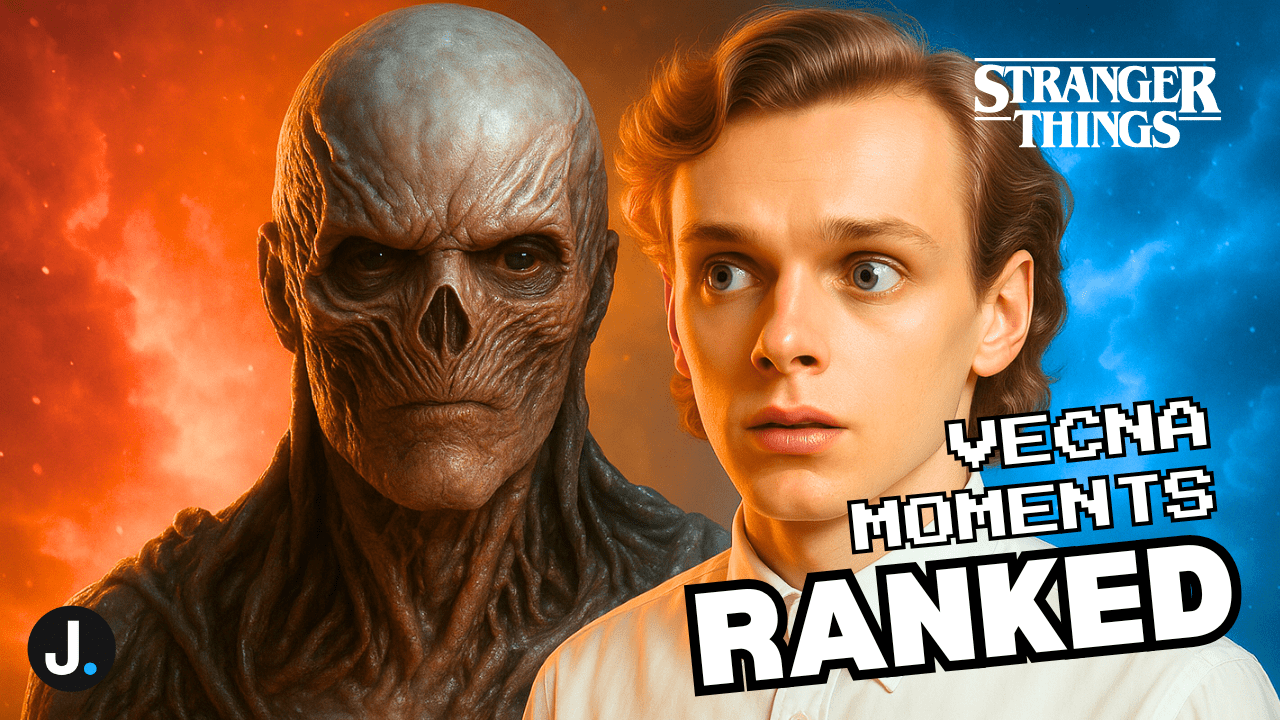
When you think of cosmic horror, your mind probably conjures images of squirming tentacles, unfathomable intelligence, and the terrifying realisation that humanity is insignificant. The Duffer Brothers’ Stranger Things taps directly into this, most vividly through the Mind Flayer. This grotesque, tentacled entity hovers in the darkness of the Upside Down, a palpable manifestation of existential dread that evokes echoes of H.P. Lovecraft’s Cthulhu.
Lovecraftian horror thrives on the idea of ancient, indifferent beings whose very existence dwarfs human understanding. The Mind Flayer mirrors this by being both colossal and insidious, a presence that isn’t content with mere destruction—it seeks domination. Unlike Cthulhu, who slumbers beneath the waves, the Mind Flayer actively manipulates its victims, controlling humans to enact its twisted plans. Ordinary townsfolk become unwilling instruments of horror, a chilling reflection of Lovecraft’s recurring motif: humanity as playthings for forces beyond comprehension.
The Duffer Brothers amplify this terror by granting the Mind Flayer intelligence and malevolent intent. Its control over individuals transforms everyday life in Hawkins into a psychological battlefield. Characters wrestle not only with physical threats but also with the creeping realisation that their agency is under siege. Lovecraft captures this existential terror perfectly in the Cthulhu Mythos: “Simply by waking he would, as casually as a man squashes an insect.” The Mind Flayer embodies this principle, treating humans as trivial and expendable, while orchestrating chaos with cunning precision.
This approach elevates Stranger Things from conventional horror into a modern reinterpretation of cosmic dread. Viewers are forced to confront a reality where the familiar—the school, the neighbourhood, the friends—can be invaded by forces beyond comprehension. Every shadow, every glitch in the air, every twitch of a controlled human becomes a reminder that the universe is vast, indifferent, and terrifyingly manipulable. The Mind Flayer, in this way, becomes both a monster and a philosophical symbol, a dark anchor grounding the series in existential horror while maintaining its thrilling, edge-of-your-seat appeal.
Cosmic horror thrives not only in monsters but in environments—realms that challenge human understanding. In Stranger Things, this role is filled by the Upside Down, a dark, twisted reflection of Hawkins. The concept resonates with Lovecraft’s 1934 short story From Beyond, in which Crawford Tillinghast develops a device that stimulates the pineal gland, revealing an unseen dimension layered over our own.
In the Upside Down, normal physics, biology, and reality warp. The environment itself exerts a psychological toll, echoing Lovecraft’s idea of worlds so alien that human minds struggle to comprehend them. Tillinghast warns, “in these rays we are able to be seen as well as to see,” underscoring the dual vulnerability of encountering a hidden world. Similarly, Eleven’s psychic connection to the Upside Down exposes her—and by extension humanity—to entities that are oblivious to human existence until the barrier ruptures. Once connected, the creatures hunt with horrifying clarity, demonstrating that crossing the threshold between worlds carries existential risk.
The Duffer Brothers extend Lovecraft’s themes of madness and cosmic insignificance through the Upside Down’s influence on characters. Exposure to this dimension often triggers panic, fear, and psychological strain, mirroring Tillinghast’s descent into madness. The stakes become both metaphysical and deeply personal. Hawkins transforms from a quaint, nostalgic 1980s town into a stage for the unknowable, where the horrors of the other world seep into everyday life. This duality—normalcy invaded by incomprehensible evil—keeps audiences on edge, making each quiet scene pregnant with possibility and dread.
Visual storytelling reinforces these themes. The Upside Down’s palette of muted blues, greens, and sickly blacks, combined with creeping tendrils and drifting spores, signals that the ordinary laws of nature no longer apply. Shadows become threatening, spaces feel claustrophobic, and familiar landmarks like the school gym or local arcade acquire a sinister patina. This is horror rooted in atmosphere and existential unease, capturing the essence of Lovecraftian terror while remaining accessible to a mainstream audience.
One of the most potent elements of Lovecraftian influence in Stranger Things is the depiction of humans as instruments for higher, indifferent forces. The Mind Flayer’s possession of Hawkins’ citizens transforms ordinary people into extensions of cosmic malevolence, illustrating the fragility of human autonomy. In Lovecraftian terms, humans are insignificant; in Stranger Things, they are also dangerously malleable, their bodies and minds turned against them.
This dynamic is not merely a narrative convenience. It reinforces the series’ thematic exploration of powerlessness, vulnerability, and the tension between innocence and corruption. Children, teenagers, and adults alike face the unsettling realisation that bravery and skill may not suffice against forces beyond comprehension. The horror is amplified because the victims are recognisable, relatable, and ordinary. Fans feel the stakes viscerally because the threat extends beyond monsters into the very essence of identity and agency.
Lovecraft’s influence is particularly evident in the way the series entwines possession with a sense of cosmic indifference. The Mind Flayer does not act out of passion or revenge; it acts because it can. Humans are secondary, incidental to its designs. The narrative creates a disquieting resonance: what does it mean to confront an entity that operates outside moral frameworks, whose goals are incomprehensible and utterly indifferent to human life? By asking this question, Stranger Things situates itself firmly within Lovecraft’s tradition, blending the horror of the unknown with the terror of insignificance.
This exploration also enriches the emotional arcs of key characters. Eleven’s psychic battles are heightened by the knowledge that she faces not only a physical opponent but a metaphysical predator whose very existence defies comprehension. Her victories and setbacks become symbolic struggles against the indifferent universe itself, elevating the narrative stakes beyond conventional monster-versus-human storytelling.
As the anticipation builds for the release of Stranger Things Season 5 this November, the enduring influence of H.P. Lovecraft remains a compelling lens through which to view the series. The Mind Flayer’s grotesque grandeur, the nightmarish landscapes of the Upside Down, and the existential threat of possession combine to create a show that is both thrilling and intellectually stimulating. By channeling cosmic horror through a modern lens, the Duffer Brothers invite viewers to engage with fear in ways that are as psychological as they are visual.
Stranger Things demonstrates that horror can be more than jump scares and dramatic confrontations; it can be an exploration of humanity’s place in a vast, uncaring cosmos. Lovecraft’s legacy—his fascination with the unknown, the unfathomable, and the unseen—finds a vibrant home in Hawkins, Indiana, a town where nostalgia, friendship, and innocence collide with incomprehensible evil. Fans, scholars, and horror enthusiasts alike can appreciate the depth this perspective brings, revealing the series as a cultural text that interrogates the fragility of human perception and the terrifying possibilities of other worlds.
As we prepare to re-enter Hawkins and the Upside Down, we can appreciate the Duffer Brothers’ masterful fusion of 1980s charm and Lovecraftian dread. The Mind Flayer waits, the spores drift, and the unseen dimensions loom, reminding viewers that horror can reside both in the shadows of childhood memory and in the infinite unknown.