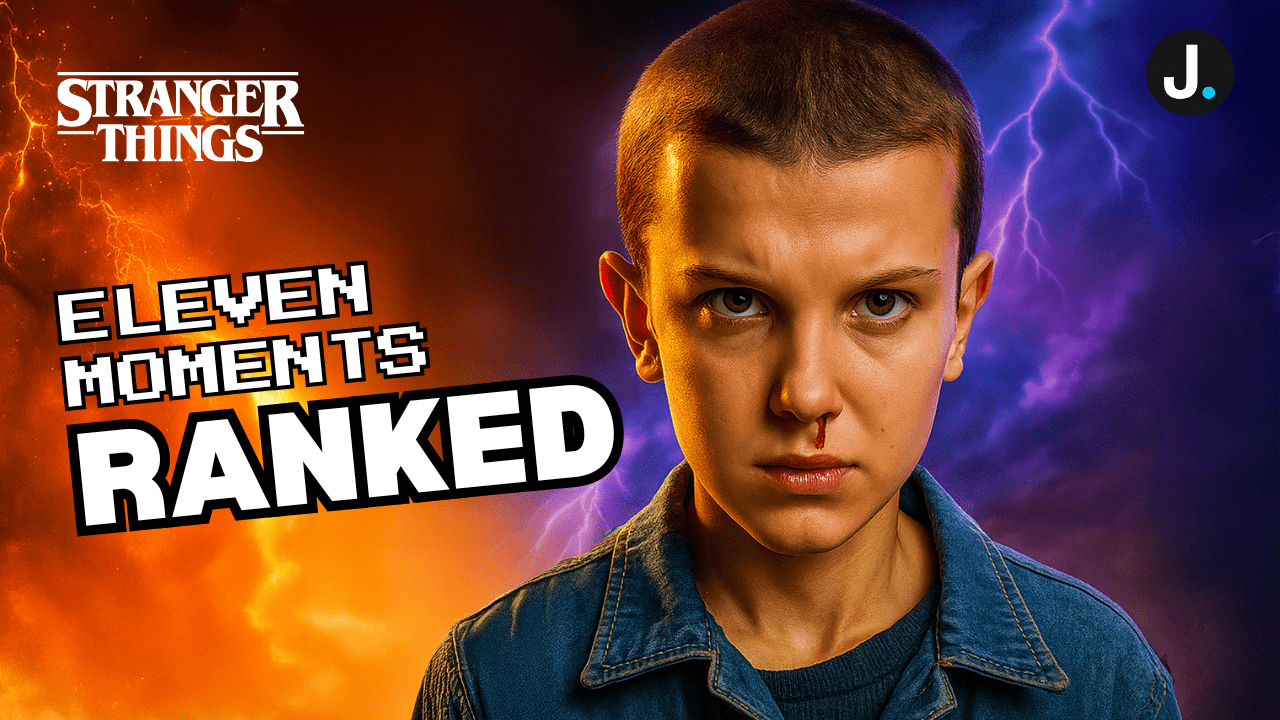
When you think about Eleven, played with quiet intensity by Millie Bobby Brown, it’s impossible not to be captivated by the sheer scope of her abilities. Telekinesis, mind-reading, and portal manipulation—she practically embodies a walking, breathing superpower encyclopedia. But as Dustin Henderson observes in Chapter 3: Holly, Jolly, there’s more to the question of heroism than raw ability. In his discussion with Mike Wheeler and Lucas Sinclair, Dustin debates whether Eleven’s powers are innate like the X-Men mutants or constructed like Green Lantern’s supercharged ring-giving origin.
"Was she destined to be different, or has she been constructed into a weapon due to the circumstances?" Dustin muses, and honestly, it’s the kind of observation only someone who’s spent countless hours in comic book lore and D&D campaigns could make. The question resonates on a deeper level: Eleven was experimented on, weaponized by the Hawkins Lab, and trained under the harshest conditions imaginable. Yet she emerges not as a mindless tool but as a conscious actor capable of moral choices. Her powers are impressive, terrifying, and utterly cinematic, but what makes them heroic is how she chooses to use them.
Fans have often drawn parallels between her and classic superheroes: the moral ambiguity of Professor X’s mutants, the personal sacrifice of Batman, the dual identity struggles of Spider-Man. Each comparison is a lens through which we can examine Eleven—not just as a girl with extraordinary abilities, but as a character grappling with trauma, agency, and the ethical dimensions of wielding power. Stranger Things layers nostalgia with psychological depth, and Eleven embodies the intersection of both.
It’s easy to reduce superheroism to flashy powers, epic battles, and dramatic monologues, but Stranger Things insists that true heroism is relational. Dustin nails this when he reflects, "It's not just about the powers; it's about how you use them and the people around you.” Eleven’s journey makes this abundantly clear: her powers flourish, falter, and even threaten destruction when detached from her support system of friends.
Think about it. Eleven’s bond with Mike, Lucas, Dustin, and even Max provides her the grounding she needs to navigate both Hawkins’ supernatural threats and the complexity of adolescence. From facing the Demogorgon to battling Vecna, her victories are rarely solo triumphs; they are team victories, a fusion of loyalty, strategy, and mutual trust. Stranger Things flips the superhero narrative from “savior alone” to “savior in community,” highlighting that relationships give her powers purpose.
Her friendships also humanize her. In moments of vulnerability—like when she struggles with trauma or questions her place in the world—these connections act as a moral compass, reminding her why her powers exist: to protect, to heal, and to defend those who cannot defend themselves. The show’s genius lies in this blend of spectacle and intimacy, making Eleven’s heroism feel grounded, relatable, and emotionally compelling.
Dustin’s love for comic books and superheroes is a brilliant narrative tool. By having a character constantly contextualize Hawkins’ horrors through X-Men analogies, Green Lantern references, or D&D metaphors, Stranger Things invites viewers to explore the philosophical dimensions of heroism while enjoying the supernatural thrills. Superpowers become more than plot devices—they become instruments to examine morality, identity, and the human experience.
Eleven mirrors the tension between power and responsibility that comics have explored for decades. Her moral choices, her struggles with self-identity, and her ultimate sacrifices reflect the very questions that Spider-Man fans have debated for generations: what do we owe to others when we hold the capacity to change their lives? How do trauma and circumstance shape what a hero becomes? The show, while drenched in 80s nostalgia, tackles these timeless questions, allowing audiences to reflect on heroism in both fictional and real-world contexts.
The genius of Stranger Things lies in the layered storytelling. Eleven’s powers captivate visually, but Dustin’s observations give them intellectual and emotional resonance. By the time the final season drops, fans will likely be analyzing every telekinetic lift, every mental projection, and every moral choice through this lens of superhero ethics. Her powers, friends, and choices intertwine to paint a portrait of a modern-day hero, grounded in human emotion yet capable of extraordinary feats.
Eleven may wear no cape and swing no hammer, but her journey through Hawkins proves that the line between ordinary and extraordinary isn’t measured by abilities alone. It’s measured by courage, choices, and connections. Stranger Things takes the fantastical and makes it feel profoundly human, and Dustin’s reflections remind us that the essence of heroism might just be this: how we wield our power in the service of others. As the series hurtles toward its climactic finale, Eleven’s story stands as a shining example of superheroism woven with friendship, trauma, resilience, and heart.