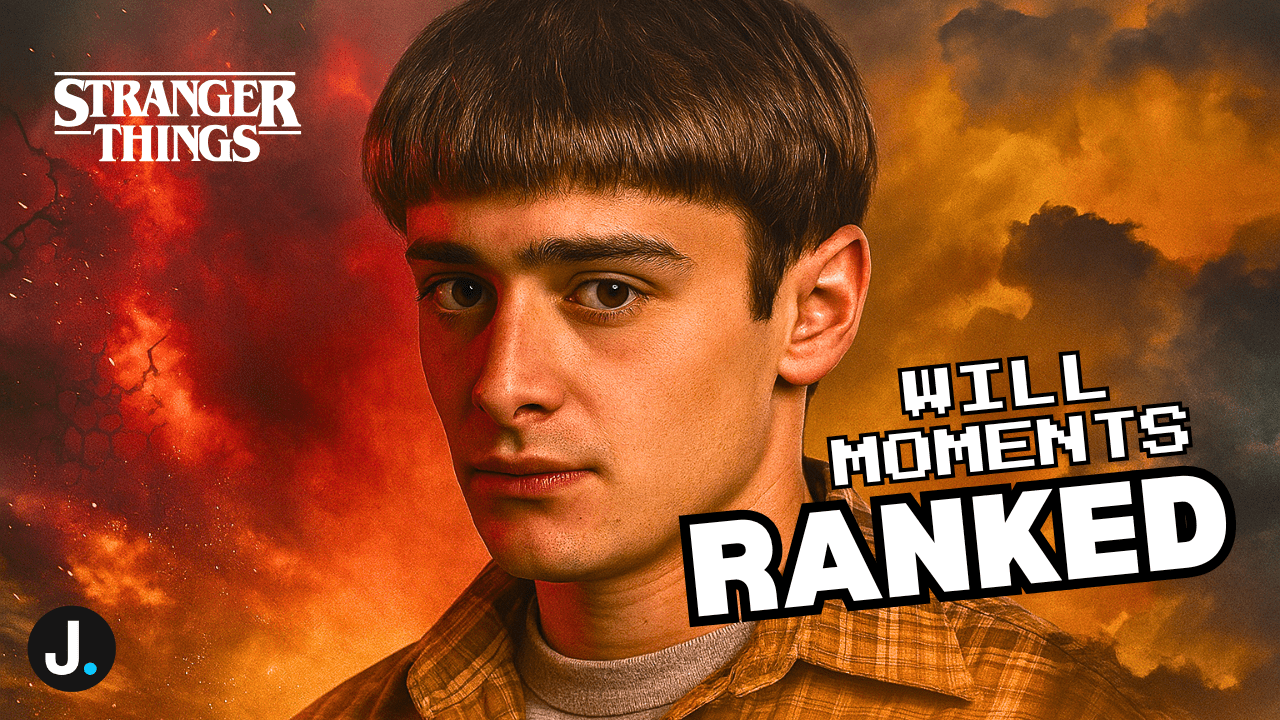
If there’s a character in Hawkins who has endured more than his fair share of misfortune, it’s Will Byers. From the moment he vanished in Season 1, setting off the frantic search that defines the series’ opening, to his possession by the Mind Flayer in Season 2, Will has been at the mercy of forces far beyond his control. Season 3 brought another twist: while his friends paired off and life moved on, Will found himself isolated, a ghost at his own birthday party. Then came the exile to California in Season 4, a physical and emotional displacement that only added layers to his struggle.
Fans have long speculated about how this continuous pattern of betrayal and neglect could affect Will’s psyche. The narrative breadcrumbs laid throughout the series suggest that the Duffer Brothers are planting seeds for a potentially darker turn. It is tempting to theorise: could the overlooked hero, the perpetual victim of Hawkins’ supernatural upheavals, become the ultimate antagonist?
David Harbour, who embodies the gruff but protective Jim Hopper, mused, “It’s definitely interesting to explore the depth of Will’s character,” while Finn Wolfhard, who plays Will’s devoted friend Mike Wheeler, chimed in that the idea of Will “turning” could make his arc “cool.” Their remarks hint at narrative intentions that respect both Will’s complexity and the audience’s appetite for unexpected twists.
The idea that Will could once again be drawn into the clutches of the Mind Flayer, or even take on a darker persona influenced by Vecna, feels both inevitable and tragic. It’s a narrative that balances sympathy for the character with the suspense of uncertainty: viewers are left wondering if the child who survived the Upside Down might become an agent of darkness rather than its victim.
One of the most compelling threads weaving through the Stranger Things tapestry is the psychic connection between Will and Vecna. From the moment this bond was established, it became clear that Will’s connection to evil in Hawkins runs deeper than mere coincidence. It is an intimate, unsettling link that exposes him to visions, influence, and trauma that few others endure.
This tether creates fascinating narrative possibilities. Will could act as a puppet, manipulated by Vecna or the Mind Flayer, while retaining glimpses of his former self. Alternatively, the series could explore a more introspective struggle, where Will’s fight against external malevolence mirrors the internal battle against his own darkness. The stakes are high because the audience knows Will’s history: trauma has shaped him, isolation has hardened him, and his connection to the Upside Down has given him insight—and vulnerability—that others cannot match.
The potential for Will to emerge as a “Big Bad” presents a riveting exploration of duality. Is he the innocent boy caught in a web of supernatural horrors, or is there a dormant capacity for darkness that the series has been hinting at since Season 1? Stranger Things has long toyed with moral ambiguity, and Will’s arc could embody the ultimate expression of this theme: a character torn between the forces of heroism and villainy, agency and manipulation, empathy and rage.
This psychic tether also raises philosophical questions about identity and choice. Even as Hawkins’ young heroes battle monsters from other dimensions, Will’s internal struggle reminds viewers that the greatest battles often occur within. If Season 5 chooses to delve into Will’s darker side, it would challenge audiences to wrestle with complex emotions: rooting for a character while fearing what he might become.
As November approaches, the tension surrounding Will Byers could not be higher. The final season has the opportunity to either cement Will’s role as a redeemed, triumphant hero or subvert expectations by exploring a darker, morally ambiguous path. Both routes offer narrative rewards, and both carry emotional stakes for audiences who have followed Will’s journey for over half a decade.
The comments from Harbour and Wolfhard signal that the creative team is aware of Will’s narrative potential, recognising that his story can be multidimensional. The finale may explore the interplay of trauma, identity, and destiny in ways that resonate with both long-time fans and newcomers alike. Will’s potential descent into darkness could offer catharsis and closure to themes that have simmered beneath the surface since the earliest episodes: the loss of innocence, the weight of responsibility, and the consequences of surviving the Upside Down.
Alternatively, a redemptive arc would allow Will to reclaim agency over his life, asserting himself against forces that have continually sought to control him. This would provide an emotionally satisfying resolution to his story, celebrating resilience and courage in a way that feels earned and poignant.
Stranger Things has always thrived on unpredictability, blending nostalgia with suspense, horror, and heartfelt character development. Will Byers’ fate in the final season exemplifies the show’s willingness to push narrative boundaries, challenge audience expectations, and explore the complex interplay between trauma and heroism. Whether he succumbs to darkness or rises triumphant, the emotional stakes have never been higher.
As Hawkins prepares for its final showdown, fans remain perched on the edge of their seats, imagining the twists, turns, and revelations that await. One thing is certain: Will Byers’ journey will be central to the final chapter, and his potential transformation into the “Big Bad” promises to test not only his character but also the moral and emotional investment of the audience.