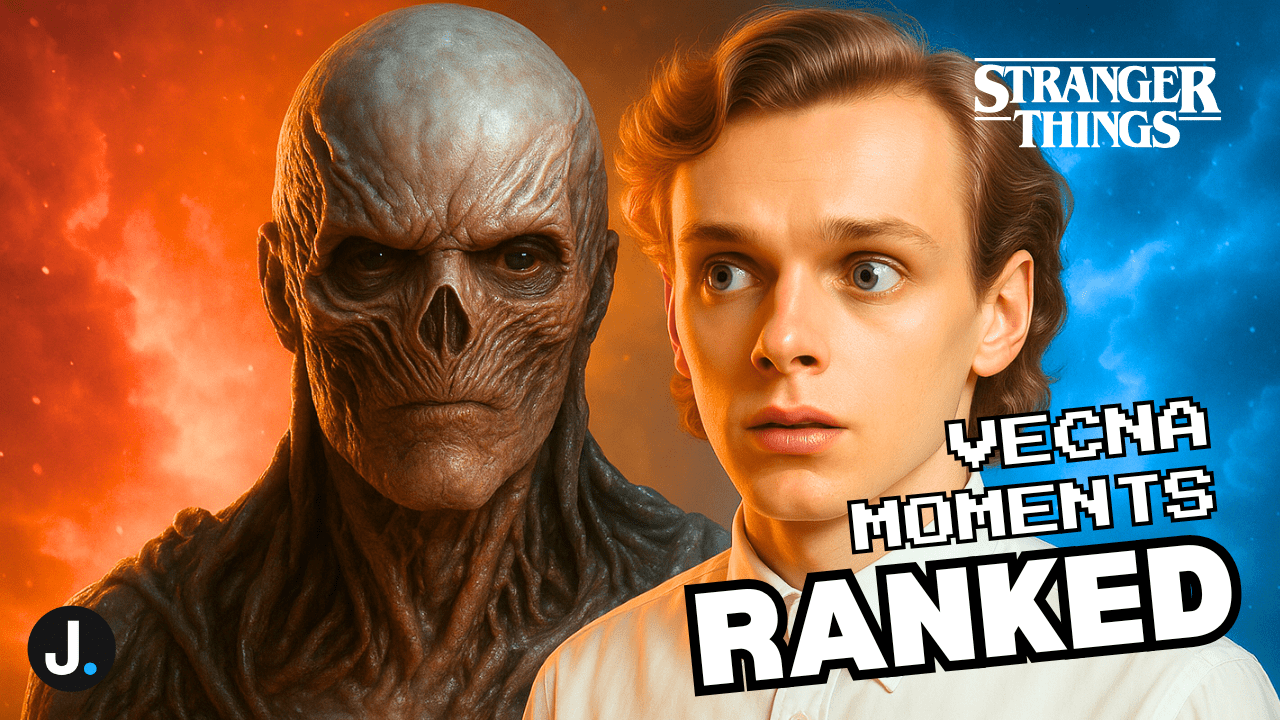
Jamie Campbell Bower’s portrayal of Vecna cements the character as a modern horror icon within the Stranger Things universe. Originally known as Henry Creel, Vecna’s story begins in the mid-20th century with a family hoping to contain his growing psychic abilities. Born to Victor and Virginia Creel, Henry’s early life was marked by instability and an innate, terrifying power that would soon wreak havoc on those closest to him. The family moved to Hawkins in 1959, seeking a fresh start, yet the relocation only exacerbated tragedy. Henry’s abilities allowed him to psychologically torment his mother and sister, ultimately culminating in their murders, for which his father was wrongfully imprisoned.
This harrowing origin story highlights the duality of Vecna as both human and monster. The Duffer Brothers illustrate how childhood trauma, isolation, and latent power can merge into malevolence. When Henry was taken to Hawkins National Laboratory by Dr. Martin Brenner, he became the lab’s first test subject, labelled “001.” Here, the sinister Soteria device was implanted to suppress his abilities, amplifying his resentment towards humanity and cementing the foundation for his future as Vecna.
The confrontation with Eleven, wherein she inadvertently removes his suppression chip, acts as the catalyst for Henry’s final transformation. His dark persona fully emerges, leaving a trail of death and despair before being cast into the Upside Down. The transformation is both literal and symbolic: Henry Creel is annihilated, replaced by Vecna, a creature who is simultaneously human, monstrous, and otherworldly.
Vecna’s Powers and Psychological Terror
Vecna’s presence in Hawkins embodies terror on multiple levels. Physically, he is grotesque yet mesmerizing, with elongated limbs, pale eyes, and a visage that merges tragedy and horror. His psychic and psychokinetic powers allow him to probe memories, exploit vulnerabilities, and summon nightmarish experiences that blur the line between reality and imagination. Victims caught in his curse are forced to relive their deepest fears, providing him with both entertainment and a mechanism of control.
The psychological dimension of Vecna’s villainy is perhaps most compelling. Unlike traditional monsters, he acknowledges the resilience of his victims, particularly Eleven and Max Mayfield. In a chilling display of sadistic respect, he remarks that Max is “much braver” than her brother, blending cruelty with an unsettling admiration that deepens the character’s complexity. Even as he manipulates minds and orchestrates terror, the psychic link he shares with his victims creates a two-way vulnerability, hinting at his dependence on human fear to assert dominance.
Vecna’s modus operandi recalls classic horror villains such as Freddy Krueger, yet the Duffer Brothers enrich him with psychological and existential weight. He is not just a predator; he is a reflection of trauma made manifest, a reminder that childhood suffering and human failings can create monsters far more frightening than any supernatural entity.
Stranger Things’ Vecna: Henry Creel to Supernatural Menace
Vecna represents a masterstroke of modern horror storytelling. By merging homage with originality, the Duffer Brothers craft a villain that pays tribute to slasher icons while retaining narrative depth. The comparisons to A Nightmare on Elm Street are deliberate: dream invasions, psychological torment, and horrifying set pieces all nod to Wes Craven’s work. Yet, Vecna is elevated by his tragic backstory and intricate relationships with Hawkins’ residents, ensuring that his terror resonates emotionally, not merely visually.
His presence also functions as a thematic focal point for the series. Vecna embodies the darkness within humanity—the destructive potential of unchecked power, resentment, and trauma. Through his interactions with Eleven, Max, and other teens, viewers are invited to explore moral ambiguity, the nature of evil, and the resilience required to confront forces both internal and external. Season 5 promises to expand this mythology further, potentially exploring Vecna’s influence on the Upside Down, his origins before Henry Creel, and the psychological ramifications for Hawkins’ heroes.
As Hawkins prepares for another round of supernatural chaos, Vecna stands at the centre of a narrative web that fuses suspense, horror, and human drama. Fans eagerly anticipate how his presence will challenge established alliances, test the limits of Eleven’s powers, and redefine the boundaries between fear, courage, and morality. His story is an exploration of what horror can achieve when it blends myth, emotion, and cinematic spectacle, ensuring that Stranger Things Season 5 will continue to thrill, terrify, and resonate on multiple levels.
The genius of Vecna lies in his duality: he is a villain to fear, a tragedy to pity, and a mirror reflecting the darkest corners of human potential. With Jamie Campbell Bower’s performance breathing life into his terrifying form, and the Duffer Brothers’ meticulous world-building, the stage is set for a Season 5 that will elevate Stranger Things from beloved sci-fi horror series to enduring cultural touchstone. As fans speculate on what lies ahead, the chilling invitation remains: confront the unknown, brace for nightmares, and remember that even in fiction, some darkness feels uncomfortably real.