At the heart of both Firestarter and Stranger Things is the story of a young girl with incredible abilities forced to navigate dangerous and exploitative circumstances. In Firestarter, Charlie McGee inherits pyrokinetic powers from her parents, who were unwilling participants in government experiments. Her struggle is as psychological as it is physical, balancing fear, agency, and moral choices while under constant threat.
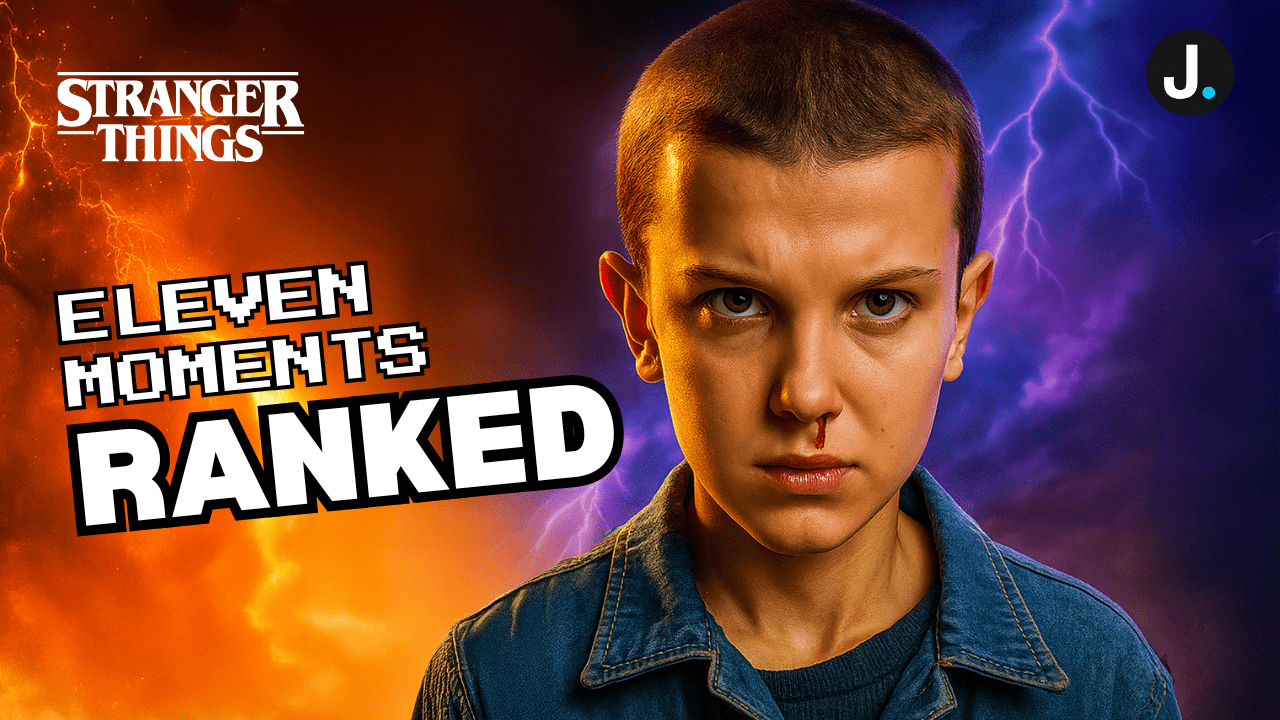
In Stranger Things, Eleven, played by Millie Bobby Brown, shares a similar journey. Her psychic and telekinetic powers place her in constant danger from both the Upside Down and human adversaries. The parallels to Charlie’s journey are evident: both girls are young, extraordinarily gifted, and hunted by forces that seek to control or exploit them. As Eleven grows from a frightened child into a formidable young woman, her arc mirrors Charlie’s trajectory in Firestarter, showcasing resilience, strategic thinking, and the moral dilemmas that accompany great power.
Millie Bobby Brown’s performance embodies this evolution. From Season 1 onwards, viewers witness Eleven learning to wield her powers defensively and, when necessary, offensively. The homage to Charlie is clear in the way Eleven confronts the dangers around her—striking back at oppressors, asserting agency, and defining her identity on her own terms. Both narratives celebrate young female protagonists who transform trauma and fear into a source of empowerment, a thematic resonance that amplifies the stakes of the series.
One of the most striking connections between Firestarter and Stranger Things lies in the presence of government oversight and manipulation. In King’s film, Charlie is relentlessly pursued by The Shop, a shadowy organization determined to harness her abilities for nefarious purposes. This constant threat creates tension and underscores a critical theme: the ethical boundaries of experimentation on human subjects, particularly vulnerable children.
Stranger Things mirrors this tension through Hawkins National Laboratory. Eleven, a product of similar experiments conducted by Dr. Martin Brenner (played by Matthew Modine), faces continuous surveillance and threats. The narrative echoes Firestarter in exploring the ethical complexities of scientific control, human exploitation, and the consequences of playing god.
Fans can spot the subtle nods throughout the series: the stark, sterile laboratory environments, the clinical detachment of authority figures, and the psychological trauma inflicted upon the children. The Duffer Brothers have masterfully built suspense and emotional weight into these scenes, reflecting the anxieties raised by King’s narrative. These Easter eggs are not superficial; they enrich the storytelling by grounding Eleven’s struggles in a lineage of classic horror while making them relatable for contemporary audiences.
The ultimate connection between Firestarter and Stranger Things is the use of power as a defensive and transformative tool. Charlie’s pyrokinesis evolves from a frightening burden into a formidable weapon she wields against those who threaten her and her father. Similarly, Eleven’s telekinesis transitions from a mysterious ability into a strategic means of survival and protection for her friends.
Throughout the series, fans witness Eleven channeling her powers in creative, often cinematic ways to confront both human and supernatural adversaries. The homage to Charlie is clear in the emphasis on self-defense and agency. Neither girl’s abilities are exploited merely for spectacle; they carry emotional, psychological, and ethical weight. The Duffer Brothers’ storytelling reflects this principle, portraying Eleven as a character whose growth is intrinsically linked to the responsible and thoughtful use of her extraordinary gifts.
This thematic mirroring reinforces why Firestarter serves as such a rich inspiration. Eleven’s battles are thrilling because they are personal, emotional, and morally complex. The show pays tribute to King’s work while amplifying its own narrative depth, providing fans with layered storytelling that blends nostalgia, horror, and coming-of-age dynamics.
Easter Eggs and Subtle References for Fans
Astute fans of both Stranger Things and Firestarter have noted several deliberate references throughout the series:
- Eleven’s early experiments in Hawkins Laboratory echo the government oversight seen in Firestarter, including surveillance, psychological testing, and the invasive control of her environment.
- The tension-filled chase sequences—where Eleven must evade authority figures—mirror Charlie’s escapes from The Shop, highlighting the recurring motif of a gifted child pursued by adults with questionable ethics.
- Cinematic choices such as dimly lit corridors, slow-burn suspense, and dramatic close-ups on the protagonists’ faces amplify the homage, creating a visual and emotional link between the two narratives.
These Easter eggs are sprinkled subtly, ensuring that casual viewers enjoy the suspense and drama, while longtime horror aficionados can appreciate the layered references to King’s 1984 classic. It’s a testament to the Duffer Brothers’ meticulous attention to detail and their love for 1980s horror and thriller cinema.
Both Eleven and Charlie are defined by resilience. Despite their youth, trauma, and immense power, they embody determination, moral courage, and the will to protect themselves and those they love. This thematic core is a powerful lens for viewing Stranger Things, particularly as the series approaches its climactic fifth season.
Fans anticipating Season 5 can expect to see Eleven pushed further into scenarios that test her limits, echoing the intense psychological and physical trials faced by Charlie in Firestarter. The connection between the two stories reinforces a central idea: extraordinary abilities bring extraordinary responsibility, and young women navigating such power must reconcile fear, control, and moral choice.
The Duffer Brothers’ storytelling ensures that these parallels are not mere homage—they are woven into the very fabric of the narrative, giving viewers a richer understanding of Eleven’s journey and her evolution from frightened child to empowered leader.
With the release of Stranger Things Season 5 looming in November 2025, fans have a chance to spot additional nods to Firestarter as the stakes rise. Eleven’s confrontation with threats both human and supernatural promises to echo Charlie McGee’s struggles in profound ways. From government machinations to the personal growth of a young girl wielding extraordinary powers, the thematic resonance will likely continue to deepen.
As viewers prepare for the series finale, the connections to Firestarter enrich the experience, offering both nostalgia for 1980s horror and insight into the timeless story of a gifted young girl battling forces beyond her control. Recognizing these references allows fans to engage more deeply, appreciating not only Eleven’s abilities but the broader cinematic heritage that informs her journey.
Whether it’s spotting the lab sequences, the ethical dilemmas of power, or the emotional stakes of self-defense, fans can now watch with an extra layer of insight. Stranger Things continues to honor its inspirations while crafting a unique, compelling narrative that spans horror, suspense, and heartfelt coming-of-age storytelling.
The influence of Firestarter on Stranger Things is subtle but powerful. From character parallels to thematic resonance and visual cues, the Duffer Brothers have built a series that respects its cinematic ancestry while innovating on its own terms. Eleven’s journey reflects the resilience, moral complexity, and empowerment seen in Charlie McGee, reminding viewers that behind every explosive or psychic display lies a story of trauma, courage, and personal growth.
As Season 5 approaches, fans can celebrate these cinematic Easter eggs, enjoying the layers of homage while immersing themselves in the high-stakes, nostalgic, and emotionally charged world of Hawkins. It’s a reminder that Stranger Things thrives in the details: the terror, the nostalgia, and the homage all combine to create a series that feels familiar, fresh, and unforgettable.