From its very first season, Stranger Things has built its reputation on meticulous attention to detail. The 1980s setting is more than backdrop; it’s a character in its own right. And within that world, costumes play a pivotal role in conveying personality, history, and mood. Enter Malgosia Turzanska, the genius behind the show’s costume design. Tasked with finding pieces that were period-accurate yet meaningful, she approached Season One with a keen eye for authenticity.
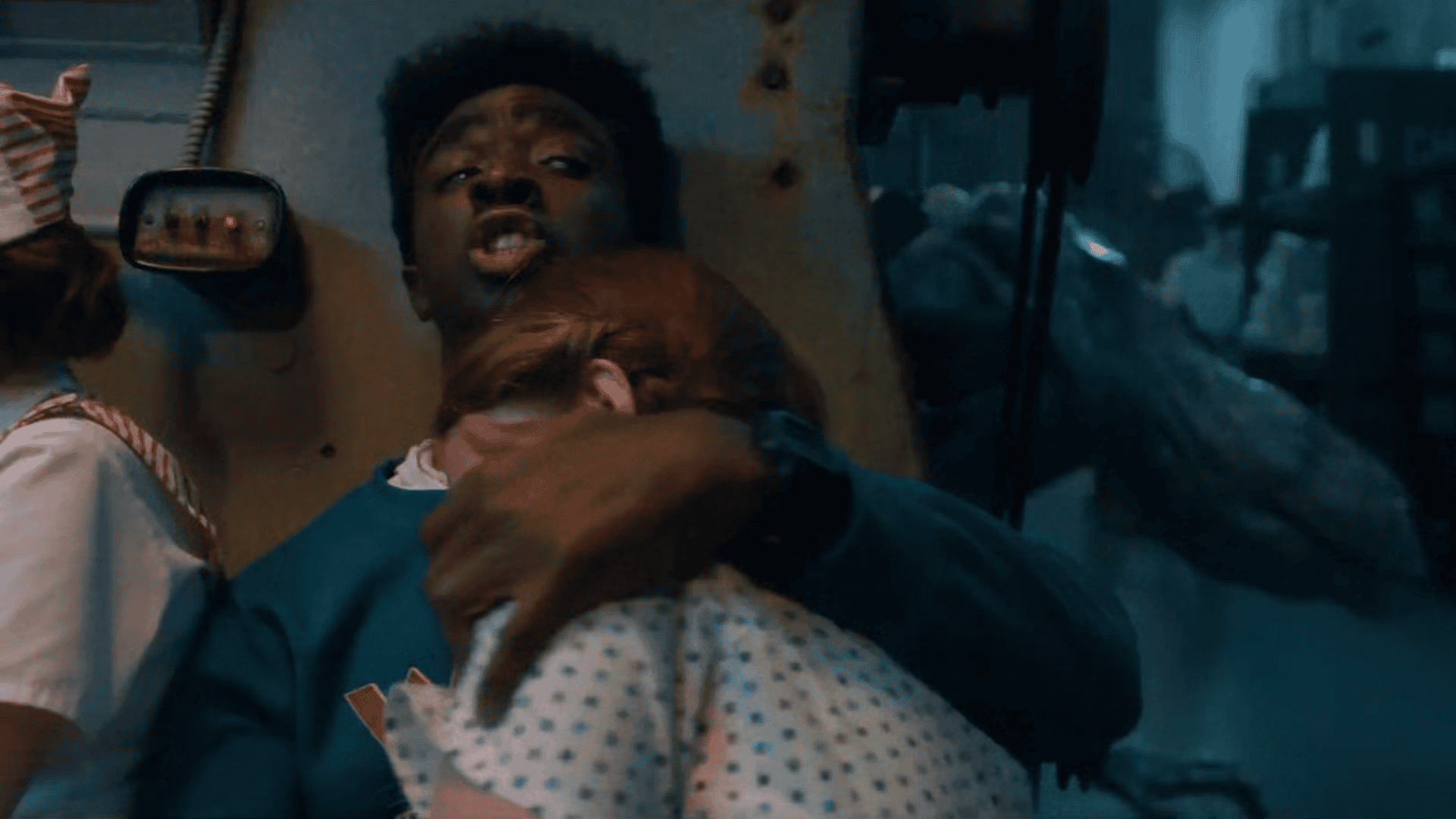
Lucas Sinclair, portrayed by Caleb McLaughlin, required a touch that would reflect his practical, resourceful nature while remaining grounded in the 1980s aesthetic. Turzanska scoured antique shops across the country, searching for items that were not only era-appropriate but also infused with subtle narrative depth. That’s when she stumbled upon a modest yet extraordinary treasure in Utah: a vintage Army belt, locked away in a cabinet.
At first glance, it seemed like just another prop. But when she examined it closely, she found something extraordinary—written on the back in sharpie was the name of its original owner: Lucas. Suddenly, what could have been a simple accessory transformed into a narrative bridge, connecting the fictional character to a real person from the past. This discovery perfectly encapsulates how Stranger Things transforms ordinary objects into vessels of storytelling.
The inclusion of the belt goes beyond aesthetic appeal; it enriches Lucas Sinclair’s character in ways that viewers might not consciously recognize. Lucas, throughout the series, embodies loyalty, courage, and a grounded sense of realism amid the supernatural chaos that envelops Hawkins, Indiana. By wearing a belt that had once belonged to another Lucas, the character channels a literal and metaphorical connection across time, adding depth to his portrayal.
Caleb McLaughlin brings Lucas to life with a blend of humor, fearlessness, and relatable adolescence, and the Army belt subtly reinforces these traits. The belt is sturdy, practical, and utilitarian—qualities that mirror Lucas’s personality, particularly when navigating the dangers of the Upside Down or standing as the pragmatic voice in his friend group. It’s a tangible reminder that even in a world filled with demogorgons and mind-bending horrors, Lucas remains tethered to a human, historical reality.
In a sense, the belt carries with it a story—its former owner, unknowingly, contributes to the fictional narrative of Hawkins. It’s a charming and poignant example of how physical artifacts can lend authenticity to storytelling, helping actors inhabit their roles more fully and audiences to immerse themselves in the world onscreen.
Stranger Things thrives on nostalgia, but its approach is never surface-level. Costumes, props, and set design are carefully curated to serve both as period references and as extensions of character psychology. The Army belt worn by Lucas is a perfect illustration of this philosophy.
By integrating such a meaningful piece, the show bridges decades, connecting modern viewers to a tangible past while reinforcing the reality of its characters. Each worn leather strap, buckle, or scuff on the belt tells a story, subtly reinforcing the sense that Hawkins is lived-in, authentic, and brimming with history.
As fans eagerly anticipate the release of Stranger Things Season 5 this November, stories like the one behind Lucas’s belt remind us that the series’ magic often lies in small details. While we’ll be bracing for Vecna’s return, the Upside Down’s horrors, and emotional farewells, it’s worth remembering the craftsmanship that has made the series so beloved. Costume pieces, props, and meticulous production choices like this Army belt create layers of realism and depth, enhancing every suspenseful, heart-wrenching, and nostalgic moment on screen.
The belt is a testament to Turzanska’s vision and the show’s broader commitment to authenticity. In a world where CGI and high-tech effects dominate, Stranger Things proves that small, tangible elements carry emotional weight. Lucas Sinclair’s belt isn’t just an accessory—it’s a symbol of continuity, realism, and the intimate connections that make the series resonate.
The tale of Lucas’s Army belt captures the essence of what makes Stranger Things so compelling. It’s not merely about the monsters, the supernatural thrills, or the 1980s pop culture callbacks. It’s about the layers of storytelling—visual, narrative, and emotional—that are built into even the smallest details.
From its discovery in a Utah antique shop to its place on Lucas Sinclair’s waist, the belt represents a bridge between real-world history and fictional narrative. It underscores the meticulous care of Malgosia Turzanska and the entire Stranger Things production team, who understand that authenticity creates immersion, and immersion creates attachment.
As the Hawkins crew faces the climactic threats of the Upside Down in Season 5, fans will once again be reminded of the series’ unique charm: the blending of nostalgia, supernatural intrigue, and human connection. Lucas’s belt is a small but powerful emblem of that craftsmanship—a story literally worn on the screen that connects past and present, reality and fiction, youth and history.
In a show where a Christmas lights alphabet can save the day, where friendship often triumphs over monsters, and where courage can be found in the most unexpected of places, even a simple Army belt carries the weight of story, character, and nostalgia. The magic of Stranger Things lies in the details, and Lucas’s belt proves that sometimes, the smallest objects hold the biggest stories.