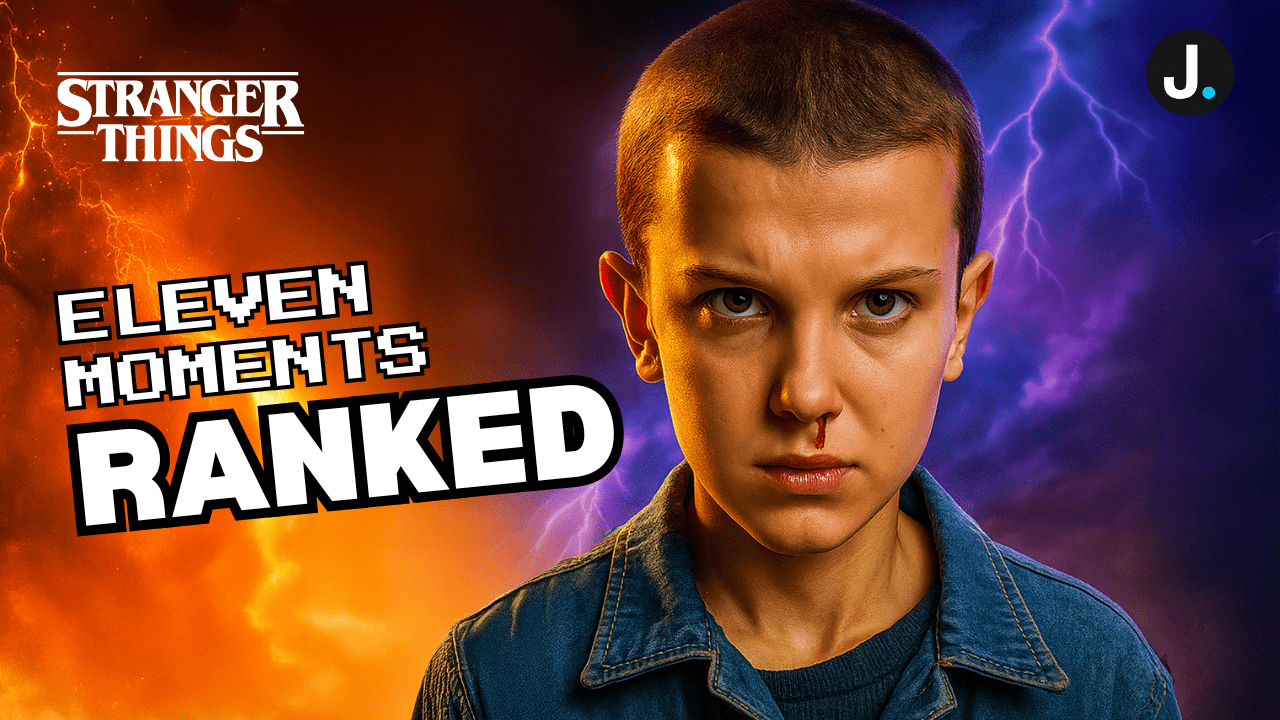
When Stranger Things premiered in 2016, one of the most memorable aspects of Eleven’s character was her shaved head. Millie Bobby Brown’s buzzcut quickly became iconic, signaling Eleven’s identity as a lab experiment, her isolation, and her emerging powers. The look became a symbol of the character and a visual shorthand for her story, inspiring cosplayers and fan art alike.
By the time Stranger Things 4 was produced, the series required flashbacks to Eleven’s time in the Hawkins lab, meaning her buzzcut had to return. After years of growing her hair, Millie Bobby Brown could not shave her head again, so the production team used a combination of wigs and prosthetic techniques to recreate the style. Sarah Hindsgaul, the show’s hair designer, described it as the most challenging wig project she had worked on.
The process began with preparing Millie’s natural hair. It was wetted, coated with gel, and tightly wrapped to create a smooth surface without bulk. The wrapped hair was set under heat to maintain its shape, producing a natural-looking scalp for the wig to sit on. Wig artist Rob Pickens then added silk pieces to mimic the appearance of skin, allowing the buzzcut to look realistic under studio lighting. The wig was then cut and textured to match the original short style from Season 1. Three wigs of varying lengths were used to depict different stages of hair growth in the flashback sequences.
Hindsgaul described the importance of detail in the process. Even small shadows or uneven surfaces could break the illusion on camera. The result was nearly indistinguishable from Millie’s real buzzcut, as evidenced by social media reactions when Season 4 premiered. The careful combination of hair wrapping, silk prosthetics, and precise cutting allowed the production to recreate a key visual element of Eleven’s character without requiring the actress to shave her head.
The return of the buzzcut carried more than visual significance. It served as a reminder of Eleven’s past, highlighting her evolution from a lab-controlled child to a young woman with autonomy and agency. In earlier seasons, her hair reflected her growth, moving from a shaved head to a style with bangs and accessories. Reintroducing the buzzcut in flashbacks reinforced the psychological and narrative context of her early trauma and the environment that shaped her abilities.
The collaboration between Hindsgaul and Brown was central to achieving the effect. Brown, who had grown up with the character, trusted the creative team to recreate an essential aspect of her appearance. Hindsgaul emphasized the importance of trust and precision in her work, noting that even minor errors could compromise the authenticity of the character. The wig was not a mere costume piece; it was a storytelling tool, designed to maintain continuity and support the narrative of Eleven’s history.
Attention to these details reflects the overall production philosophy of Stranger Things. The series consistently prioritizes accuracy and realism, even in small elements such as hairstyles. Props, costumes, and set design are all carefully constructed to reinforce the 1980s setting and the characters’ emotional journeys. The buzzcut is one example of the series’ commitment to using visual design to support storytelling.
With Stranger Things 5 scheduled for release in November 2025, the recreation of the buzzcut in previous seasons exemplifies the level of care the production applies to character continuity. Eleven’s hair represents both the character’s history and the technical skill required to bring her to life on screen. The process demonstrates the intersection of practical effects, hair design, and narrative purpose in modern television production.
In conclusion, Eleven’s buzzcut in Stranger Things 4 was achieved through a combination of hair wrapping, silk prosthetics, and precise wig styling. The effect preserved the visual identity of the character while respecting Millie Bobby Brown’s growth as an actress. It also reinforced the psychological and narrative significance of her early experiences. The effort highlights the attention to detail that characterizes the series and illustrates how technical artistry contributes to storytelling in contemporary television. Every strand, wrap, and cut had a purpose, showing how production techniques can support character continuity and narrative clarity.