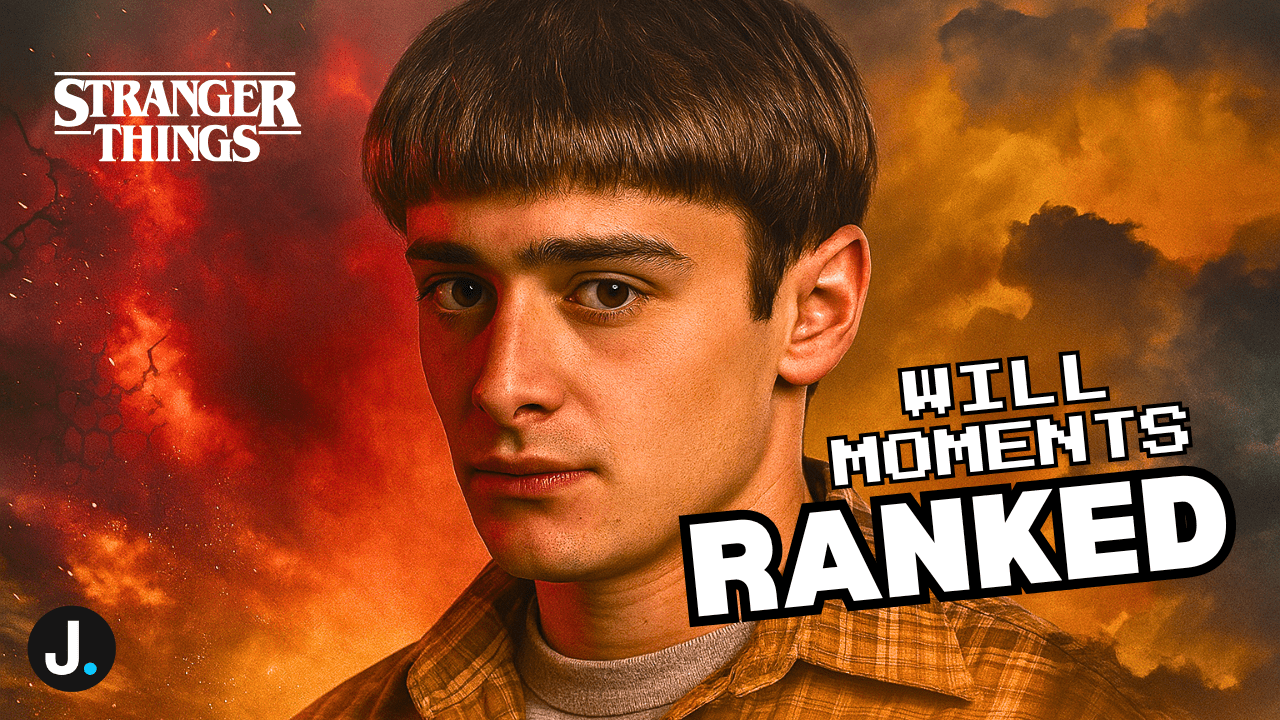
From the very first moment Will Byers disappears into the Upside Down, it’s clear his journey is unlike that of his friends. While Mike, Lucas, and Dustin often unleash playful expletives as a way to navigate fear, frustration, or excitement, Will’s dialogue is conspicuously free of swearing. His innocence is a conscious storytelling choice, reflecting the duality of his existence: a child confronting horrors beyond comprehension while maintaining the heart of a kid who simply wants to belong and survive.
Schnapp explained in interviews, “Will is just a kid trying to find his way through all of this,” a statement that captures the essence of his portrayal. Unlike his peers, who often resort to colourful language to assert themselves or express tension, Will confronts his demons internally, making his bravery quieter, subtler, and profoundly empathetic.
This approach distinguishes Will in a show teeming with supernatural danger, morally ambiguous adults, and adolescent rebellion. The Duffer Brothers deliberately avoided giving Will the typical boyish bravado, ensuring that his character preserved a sense of moral clarity. In a series where nearly everyone has moments of anger, panic, or defiance punctuated with strong language, Will’s restraint feels intentional and resonant. It’s a reminder that courage and strength do not always need to be shouted or swore aloud—they can exist in quiet resilience and steady determination.
Maintaining Will’s clean dialogue is not merely a stylistic choice; it serves as a narrative tool that reinforces his emotional depth. While other characters grapple with external threats using words as weapons or shields, Will’s battles are internal. The Upside Down terrorises him physically and psychologically, yet his language choices reflect a character who has retained a core of childlike purity.
Vulture highlighted this dynamic, noting, “For the most part, the kids are in a world where real monsters exist, and they have to navigate that by saying a lot of things they wouldn’t say in front of their parents.” Will’s exceptionality here is striking—his lack of swearing signals a unique moral centre and provides a bridge for younger viewers or those looking for a character whose heroism is grounded in empathy rather than rebellion.
Moreover, Will’s untainted dialogue contrasts sharply with the darker themes that permeate Stranger Things. He navigates trauma, alienation, and supernatural peril without resorting to crude language, underscoring the deliberate care the Duffer Brothers take in shaping his character. This choice allows the audience to experience fear, suspense, and horror through the lens of a character whose innocence has been preserved, creating a poignant counterpoint to the series’ grim undercurrents.
It also enhances relatability. Viewers who have faced challenging situations without outward displays of aggression or defiance see themselves reflected in Will. The avoidance of swearing reinforces his status as a grounding force in Hawkins, someone whose emotional journey provides balance against the chaos of his peers’ antics and the ever-looming threats of the Upside Down.
As anticipation builds for Stranger Things 5, the stakes for every character have never been higher. Will Byers has always been central to the story, his experiences forming both the emotional and narrative backbone of the series. Yet with escalating supernatural threats, fan speculation naturally turns to whether Will’s spotless dialogue record will hold. Will the events of the final season push him to a breaking point, compelling him to let loose in a way we’ve never seen?
Schnapp himself teased, “It’s been incredible to see how much Will has grown. I think fans will be surprised by what’s to come.” This hint suggests that while Will will undoubtedly face trials that challenge his resilience, the core of his character—the kindness, bravery, and emotional intelligence—may remain intact. The contrast between innocence and exposure to escalating horror provides fertile ground for tension, making viewers wonder if and when Will’s moral compass might bend under pressure.
This dynamic makes his character journey compelling and emotionally layered. Unlike characters who rely on sharp words or brashness to assert themselves, Will’s development has been more subtle. His courage is internal, his victories quieter, and his triumphs more relatable because they come from perseverance and intellect rather than force or expletives. The final season may amplify these traits, positioning him as both an emotional anchor and a narrative pivot.
Fans are also eager to see how Will’s relationships with his friends and family evolve in the concluding season. His dynamic with Mike, Eleven, Lucas, and Dustin has always been central to the series, and his continued moral grounding may serve as a stabilising influence during crises. Will’s innocence is not just a quirk—it’s a lens through which viewers understand the stakes, sympathise with the characters, and emotionally invest in the outcomes.
Noah Schnapp’s unique position within the Stranger Things ensemble highlights the careful character construction that has made the series a cultural phenomenon. The Duffer Brothers’ decision to shield Will from swearing ensures that his narrative trajectory remains anchored in childlike authenticity, providing contrast to the morally complex, sometimes reckless, behaviour of other characters.
This design choice enriches the storytelling. It reminds audiences that heroism can take many forms, and that strength, resilience, and bravery do not require defiance expressed through adult language. Will’s innocence becomes a narrative tool, intensifying emotional resonance, grounding the supernatural chaos, and giving viewers a character to root for whose integrity remains unassailable.
It also illustrates the nuanced understanding the Duffer Brothers have of their audience. Stranger Things appeals to a multi-generational fanbase, from those who revel in ’80s nostalgia to younger viewers discovering the series for the first time. Will Byers becomes a touchpoint for audiences seeking relatability, moral clarity, or simply a character who embodies hope in a world rife with darkness.
Looking ahead to the finale, one of the most intriguing questions is whether Will Byers will retain his squeaky-clean dialogue record. As Hawkins descends further into chaos and the Upside Down threatens more than ever, will his restraint continue to serve as a narrative foil for his peers’ antics? Or will the emotional intensity of the final season provoke a crack in his moral shield, adding a layer of complexity to his character arc?
Schnapp’s performance has always balanced vulnerability with resilience, and his unblemished record of dialogue is part of what makes him stand out in a series known for tension, horror, and occasional irreverence. Maintaining this trait allows the audience to experience the story through a lens of emotional authenticity, where fear, courage, and trauma are expressed without the crutch of expletives.
It’s a subtle but powerful storytelling choice. By preserving Will’s innocence, the show offers a counterbalance to its darker, more violent, or more morally ambiguous elements, creating a richer viewing experience. As the final season unfolds, every line Will delivers will carry weight, embodying both the stakes of the narrative and the heart of the series.
In a show where monsters lurk in shadowy realms, friendships are tested, and the line between right and wrong often blurs, Will Byers’ innocence remains a remarkable constant. Noah Schnapp’s ability to convey fear, hope, and resilience without ever swearing highlights both his talent and the creators’ intention to craft a morally grounded, relatable character amidst escalating chaos.
As Stranger Things 5 approaches, Will’s status as the only cast member yet to swear on screen encapsulates the emotional resonance of his journey. His character reminds viewers that strength can exist in restraint, that courage can be quiet, and that innocence can endure even when confronted with the horrors of the Upside Down. The final season promises high stakes, emotional intensity, and narrative surprises, but Will’s unique portrayal will continue to serve as the heart of Hawkins, a beacon of humanity in a world teetering between reality and nightmare.
Fans will be watching closely, not just for plot twists or supernatural battles, but for every subtle choice in Will’s dialogue, every expression of vulnerability, and every act of quiet heroism that has made him one of the most compelling characters in modern television.