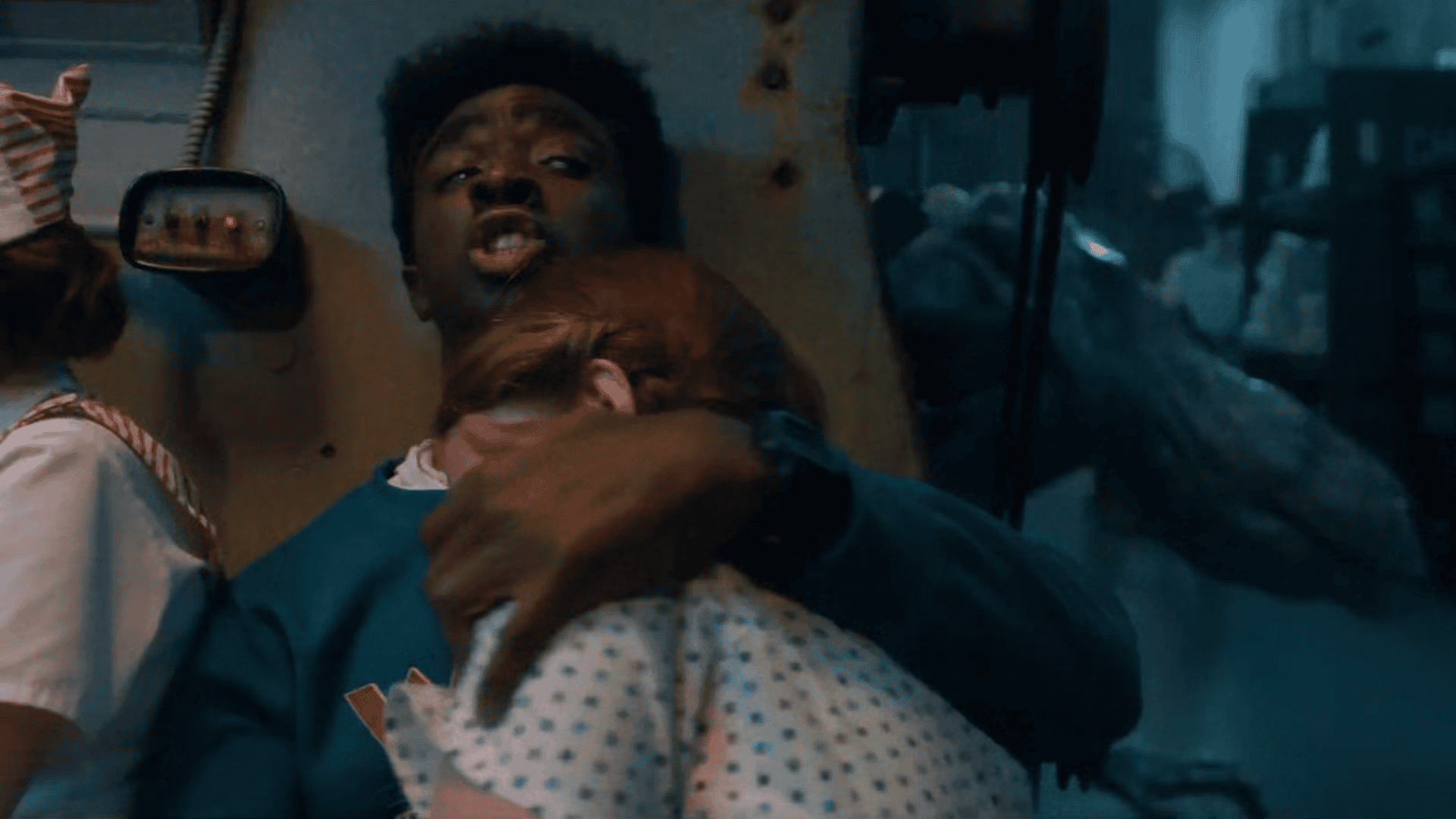
When Stranger Things introduced Eddie Munson in Season 4, played by Joseph Quinn, he arrived like a rock-and-roll hurricane in Hawkins. The head of the Hellfire Club, Eddie had charisma, charm, and a devil-may-care attitude that instantly made fans adore him. His flair for dramatic entrances, philosophical banter about heavy metal, and the sheer sense of danger he exuded made his eventual demise all the more gut-wrenching. Facing off against the terrifying Demobats in the Upside Down, Eddie met a tragic end that had Twitter trending, TikTok flooded with tributes, and Reddit threads dedicated to lamenting the loss of the ultimate outsider-hero.
Yet, in the world of Stranger Things, death is rarely permanent, and fan imagination thrives in the cracks between canon and speculation. Enter the theory sweeping fan forums: could Eddie Munson return as Kas, the vampire righthand man of Vecna straight out of Dungeons & Dragons lore? For those steeped in D&D mythology, Kas serves as a loyal lieutenant with a penchant for betrayal—a perfect foil to Vecna’s tyrannical rule. The parallels between Eddie and Kas are too tantalizing to ignore. Eddie’s spiked trash-can weapon, his tree-branch knife, and his audacious fighting style mirror Kas’ iconic spiked shield and deadly sword. Fans argue that these props may have been carefully planted Easter eggs, foreshadowing a resurrection or transformation that could redefine Eddie’s narrative arc.
The idea of Eddie returning, wielding dark power under Vecna’s command, only to eventually seek revenge, fuels an emotional rollercoaster. Fans imagine him straddling the line between hero and antihero, his charm now twisted with the edge of supernatural menace. In the multiverse of Hawkins, where monsters, dimensions, and teen angst collide, this theory feels eerily plausible.
The Upside Down as Dungeons & Dragons: Why Eddie’s Return Makes Sense
To understand why Eddie Munson as Kas resonates so deeply, it helps to look at the Upside Down itself. This eerie alternate dimension, dripping with mold, shadow, and the screams of lost souls, functions as Hawkins’ real-world D&D dungeon. Creatures from the show, from Demogorgons to the Mind Flayer, read like pages from a monster manual. The stakes are measured in hit points, terror, and narrative significance.
Eddie’s arc, woven into this chaotic tableau, is full of symbolic resonance. His personality, rebellious yet loyal, mirrors the archetypes found in D&D campaigns. He embodies the chaotic neutral player who bends the rules, challenges authority, and ultimately sacrifices for his friends. His death at the claws of Demobats felt narratively satisfying yet incomplete. Fans see Kas as a natural extension of Eddie’s story: a supernatural avatar who can wield agency in a world that previously cut him down too soon.
The visual evidence bolsters the theory. In Season 4, Eddie’s weapons were far from ordinary: a trash can lid adorned with spikes and a knife tied to a branch are eerie echoes of Kas’ legendary gear. Even the way Eddie navigates the Upside Down—recklessly, yet skillfully—suggests a character ready to evolve. The show’s creators, Matt Duffer and Ross Duffer, have confirmed Eddie’s death, but their universe bends reality, death, and space-time to suit the narrative. Within that creative elasticity, the fan theory thrives.
Additionally, the connection between D&D and the show itself reinforces the plausibility. Dungeons & Dragons in Stranger Things acts as a narrative bridge, connecting childhood play to life-or-death stakes. When characters roll dice in Hawkins basements, they are unknowingly strategizing against forces that are all too real. Eddie as Kas would extend this metaphor: a character who transitions from board-game fantasy to full-scale Upside Down menace. Fans revel in these intersections of fandom, mythology, and character evolution, creating endless speculation that blurs the lines between canon and imagination.
Imagining Eddie Munson’s Resurrection
As Season 5 looms, fan theory threads spin with excitement. Could Eddie return, now a dark, D&D-inspired version of himself, ready to challenge Vecna from the inside out? Could Kas-Eddie operate as a kind of antihero, wielding vengeance while wrestling with the fragments of his former personality? The possibilities are electrifying.
Imagine the emotional payoff: Hawkins’ beloved outsider, once a beacon of charisma and sacrifice, returns transformed yet familiar. He confronts the villain responsible for his death, adding layers of suspense and poignancy to the narrative. Fans speculate about epic confrontations, strategic alliances, and moments of pathos where Eddie interacts with the living characters who loved him, particularly those in the Hellfire Club or Eleven’s circle. The tension between loyalty, revenge, and redemption could anchor the emotional stakes of the final season.
Even if Eddie never physically returns, fan speculation illuminates his narrative importance. His presence in the collective imagination of the fandom keeps the story alive, creating spaces for analysis, discussion, and creative exploration. The debate over whether he becomes Kas or remains a memory underscores the enduring power of Stranger Things: it thrives on blending horror, nostalgia, and heartfelt human connection.
Moreover, Eddie’s theoretical resurrection reflects a broader narrative trend within the series: the malleability of life and death in the Upside Down. Characters have returned, survived impossible odds, and evolved in ways that defy expectations. From Eleven’s psychic feats to Will Byers’ temporal anomalies, the universe of Hawkins is fertile ground for fan-driven speculation. The theory of Eddie as Kas fits seamlessly into this established logic.
Why Fans Are So Invested in Eddie Munson
Beyond narrative mechanics, Eddie Munson resonates because of who he is. He represents the outsider, the misunderstood rebel who fights for friendship and honor against overwhelming odds. Fans see themselves in his defiance, wit, and unwavering loyalty. His death, while heroic, left a vacuum in the emotional ecosystem of the show.
The possibility of his return—through resurrection, transformation, or metaphorical presence—rekindles a sense of hope and narrative closure. It also opens doors for discussions about loyalty, betrayal, and morality in a world where good and evil are rarely absolute. If Eddie returns as Kas, it allows the series to explore moral ambiguity in a visceral, emotionally charged way. Hawkins becomes more than a town under siege; it becomes a canvas for exploring human—and now superhuman—choices under pressure.
What makes Stranger Things such a cultural phenomenon is its ability to inspire fan engagement at an extraordinary level. Reddit threads, YouTube deep dives, and TikTok breakdowns dissect every weapon, line of dialogue, and camera angle for hidden meaning. Eddie Munson, given his popularity and dramatic arc, has become a centerpiece of this collective detective work.
Fan theories about Kas-Eddie exemplify this dynamic. They mix canon knowledge, visual cues, D&D lore, and emotional attachment to craft a plausible path for the character. These discussions extend the life of the series between seasons, enrich the viewing experience, and demonstrate how invested audiences have become in the intricate storytelling.
Stranger Things Season 5 and the Final Battle in Hawkins
As we approach the final episodes, the stakes for Hawkins could not be higher. Vecna looms large, supernatural threats escalate, and the emotional resonance of long-standing characters reaches a peak. Eddie Munson’s potential return adds another layer of tension, hope, and complexity. Whether as Kas, a spectral force, or a memory driving the heroes forward, his presence amplifies the suspense.
Season 5 promises to tie together threads from all four previous seasons, including unresolved arcs for Eleven, Mike, Will, Max, and yes, the Hellfire Club. Fans are bracing for a finale that combines horror, nostalgia, emotional catharsis, and the kind of pop-culture Easter eggs that have become a hallmark of Stranger Things. The series finale may answer questions about the Upside Down’s origins, the ultimate fate of Hawkins, and the legacy of its beloved characters.
In the end, Eddie Munson’s story—whether concluded or resurrected—underscores the narrative richness of Stranger Things. It reminds us why viewers invest so deeply in the series, why fan theories flourish, and why Hawkins has captured hearts across generations. The intersection of human emotion, supernatural stakes, and playful pop-culture homage creates a universe where anything feels possible, and Eddie Munson’s fate remains a tantalizing mystery.
Whether he returns as a vengeful vampire, a spectral guide, or simply as a cherished memory, Eddie Munson embodies the essence of Stranger Things: bravery, friendship, and defiance in the face of otherworldly horror. As November 2025 approaches, fans everywhere will be watching Hawkins, rolling their own dice, and imagining the possibilities for their favorite Hellfire Club leader in the Upside Down.