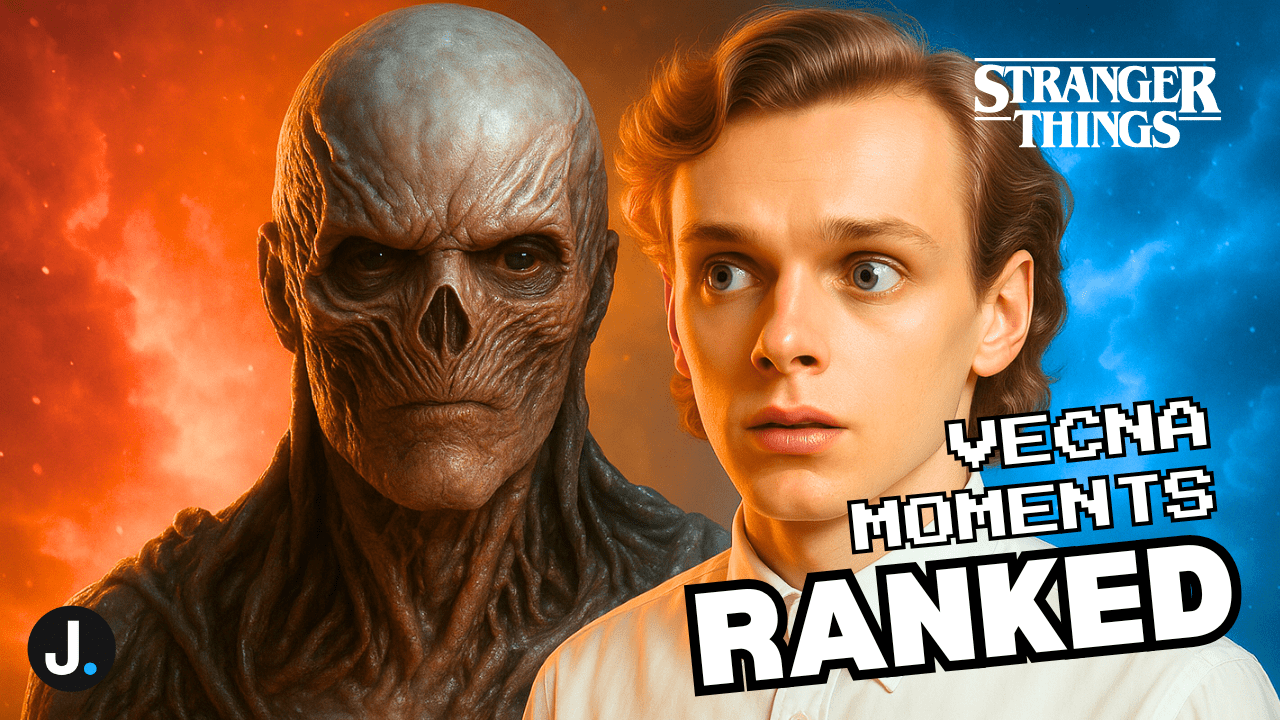
As Stranger Things 5 approaches, horror fans have their eyes glued to the screen, and much of that anticipation revolves around Vecna, the monstrous yet strangely alluring villain who has captured the imagination of the internet. Behind the scenes, the journey of bringing this character to life is as fascinating as anything happening in Hawkins itself. Enter Barrie Gower, the mastermind makeup artist whose previous work on Game of Thrones’ Night King cemented his reputation for terrifying yet stunning creature design.
When the Duffer Brothers approached Gower in November 2019, they weren’t seeking another abstract creature like the Demogorgon. “They had just seen some of our work in Chernobyl for HBO and they were fans of our work doing the radiation burn victims,” Gower shared with Den of Geek. This reference might seem odd for a fantasy horror show, but it underscored a crucial intent: Vecna had to feel real, tactile, and horrifyingly human. The Chernobyl-inspired burn aesthetics gave Gower the palette to craft a villain who could inhabit both our world and the Upside Down.
Gower’s team collaborated closely with visual effects artist Michael Mayer, transforming concept art into a practical, wearable design. “It’s actually very close to what we see in the final show now,” Gower explained, highlighting the seamless fusion of creative vision and technical execution. The decision to employ prosthetics rather than rely solely on CGI allowed Vecna to exist as a tangible presence on set, reacting naturally to actors and enhancing the horror of his interactions with the Hawkins crew.
How Henry Creel Turns Into Vecna in Stranger Things
What sets Vecna apart from previous Stranger Things antagonists is the intertwining of human tragedy with supernatural menace. Known in his past as Henry Creel, or Number One, Vecna’s story is entwined with the human characters, providing narrative weight that elevates him beyond a mere monster. Jamie Campbell Bower’s portrayal adds layers of charisma and empathy, creating a villain whose motivations stem from pain, abandonment, and the grotesque consequences of unchecked power.
Gower acknowledged the narrative importance of these layers, stating, “Seeing the show and speaking to Jamie now – we’re really pleased with the actual story arc of Number One. It is sort of running concurrently with the character of Vecna, even though it’s in flashback.” This humanisation allows audiences to feel fear and fascination simultaneously, making Vecna compelling in ways the Demogorgon could never be.
The practical effects were crucial in maintaining this delicate balance. Every layer of prosthetic, from translucent skin to a glossy finish, suggested someone who had survived decades in the Upside Down. “We always had in mind that this character’s presumably lived in the Upside Down for the last 10-15 years or so,” Gower added. The result is a villain who feels lived-in, whose physicality tells a story as haunting as his dialogue or actions.
Stranger Things Fans Think Vecna is Sexy Thanks To Jamie Campbell Bower
Vecna’s reception has been as unexpected as it is enthusiastic. Beyond terror, fans have responded with fascination, dubbing him “sexy” across Twitter and creating a flurry of memes. Gower attributes this phenomenon largely to Jamie Campbell Bower, admitting with a chuckle, “I think it’s down to Jamie. I mean, he’s a sex icon.” The combination of physical beauty, performance, and horrifying presence has transformed Vecna into a character that sparks both fear and fandom adoration.
The response perfectly encapsulates how Stranger Things blends nostalgia, horror, and pop culture commentary. Vecna is simultaneously a nod to classic 1980s horror villains and a modern creation with enough charisma to ignite fan theories, fan art, and social media engagement. “We couldn’t have asked for anything better,” Gower said, reflecting on both the execution of the design and the reaction it generated.
Vecna stands as a testament to the collaborative artistry of television. From the Duffer Brothers’ writing and vision to Gower’s practical effects and Bower’s performance, every element converges to create a villain who is unforgettable, horrifying, and, surprisingly, charming. As viewers prepare for the final season, Vecna reminds us why Stranger Things has captured hearts, minds, and nightmares alike.
Practical effects, humanised narratives, and design rooted in realism distinguish Vecna from previous monsters, showcasing the meticulous care that goes into modern creature creation. He is a perfect example of how horror can be both emotionally resonant and visually spectacular, combining decades of practical effects knowledge with contemporary storytelling.
As the countdown to Stranger Things 5 continues, Vecna’s presence promises to elevate the series’ final chapter. He demonstrates that monsters in television can be more than frightening—they can be central to a story’s emotional and thematic resonance, creating characters that haunt audiences long after the final scene.
With Barrie Gower’s design genius, Jamie Campbell Bower’s magnetic performance, and the Duffer Brothers’ narrative mastery, Vecna cements his place in television history as one of the most compelling villains in modern pop culture. He is terrifying, tragic, alluring, and iconic—a perfect embodiment of what makes Stranger Things a cultural phenomenon.