At the heart of Stranger Things’ chilling mythology lies a careful weaving of nostalgia, horror, and adolescence, and Vecna embodies all three. Matt and Ross Duffer, the twin creators behind the series, have openly discussed how their formative years shaped the monsters and mysteries that haunt Hawkins. In an interview with USA Today, Matt shared a particularly striking anecdote:
“Before Matt Duffer ever watched A Nightmare on Elm Street, a babysitter he had growing up in North Carolina told him the legend of the sweater-clad, dream-invading clawed ghoul Freddy Krueger. When he was 3 years old. ‘Even now I’m like, ‘Wait, why was she telling me that?’”
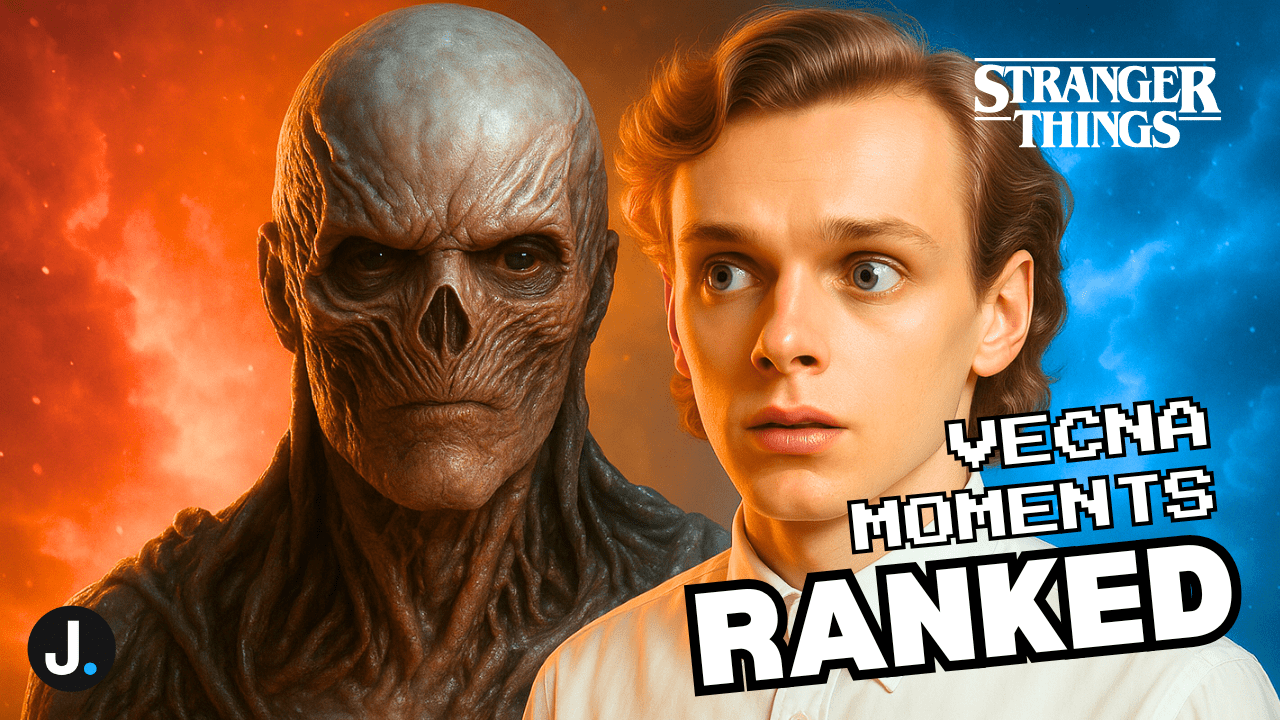
This early exposure to fear planted a seed that would later grow into the nightmarish visage of Vecna. Drawing from the physical grotesqueness of Freddy Krueger, the sadistic intelligence of Pinhead from Hellraiser, and the unsettling eeriness of Pennywise from It, the Duffer brothers sought to create a villain that struck both physically and psychologically. Vecna’s terrifying presence resonates because it taps into primal fears: the kind that keep you checking your bedroom corners at night.
Matt elaborated on their intentions: “We really wanted to go scary and explore the types of villains that shook us the most when we were kids.” The goal was clear: to design a villain that would haunt audiences on multiple levels, merging childhood nightmares with the series’ own supernatural framework. Every gnarled limb, every ominous shadow cast by Vecna, is designed to echo the horror icons that defined the Duffers’ youth, while also grounding the fear in the reality of Hawkins.
Creating Vecna involved more than just a spooky silhouette. Unlike previous monsters in the series, such as the Demogorgon, Vecna needed to feel intelligent, sentient, and calculated. “Unlike the Demogorgon, who has a Jaws-like ‘Yeah, he eats you’ vibe, they’re intelligent, they're sentient, they're there,” Matt explained. This emphasis on sentience meant that the character could interact with protagonists in ways that required nuanced performances and complex narrative stakes.
Bringing Vecna to life was a labor-intensive process. Jamie Campbell Bower, the actor portraying the villain, endured eight-hour daily sessions of hair, prosthetics, and makeup. These transformations were not merely cosmetic—they were functional, designed to allow Bower the mobility and expressiveness needed to convey intelligence and malevolence. On-set, the crew often played the Hellraiser score during his appearances to cultivate a palpable tension. “Everybody was on edge. It was really fun,” Matt said, capturing how the creative environment itself contributed to the authenticity of fear on screen.
The interplay between practical effects and digital enhancements further solidified Vecna’s terrifying aura. While CGI could have simplified the process, the Duffer brothers chose to lean into tangible horror. The texture of his skin, the sinewy distortion of his limbs, and the grotesque detail of his face are all designed to feel disturbingly real, enhancing both the audience’s immersion and the actors’ performances.
Vecna’s horror was not contained to the screen. The cast themselves were affected by the villain’s presence, which shaped their performances in crucial ways. Sadie Sink, who portrays Max, noted that Vecna’s tangibility made it easier to portray authentic fear:
“Vecna was ‘so scary’ that it was easier to act afraid: ‘There's less to imagine.’”
Similarly, Joe Keery emphasized how interacting with a fully realized villain elevated his performance:
“Having that as opposed to just a tennis ball on the end of a stick is infinitely more helpful.”
This commitment to creating a palpable horror figure allowed actors to engage with the narrative more deeply, translating into performances that feel authentic and visceral to viewers. For fans, this meant that the terror wasn’t just implied—it was experienced, enhancing the suspense and making every encounter with Vecna pulse with danger.
Vecna’s design, inspired by the classic villains that shaped the Duffers’ own childhoods, also serves a narrative purpose. He is not merely an obstacle to be defeated; he embodies the inner fears of Hawkins’ youth. By connecting him to Freddy Krueger, Pinhead, and Pennywise, the series taps into the collective memory of viewers who grew up alongside these iconic horror figures, blending nostalgia with genuine suspense.
The resulting villain is multidimensional. His intelligence makes him a credible threat, his appearance evokes immediate dread, and his actions drive the narrative forward, challenging the protagonists both physically and emotionally. In this way, Vecna represents a culmination of the series’ thematic focus: fear as a force that shapes growth, friendship, and courage in the face of the unknown.
The creation of Vecna reflects the Duffer brothers’ meticulous approach to storytelling and their reverence for horror history. By integrating elements from films like A Nightmare on Elm Street, Hellraiser, and It, they honor the genre’s legacy while crafting something new and compelling for contemporary audiences.
Vecna’s presence reinforces the broader aesthetic of Stranger Things, a series defined by its fusion of coming-of-age narratives, supernatural thrills, and pop-culture nostalgia. The Upside Down, with its eerie corridors and shadowy horrors, becomes a stage where past and present fears intersect. Vecna operates as both a literal and symbolic antagonist, embodying the darkness of adolescence, the threat of external forces, and the lingering impact of formative nightmares.
The meticulous design process, blending practical and digital effects, also highlights the series’ commitment to immersive horror. The eight-hour transformations, on-set musical cues, and actor preparation contribute to a sense of authenticity that differentiates Vecna from other television villains. He is a monster you can believe exists in Hawkins, a terrifying reminder of the consequences when childhood fears manifest in reality.
By drawing on horror icons, the Duffers ensure that the series appeals to multiple generations. Older viewers recognize echoes of Freddy, Pinhead, and Pennywise, while younger audiences encounter these archetypes freshly through Vecna’s terrifying lens. This layering of references creates a rich cultural tapestry, deepening engagement and ensuring that the horror resonates on multiple levels.
As fans count down to the release of Stranger Things 5 this November, anticipation builds around how Vecna’s story will unfold. With Jamie Campbell Bower reprising the role, viewers can expect the character’s mythology, motives, and terrifying abilities to be explored more deeply than ever. The groundwork laid in previous seasons—his ties to the Upside Down, his connection to Hawkins’ residents, and his psychological manipulation—sets the stage for a season that promises intense suspense and emotional resonance.
Vecna’s influence extends beyond mere fright. His presence catalyzes character growth, challenges the bonds of friendship, and forces protagonists to confront their deepest fears. The careful integration of horror film influences ensures that his terror is both nostalgic and fresh, merging the childhood anxieties that shaped the Duffer brothers with the stakes of a contemporary supernatural saga.
For viewers, Vecna exemplifies what makes Stranger Things compelling: a balance of homage, originality, and character-driven narrative. He is a reminder that the series thrives when it blends the familiar with the novel, the nostalgic with the frightening, and the supernatural with the deeply human.
The anticipation surrounding Season 5 is fueled in part by Vecna’s legacy. His creation, drawing on Freddy Krueger, Pinhead, and Pennywise, serves as a testament to the power of horror to influence storytelling, evoke emotion, and challenge characters in ways that are both entertaining and profoundly resonant.
Vecna stands as an enduring symbol of the ways childhood fears shape imagination, creativity, and narrative structure. By channeling the terror of horror icons into a character with intelligence, physical menace, and emotional resonance, the Duffer brothers ensure that Stranger Things continues to captivate audiences across generations.
Through meticulous design, practical effects, and immersive actor preparation, Vecna transcends the screen to become a figure that is frightening, fascinating, and unforgettable. His presence deepens the storytelling, enhances the performances, and reinforces the thematic heart of Stranger Things: that fear—when faced with courage and friendship—can be confronted, understood, and even transformed into a driving force for heroism.
As Hawkins prepares for its final chapter, Vecna reminds us that horror can be beautiful, terrifying, and culturally resonant all at once. By channeling the nightmares of Freddy Krueger, Pinhead, and Pennywise into a coherent, sentient villain, the Duffer brothers have crafted a modern horror icon. Jamie Campbell Bower’s dedication ensures that this vision comes to life with authenticity, making every scene a pulse-pounding experience for viewers.
Vecna proves that the best villains are those that tap into something universal: fear, memory, and imagination. As Stranger Things 5 approaches, audiences will once again confront the Upside Down, guided by a monster who embodies decades of horror, a testament to the enduring power of fear in storytelling.