Let’s start with a simple question: when you think of Stranger Things, do you think of Tolkien? Probably not at first. You think of flickering neon lights, kids in Ghostbusters outfits, and Kate Bush soaring through a portal to the Upside Down. But look closer. Behind the bike chases and monster battles, there’s something ancient stirring — the heartbeat of myth, the whisper of Middle-earth.
The Duffer Brothers, Matt and Ross, have often admitted they’re massive fantasy nerds. They grew up on Star Wars, The Goonies, E.T., and of course, Dungeons & Dragons. But D&D itself was built from the bones of J.R.R. Tolkien’s imagination. The orcs, elves, dark lords, and quests that shaped tabletop gaming all trace back to Tolkien’s literary DNA. So when the Duffers built Hawkins, they didn’t just make a nostalgic 1980s town. They made a modern myth.
The show’s heartbeat — friendship under fire, innocence tested, evil rising from hidden realms — mirrors the structure Tolkien perfected. The Shire becomes Hawkins. The Fellowship becomes a band of misfit kids. Mordor becomes the Upside Down. It’s not a copy; it’s a conversation. A remix between the pastoral past of The Lord of the Rings and the suburban present of Stranger Things.
And just like Tolkien’s hobbits, our Hawkins heroes are ordinary souls dragged into extraordinary battles. They don’t seek adventure. It finds them. That’s the Tolkien effect: the belief that courage belongs to the small, not the mighty.
Long before the Duffers ever dreamed up Demogorgons, J.R.R. Tolkien was redefining what modern fantasy could be. His works were not simply escapism; they were blueprints for moral storytelling. He created worlds that felt ancient, lived-in, and emotionally grounded. The Elves had politics. The Dwarves had pride. Even the villains had history. And his theme — that power corrupts and courage redeems — became the gold standard for fantasy storytelling.
When you look at Stranger Things through that lens, it clicks. The show thrives on moral tension: innocence versus knowledge, trust versus deception, hope versus despair. The Duffers may have traded swords for baseball bats and ringwraiths for Demobats, but the struggle is the same. Darkness creeps in slowly. The real battle is internal.
Even the Duffers’ visual language reflects Tolkien’s influence. Their world feels textured — nostalgic yet mystical. Streets are filmed with the same reverence Tolkien gave his hills and rivers. Hawkins looks small, but it feels vast, as if entire histories lie beneath the asphalt. The kids’ basements, the hidden lab, the flickering lights — all of it carries the weight of myth disguised as suburbia.
The Stranger Things creators have described their storytelling as “emotional world-building.” They construct not only monsters and portals but entire emotional ecosystems. That’s Tolkien through and through. As Matt Duffer once said, “We were obsessed with how Tolkien created worlds that felt bigger than the story being told.” The brothers took that same principle and made it personal.
If Hawkins is the Shire, then its inhabitants are Tolkien’s hobbits — small in stature but mighty in spirit. And among them, few stand out more than Bob Newby and Eddie Munson.
Let’s start with Sean Astin’s Bob. You can’t ignore the meta brilliance here. Astin, who once carried Frodo up Mount Doom as Samwise Gamgee, returns to Stranger Things as the ultimate everyman. Bob is sweet, earnest, slightly awkward — the guy who’d rather fix radios than fight monsters. But when the moment comes, he’s brave. He sacrifices himself in Season 2 to save the people he loves. Sound familiar? It should. Samwise Gamgee was never a warrior, but his courage was unmatched. Bob carries that same spirit — proof that heroism doesn’t require glory.
Then there’s Eddie Munson, played by Joseph Quinn. A metalhead outcast, dungeon master, and unapologetic weirdo, Eddie embodies Tolkien’s fallen knights — think Boromir or Túrin Turambar — tragic, loyal, flawed, and noble. His guitar solo in the Upside Down is pure legend, a rock-and-roll reinterpretation of a warrior’s last stand. When Eddie says, “I didn’t run this time,” he seals his fate with the same quiet pride as Boromir’s dying words. It’s not about survival; it’s about honor. It’s about finally standing tall.
Fans have even drawn parallels between Eddie and the D&D character Kas, Vecna’s vampire lieutenant who betrays his master. Could Season 5 turn Eddie into Kas reborn? That’s fan theory territory, sure, but thematically it fits. Tolkien’s stories were filled with resurrection, corruption, and redemption arcs. A character falling to darkness only to rise again? That’s myth 101. And if any show would dare to pull that thread, it’s this one.
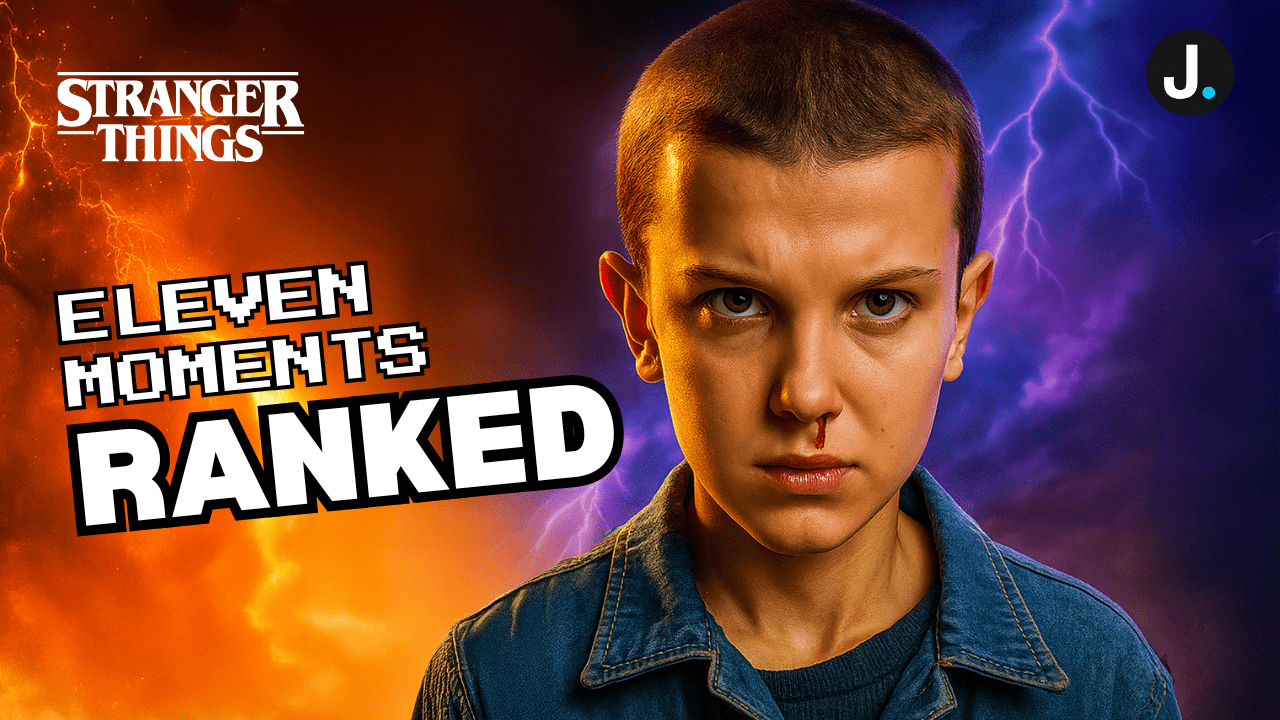
Even Eleven, our psychic heroine played by Millie Bobby Brown, has Tolkien in her veins. Like Frodo, she bears the invisible weight of power — something she never asked for but can’t escape. Her quiet resilience mirrors Tolkien’s belief that the smallest, gentlest souls often face the heaviest burdens. Eleven may not be a ring-bearer, but she’s definitely carrying something that wants to consume her.
Every fantasy epic needs a home worth fighting for. Tolkien had The Shire. The Duffers have Hawkins.
When Eddie Munson compared Hawkins to The Shire in Season 4, fans went wild — because it wasn’t just a throwaway line. It was a thesis statement. The Shire represents innocence. A simple, happy life untouched by darkness. Hawkins, with its malls, diners, and D&D clubs, captures that same prelapsarian vibe. It’s the last place you’d expect to find cosmic evil — which is precisely why it works.
The Duffer Brothers fill Hawkins with the same emotional geography Tolkien gave the Shire. The town feels safe, nostalgic, communal — until the shadows start to lengthen. The Upside Down isn’t just under Hawkins; it’s inside it. It’s the shadow realm Tolkien warned us about — the lurking corruption beneath comfort. When the lights flicker, you can almost hear Gandalf whispering, “Something stirs in the dark places of the world.”
Like Tolkien’s heroes, the kids of Hawkins are reluctant defenders. They’d rather be playing D&D or hanging at the arcade. But they take up the fight because someone has to. That’s the emotional throughline that ties the two universes together: the fight for home, friendship, and innocence.
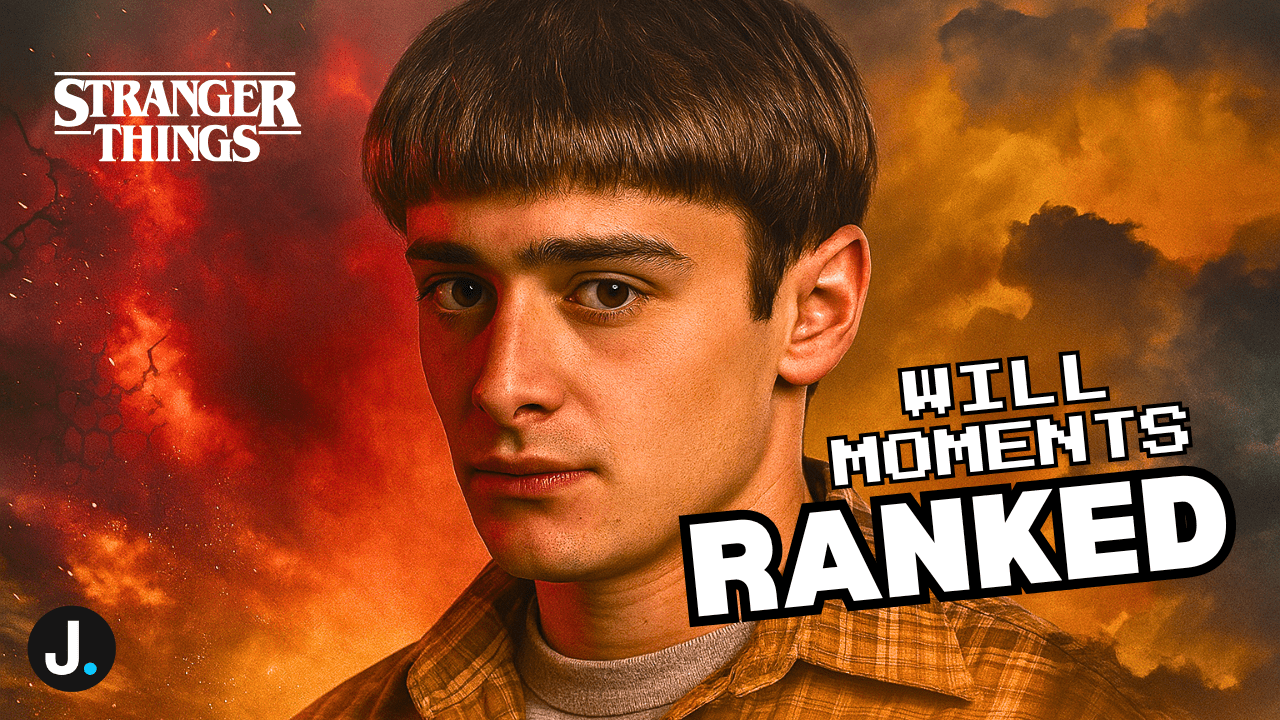
Even the friendship dynamics echo the Fellowship of the Ring. Dustin’s optimism feels Sam-like. Mike has Frodo’s burden of leadership. Lucas has Aragorn’s pragmatism. Will has Frodo’s haunted vulnerability. Max has Éowyn’s fierce courage. And Eleven — well, she’s the wizard and the weapon, all at once.
The Duffers clearly understand that the power of Tolkien’s stories lies not in dragons or swords, but in fellowship. It’s the bonds between people that make the magic work. And Stranger Things thrives on that exact energy. Every season’s climax isn’t about who defeats the monster, but who stands beside whom when the darkness hits.
So why does all this matter? Because Stranger Things isn’t just a nostalgic trip through ’80s pop culture; it’s a myth for a new generation. It bridges the gap between Tolkien’s world of ink and parchment and the era of VHS tapes and arcade machines.
The Duffers reinvent myth the same way Tolkien did — by rooting it in humanity. The monsters may be slimier, the music louder, but the themes are timeless: courage, sacrifice, friendship, loss. The Duffer Brothers once said they wanted Stranger Things to feel like “a Stephen King story directed by Steven Spielberg.” What they actually made feels like The Lord of the Rings played on a cassette tape, rewound and reimagined through the lens of 1980s America.
And there’s something beautiful about that. Tolkien’s stories were about preserving goodness in a world slipping into darkness. So is Stranger Things. Both remind us that even in the bleakest places, light flickers — in a hobbit’s heart, or in a girl with telekinetic powers fighting to protect her friends.
As Ross Duffer once said in an interview, “We always wanted the kids’ imagination to be the key to survival.” That’s the Tolkien spirit distilled. In Middle-earth, imagination — or faith, or courage — is what keeps the darkness at bay. In Hawkins, it’s the same.
As Stranger Things 5 looms closer, the connection between Tolkien’s epic past and Hawkins’ neon-lit present feels stronger than ever. Fans are already theorizing how the show will end — and whether it will echo Tolkien’s bittersweet sense of closure. Will Eleven sail off into her own kind of Grey Havens? Will the heroes return to a changed home? Will their innocence be gone forever?
No one knows yet. But if history (and fantasy) are any guide, the ending will be emotional, tragic, and cathartic. That’s how myth works. Tolkien knew it. The Duffers know it too.
The story of Stranger Things may be filled with monsters and music, but at its heart, it’s about what Tolkien valued most — friendship, bravery, and the quiet power of hope. In the words of Samwise Gamgee, “There’s some good in this world, and it’s worth fighting for.”