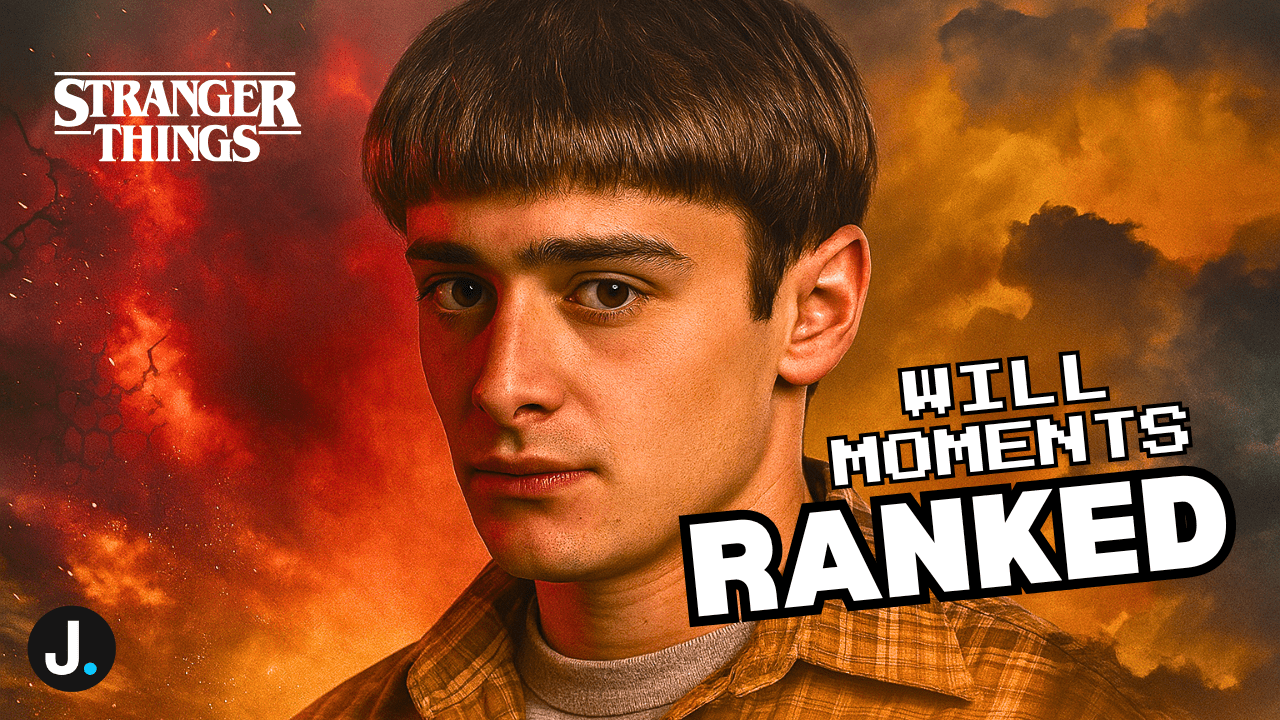
At first glance, “Radagast” might seem like a quirky choice for a password, a throwaway Easter egg for the Tolkien fans among us. Yet in Stranger Things, nothing is ever coincidental. When young Will Byers disappears near the dark stretch of road his friends call Mirkwood — an overt nod to Tolkien’s elven realm — the show subtly establishes the boys’ deep connection to literature and fantasy. This isn’t just about nostalgia or clever references; it’s about capturing the inner world of children navigating both mundane and terrifying realities.
The boys’ fantasy lexicon runs deep. When Chief Hopper tries to engage them with references to The Lord of the Rings, Dustin corrects him: “Mirkwood is from The Hobbit.” That single line encapsulates the stubborn defiance and passion of childhood fandom. It is these quirks, this insistence on knowledge and shared imagination, that ground the show’s fantastical elements in authenticity. The use of Radagast the Brown, a wizard allied with Gandalf in Tolkien’s lore, as the password to Castle Byers, reinforces this bond. It is simultaneously a playful homage to the fantasy canon and a narrative tool symbolising the boys’ inner sanctuary, a protective space where imagination shields them from the chaos of their world.
Castle Byers itself is more than a hideout; it is the locus of their camaraderie, bravery, and creativity. Naming the password after a wizard known for safeguarding the forest and its creatures mirrors the protective function the fort provides. Within these walls, the boys can process fear, experiment with power dynamics, and maintain a sense of control when the Upside Down threatens to encroach upon their lives.
The physical structure of Castle Byers, combined with its password, carries rich metaphorical weight. Here, in this leafy enclave, the boys create a boundary between their everyday lives and the creeping darkness of Hawkins’ underbelly. The choice of Radagast is emblematic — a whisper of magic, a shield of imagination. In many ways, it is a talisman against the encroaching horrors, both human and supernatural.
Will’s disappearance amplifies the fort’s importance. Mirkwood, as a reference to Tolkien, is not merely a fantastical backdrop; it represents the unknown, the fear of what lies beyond comprehension. The Upside Down mirrors Mirkwood’s shadowy dangers, turning metaphor into palpable threat. As the boys rally around their missing friend, the password becomes an incantation of solidarity. It embodies hope, courage, and the invisible threads of loyalty that bind them together in the face of overwhelming peril.
This symbolism extends beyond survival. Castle Byers functions as an emotional and psychological safe space where the children navigate growing up, friendships, and the trauma of confronting death and disappearance. It is a microcosm of resilience, demonstrating how small, creative acts — building forts, sharing passwords, invoking fictional heroes — become strategies for coping with the complexities of a world that feels increasingly hostile and inexplicable.
The choice of “Radagast” as a password also underscores one of Stranger Things’ most enduring themes: collaboration. Just as Tolkien’s Middle-Earth features a tapestry of characters whose strengths complement one another, the Byers’ group is defined by the interplay of talents, personalities, and shared knowledge. Each child contributes something vital to the collective survival and understanding of their world — Dustin with his encyclopedic knowledge, Mike with leadership instincts, Lucas with courage, and Will with resilience shaped by trauma.
These shared mythologies — Tolkien references, Dungeons & Dragons campaigns, and their imaginative play — elevate the narrative beyond mere adventure. They weave a complex social fabric, grounding supernatural events in relatable emotional truths. The password, therefore, is more than a key; it is a symbol of unity, a recognition that imagination and friendship fortify the boys against both mundane and extraordinary threats.
As Stranger Things 5 approaches, fans can anticipate the continuation of these layered narrative threads. Castle Byers, Radagast, and the boys’ fantastical lexicon remind us that even in a world threatened by the Upside Down, the real magic lies in human connection and the strength of collective imagination. These small yet resonant details exemplify the Duffer Brothers’ meticulous attention to storytelling, where every reference enriches characterisation and theme.
Whether confronting monsters, negotiating adolescence, or wrestling with the unknown, the boys’ sanctuary and its password are a testament to resilience, loyalty, and the enduring power of stories that shape identity. Castle Byers, Radagast, and Mirkwood become touchstones for viewers — reminders that in the darkest moments, imagination and friendship can light a path forward.
In the grand tapestry of Stranger Things, few elements carry as much understated significance as the Castle Byers password. It links literature, friendship, and protection into a single motif, illustrating how the Duffer Brothers transform simple references into profound narrative tools. As Hawkins braces for the events of Season 5, Radagast stands as both a tribute to Tolkien and a beacon of hope, inviting fans back into a world where monsters lurk, but courage, loyalty, and imagination endure.