Before he was the bare-chested bully of Hawkins High, Billy Hargrove was a kid who loved surfing. His story begins in California — sun, saltwater, and fleeting innocence. Born on March 29, 1967, to Neil Hargrove and an unnamed mother, Billy’s early life looked, on the surface, like a coming-of-age movie straight out of Fast Times at Ridgemont High. But beneath the Californian calm, darkness simmered. His mother left when he was ten, escaping Neil’s violent temper, leaving Billy behind to absorb the blows and bitterness that would define his adolescence.
That abandonment carved him into something sharp. Without a mother’s softness, Billy learned survival through cruelty. By the time his father remarried and introduced him to his step-sister, Max Mayfield, Billy was a storm contained within denim and attitude. His aggression towards Max wasn’t just control — it was projection. The anger, the jealousy, the desperate need for order, all stemmed from the chaos his father created. It’s one of Stranger Things’ most uncomfortable truths: the monsters we meet aren’t always born in the Upside Down. Sometimes, they’re made at home.
When the Hargroves relocated from California to Hawkins in 1984, Billy’s arrival wasn’t subtle. He was the quintessential 80s archetype — the swaggering heartthrob with a smirk and a Camaro, a mash-up of Rob Lowe’s charm and Kiefer Sutherland’s menace. He strutted into Hawkins High with feathered hair, tight jeans, and a smouldering disdain for everyone in sight. He was the guy parents warned their daughters about and the one teenage boys wanted to be. His first appearances are pure cinematic nostalgia, all slow-motion entrances and classic rock guitar riffs. But beneath the swagger, there’s something fractured — a young man performing toughness because the alternative is too painful to face.
As Stranger Things 2 unfolds, Billy’s presence fills a void left by supernatural threats. The Duffer Brothers wanted a human villain, and in Billy, they found one. While the Demogorgon haunted Hawkins’ forests, Billy haunted its hallways — a reminder that the human world can be just as cruel as the one beneath. His bullying, his aggression, his obsession with dominance — all stem from his father’s brutality. The show never excuses his behaviour, but it does illuminate it. Through the smallest cracks in his façade, we glimpse the terrified child still trapped inside.
If Billy’s first season is about performance, his second is about possession. By the time Stranger Things 3 rolls around, his transformation takes a literal turn. The confident jock becomes a vessel for the Mind Flayer — the ultimate puppet master of Hawkins’ horrors. The symbolism couldn’t be clearer: the abused child who grew up under his father’s control becomes enslaved by an even greater force of domination.
His possession begins innocuously, during what should have been another day in his perfectly coiffed life. Driving his Camaro past the Starcourt Mall, Billy crashes and encounters the Mind Flayer in the steel-and-smoke nightmare of the Upside Down. From that moment, he is no longer just Billy. He becomes something darker, a puppet dancing to a supernatural rhythm. The Mind Flayer amplifies his worst traits — aggression, rage, control — turning him into a walking weapon.
But even within that horror, Stranger Things threads humanity. Billy’s struggle is not just with an otherworldly monster but with himself. The tension between his will and the Mind Flayer’s domination mirrors the abuse he suffered from his father. The show’s subtext becomes brutally clear: control, whether physical or psychological, leaves scars that linger long after the bruises fade.
One of the most powerful scenes in the entire series comes when Eleven confronts him. As he holds her captive, eyes blackened and body trembling, she reaches into his mind. What she finds isn’t a monster but a memory — a boy standing on a sunlit beach beside his mother. “The wave was seven feet,” Billy says, describing the day he surfed under her watchful gaze. It’s the single most humanising moment for a character defined by rage. That flash of sunlight through the darkness reminds both Eleven and the audience that underneath the hate, there was once love.
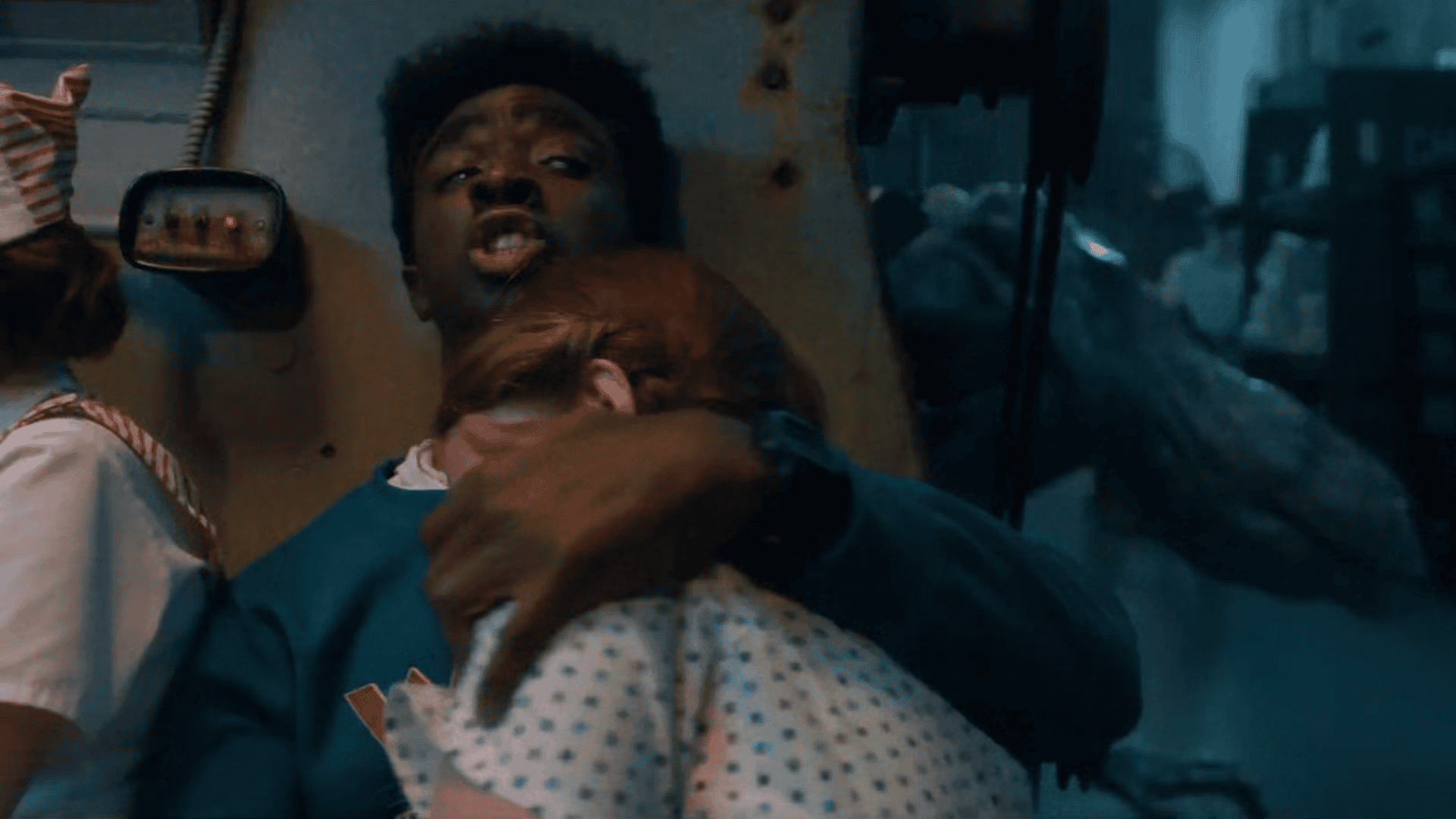
It’s that love — the memory of his mother, of innocence lost — that saves him. In a series known for its brutal deaths, Billy’s stands apart. In the Starcourt Mall finale, with the Mind Flayer bearing down, Billy finds a sliver of himself again. He steps between the monster and Eleven, defying the very force that consumed him. His final words, an apology to Max, strike with quiet devastation. “I’m sorry,” he gasps, the words heavy with years of unspoken guilt. His death is violent, but his redemption is peaceful. For a boy who spent his life trapped in rage, his final act is one of protection.
His sacrifice reverberates long after his body falls. For Max, it becomes both an anchor and a wound. By Stranger Things 4, her grief has curdled into numbness. Her memories of Billy haunt her as much as Vecna’s curse. When she becomes one of Vecna’s targets, it’s Billy’s spectre that appears — not as comfort, but as cruelty. The villain who taunted her becomes the memory that saves her. In many ways, Billy’s death becomes the emotional foundation for Max’s arc, proving that even in death, his influence lingers like smoke over Hawkins.
Behind the scenes, Dacre Montgomery’s portrayal of Billy Hargrove transformed what could have been a one-note villain into one of Stranger Things’ most fascinating characters. When the role was announced in a 2016 casting call, it described a “classic bad boy with a violent streak and charisma that draws in both girls and guys.” It sounded like something out of The Lost Boys — part vampire, part high-school tyrant. Montgomery didn’t just play that archetype; he exploded it.
His audition tape is now internet legend. Instead of a traditional reading, Montgomery submitted a short film he made himself — dancing in a G-string, leather jacket, and oversized sunglasses, soundtracked by Duran Duran. It was chaotic, confident, and utterly unhinged. The Duffer Brothers were sold immediately. They saw in him what Billy needed to be: magnetic, unpredictable, and slightly dangerous.
Montgomery drew inspiration from cinematic icons of the 1980s — Jack Nicholson in The Shining for menace, Rob Lowe in St. Elmo’s Fire for charisma, and the archetypal misunderstood villains of Stephen King’s novels. The Duffers wanted a human villain inspired by King’s work — someone whose cruelty came from trauma rather than supernatural origins. Montgomery embodied that perfectly. He played Billy with physicality — all clenched jaws, smirks, and twitching muscles — but also with quiet moments of fragility.
His approach to Billy’s emotional arc was methodical. In interviews, Montgomery has described how he viewed Billy as both victim and villain, trapped in a cycle of inherited pain. “Billy doesn’t know any other way to exist,” he once said. “He’s constantly trying to assert control because he’s never had any.” That insight became the backbone of his performance. Even when Billy’s actions were reprehensible, the audience couldn’t look away.
By Season 3, Montgomery had turned Billy into an unlikely cult figure. Fans were conflicted — some despised him, others pitied him, and a surprising number adored him. When Billy died, Stranger Things fans flooded social media with tributes, fan art, and entire essays analysing his redemption. His death scene became one of the most rewatched moments in the series’ history, standing alongside the “Running Up That Hill” sequence as a defining emotional crescendo.
Even Metallica weighed in after Stranger Things 4, sharing Eddie Munson’s guitar scene and nodding to Billy’s role in bringing heavy metal aesthetics into the show. It’s poetic, really — two characters bound by rebellion, guitars, and misunderstood hearts, both dying as heroes.
As Stranger Things 5 looms, Billy’s ghost still hangs over Hawkins — and over Max. His story continues to ripple through the emotional fabric of the series. His abuse, his guilt, his final act of love — all of it feeds into the show’s central theme: that people, like Hawkins itself, can be both beautiful and broken.
Billy’s life is a study in contrasts. The sunlit surfer of his youth versus the bruised man he became. The abuser and the protector. The monster and the martyr. Stranger Things thrives on those dualities, and Billy embodies them more than almost anyone else. He is both product and victim of the world that made him — a world where masculinity is measured in aggression, and vulnerability is punished.
His influence is particularly profound on Max, whose emotional distance and survivor’s guilt drive her narrative in Season 4. Vecna’s psychological attacks prey on her grief, weaponising her memories of Billy. Yet through that torment, she reclaims power — facing both her brother’s shadow and her own pain. In that sense, Billy’s redemption extends beyond his death. It becomes the catalyst for Max’s evolution.
In a series bursting with supernatural monsters, Billy Hargrove remains one of its most human creations. His story reminds us that evil doesn’t always come from another world — sometimes, it’s born in living rooms, fed by fear and neglect. But redemption can come too — even if it takes dying in a shopping mall to find it.
As fans count down to November 2025, the question lingers: will Stranger Things 5 revisit Billy’s legacy? The Duffers have remained tight-lipped, but Stranger Things has a knack for resurrecting its ghosts. Whether through flashback, dream, or haunting, Billy’s presence feels inevitable. After all, the series has always been about unfinished business — and Billy Hargrove’s story, as tragic and tangled as it is, feels far from over.
His catchphrase, “The wave was seven feet,” now feels like a metaphor. It’s about facing something bigger than yourself, something that might crush you — but diving in anyway. That’s Billy. Brash, broken, and brave, right up until the end.