"This year is my year. I can feel it. '86 baby!" Who is Eddie Munson in Stranger Things?
Few characters have crashed into the Stranger Things universe with the impact of Eddie Munson. When we first meet him in Season 4, he’s everything Hawkins High despises and everything the audience instantly loves: loud, brash, magnetic, and completely himself. Portrayed with chaotic brilliance by Joseph Quinn, Eddie leads the Hellfire Club — Hawkins High’s band of Dungeons & Dragons devotees. In the middle of the 1980s “Satanic Panic”, when parents genuinely believed fantasy role-playing games were summoning demons in their basements, Eddie’s club is both a refuge and a rebellion.
The Hellfire Club becomes a safe haven for misfits — a place where imagination thrives and the socially discarded find belonging. While the basketball jocks chase trophies, Eddie and his friends chase dragons. His friendship with Dustin Henderson, Lucas Sinclair, and Mike Wheeler adds new layers to the Stranger Things dynamic, merging their middle-school innocence with high-school rebellion. For them, Eddie represents freedom from conformity — the unspoken invitation to be whoever they want to be, even if it means being weird.
Yet behind the confident swagger lies vulnerability. Eddie’s charisma often masks insecurity, the quiet ache of someone perpetually misunderstood. Against the pastel-polished backdrop of 1980s small-town America, his long hair, ripped denim, and Metallica patches make him an easy target. Characters like Jason Carver, the all-American jock and boyfriend of Chrissy Cunningham, personify the town’s moral judgement. To Hawkins, Eddie’s heavy-metal aesthetic looks like danger. To the audience, it looks like honesty.
Then 1986 happens. In one of the most haunting scenes of Stranger Things 4, Eddie witnesses the horrifying supernatural murder of Chrissy — a girl he genuinely likes, moments after she’d sought refuge from her own pressures. The tragedy shatters Eddie’s world and thrusts him into Hawkins’ hysteria as the prime suspect. What follows is part supernatural thriller, part social commentary: an innocent man hunted for being different. His declaration — “This year is my year. I can feel it. ’86 baby!” — echoes ironically through the chaos that follows, transforming from a moment of optimism into the tragic refrain of a doomed underdog.
The Tragic Hero of Hawkins High: The Rise and Fall of Eddie Munson
Eddie’s story isn’t confined to Hawkins; it mirrors real-world paranoia from the 1980s and beyond. His arc draws inspiration from the true-life case of Damien Echols and the West Memphis Three — young men wrongly convicted of murder largely because of their appearance and interest in heavy metal and the occult. Like Damien, Eddie becomes a scapegoat, branded as evil simply for refusing to conform.
Within Stranger Things, this misjudgement amplifies one of the series’ most consistent themes: that monsters often wear familiar faces. Hawkins’ fear of Eddie reveals its deeper fear of individuality. His love of metal, his Dungeons & Dragons obsession, and his leather-and-denim uniform mark him as an outsider, but they also define his integrity. Eddie never hides who he is.
His friendship with Dustin becomes the emotional lifeline of the story. The chemistry between Joseph Quinn and Gaten Matarazzo radiates genuine affection. Dustin looks up to Eddie not only as a dungeon master but as a mentor — someone unafraid to stand apart. Their bond gives the season its emotional centre. When Hawkins turns against Eddie, Dustin’s unwavering loyalty becomes symbolic of hope amidst hysteria.
In a key moment after Eddie’s death, Dustin speaks to his uncle, saying that those who truly knew Eddie would always remember him differently. It’s one of the most quietly devastating scenes in the show — the world may brand him a murderer, but his friends know the truth: he died a hero. That emotional duality — hero to some, monster to others — is the essence of Eddie Munson’s power as a character.
Eddie’s visual identity, with his Dio patches and frayed denim, is more than costuming. It’s storytelling. Every torn sleeve and badge tells us who he is — a walking embodiment of rebellion and belonging. His appearance is both armour and vulnerability, a statement of authenticity in a world obsessed with fitting in. His defiance against conformity turns him into an icon, both within Hawkins and beyond the screen.
If Stranger Things 4 had a single moment that defined its cultural dominance, it was Eddie Munson standing atop the Upside Down trailer, shredding Metallica’s Master of Puppets on his guitar as demobats swarm in the crimson sky. It’s a sequence so absurdly theatrical that it shouldn’t work — but it does, perfectly. The moment fuses music, courage, and catharsis into one electric crescendo.
That guitar solo isn’t just spectacle. It’s the culmination of everything Eddie represents: defiance through self-expression. In a world collapsing into fear and conformity, Eddie fights back not with weapons but with music — his most authentic self turned into a weapon of resistance. “Metallica in the Upside Down” became an instant meme, but beneath the humour lies something genuinely moving. The scene transforms heavy metal from misunderstood subculture to mythic heroism.
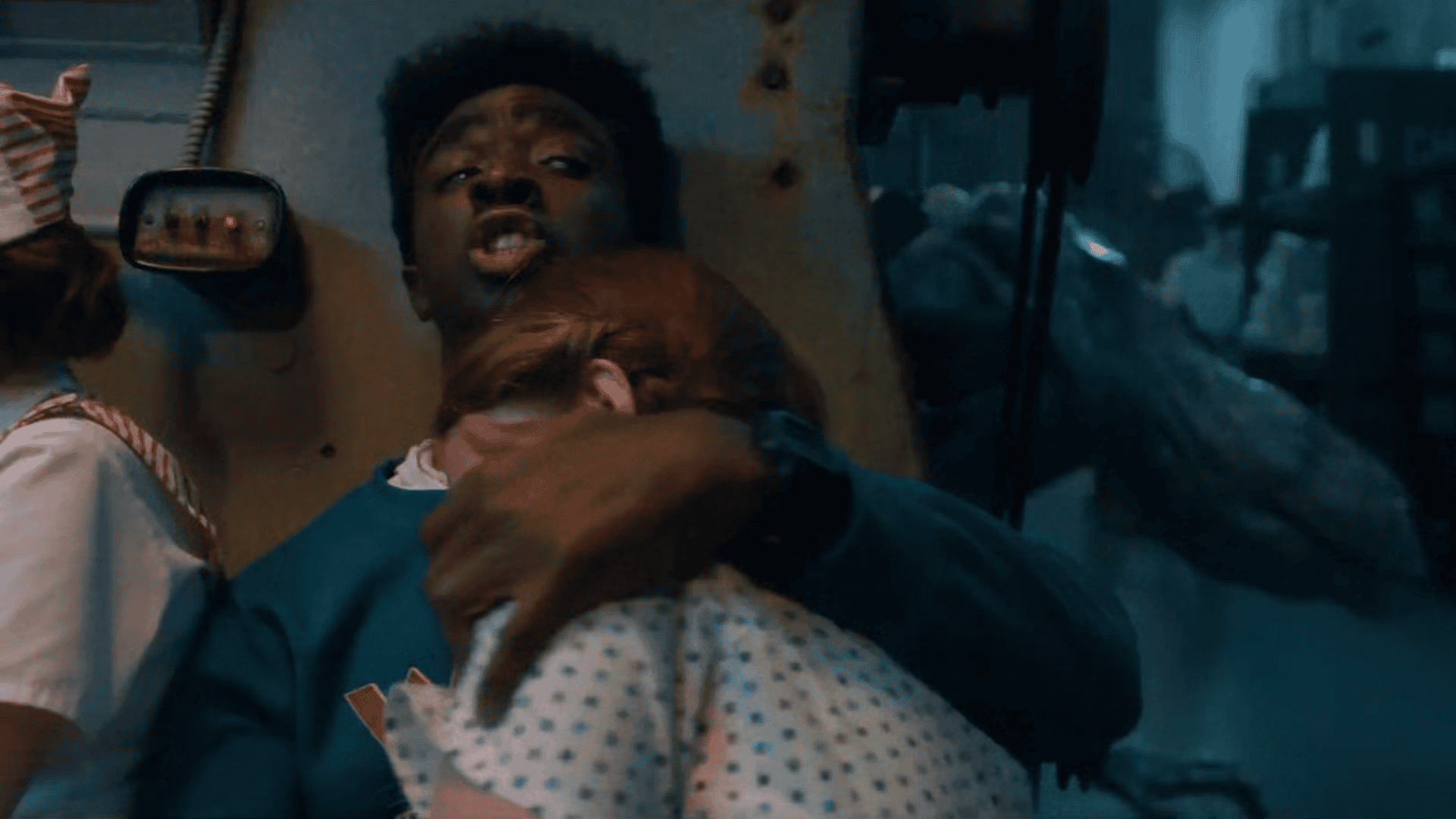
His sacrifice — dying to buy his friends time — cements him as one of Stranger Things’ great tragic figures. It’s raw, shocking, and heartbreakingly poetic. As Dustin cradles him, Eddie smiles through the blood and says he didn’t run away this time. That line hits harder than any monster’s bite. In that moment, Eddie completes his arc: from self-doubting misfit to fearless protector. His journey ends where all heroes’ do — not in victory, but in selflessness.
Fans have compared Eddie’s sacrifice to cinematic legends like Boromir in The Lord of the Rings and Tony Stark in Avengers: Endgame. It’s mythic storytelling disguised in denim and distortion. His death isn’t only tragic because we loved him; it’s tragic because it reflects how society often fails its outsiders, only recognising their worth when it’s too late.
Behind the scenes, Joseph Quinn’s portrayal elevated Eddie from cult character to cultural phenomenon. His performance blends humour, vulnerability, and intensity, giving life to a character who could have easily been a stereotype. Instead, Quinn turns him into something timeless: a symbol of misunderstood youth. His chemistry with the cast, his comedic spontaneity, and his emotional honesty made Eddie’s death one of the most talked-about TV moments of 2022.
In interviews, Quinn spoke about Eddie’s connection to the audience, saying he was moved by how fans identified with the character’s sense of alienation and passion. Conventions erupted with cheers whenever his name was mentioned, and Master of Puppets re-entered global music charts thanks to that now-iconic scene. The legacy of Eddie Munson lives far beyond Hawkins — in playlists, tattoos, fan art, and a collective sense of cathartic rebellion.
Why Eddie Munson Still Matters in 2025
As the Stranger Things saga nears its final chapter, the ghost of Eddie Munson continues to haunt the story — and the fandom. Theories about his return have flooded social media: could Vecna twist his memory into something darker? Could Eddie’s D&D persona, the “Sorcerer,” resurface symbolically in Season 5? Whether he appears again or not, his influence lingers. Eddie represents a generation of viewers who grew up feeling misunderstood, learning that difference is strength, not shame.
His connection to the 1980s zeitgeist goes deeper than nostalgia. The decade was a breeding ground for cultural rebellion — heavy metal, punk, and the DIY ethos all rejected conformity. Stranger Things captures that energy, and Eddie personifies it. He’s a love letter to every kid who was ever told their passions made them strange.
There’s also a melancholic realism to his story. Eddie’s death is unjust, his reputation tarnished, yet within that tragedy lies authenticity. The world doesn’t always celebrate its heroes. Sometimes it vilifies them. But the legacy they leave — the lives they touch — is what endures. Dustin’s heartfelt defence of Eddie’s memory epitomises that truth.
As Stranger Things 5 approaches, fans are clinging to every clue about how the Duffer Brothers might honour Eddie’s memory. Whether it’s through a haunting guitar motif, a flashback, or a spiritual echo of his courage, it’s clear he remains an emotional cornerstone. His line, “This year is my year,” has transformed from a cheeky boast into a bittersweet prophecy — Eddie Munson’s year never came in Hawkins, but it certainly came in ours.
Eddie’s appeal lies in his contradictions: brave yet afraid, defiant yet tender, rebellious yet loyal. He encapsulates the show’s beating heart — that friendship, love, and authenticity can exist even when the world turns upside down.
As metal riffs echo through the pop-culture memory of Stranger Things, Eddie Munson stands eternal: the outsider who never stopped believing, the hero who died playing his song.
Unlocking Eddie Munson's Secret: The Heart of a Hero
Key Information:
- Eddie Munson’s transformation from misunderstood outcast to tragic hero remains one of Stranger Things’ most powerful arcs, blending 1980s counterculture, Dungeons & Dragons lore, and emotional storytelling.
- Joseph Quinn’s portrayal of Eddie Munson captures the heart of rebellion and vulnerability, turning a heavy-metal-loving misfit into an icon of bravery and individuality.
- Eddie’s heroic sacrifice and misunderstood legacy continue to resonate as the Stranger Things 5 countdown begins, reminding fans why Hawkins’ most unlikely hero struck a chord that still reverberates.
Few characters have crashed into the Stranger Things universe with the impact of Eddie Munson. When we first meet him in Season 4, he’s everything Hawkins High despises and everything the audience instantly loves: loud, brash, magnetic, and completely himself. Portrayed with chaotic brilliance by Joseph Quinn, Eddie leads the Hellfire Club — Hawkins High’s band of Dungeons & Dragons devotees. In the middle of the 1980s “Satanic Panic”, when parents genuinely believed fantasy role-playing games were summoning demons in their basements, Eddie’s club is both a refuge and a rebellion.
The Hellfire Club becomes a safe haven for misfits — a place where imagination thrives and the socially discarded find belonging. While the basketball jocks chase trophies, Eddie and his friends chase dragons. His friendship with Dustin Henderson, Lucas Sinclair, and Mike Wheeler adds new layers to the Stranger Things dynamic, merging their middle-school innocence with high-school rebellion. For them, Eddie represents freedom from conformity — the unspoken invitation to be whoever they want to be, even if it means being weird.
Yet behind the confident swagger lies vulnerability. Eddie’s charisma often masks insecurity, the quiet ache of someone perpetually misunderstood. Against the pastel-polished backdrop of 1980s small-town America, his long hair, ripped denim, and Metallica patches make him an easy target. Characters like Jason Carver, the all-American jock and boyfriend of Chrissy Cunningham, personify the town’s moral judgement. To Hawkins, Eddie’s heavy-metal aesthetic looks like danger. To the audience, it looks like honesty.
Then 1986 happens. In one of the most haunting scenes of Stranger Things 4, Eddie witnesses the horrifying supernatural murder of Chrissy — a girl he genuinely likes, moments after she’d sought refuge from her own pressures. The tragedy shatters Eddie’s world and thrusts him into Hawkins’ hysteria as the prime suspect. What follows is part supernatural thriller, part social commentary: an innocent man hunted for being different. His declaration — “This year is my year. I can feel it. ’86 baby!” — echoes ironically through the chaos that follows, transforming from a moment of optimism into the tragic refrain of a doomed underdog.
The Tragic Hero of Hawkins High: The Rise and Fall of Eddie Munson
Eddie’s story isn’t confined to Hawkins; it mirrors real-world paranoia from the 1980s and beyond. His arc draws inspiration from the true-life case of Damien Echols and the West Memphis Three — young men wrongly convicted of murder largely because of their appearance and interest in heavy metal and the occult. Like Damien, Eddie becomes a scapegoat, branded as evil simply for refusing to conform.
Within Stranger Things, this misjudgement amplifies one of the series’ most consistent themes: that monsters often wear familiar faces. Hawkins’ fear of Eddie reveals its deeper fear of individuality. His love of metal, his Dungeons & Dragons obsession, and his leather-and-denim uniform mark him as an outsider, but they also define his integrity. Eddie never hides who he is.
His friendship with Dustin becomes the emotional lifeline of the story. The chemistry between Joseph Quinn and Gaten Matarazzo radiates genuine affection. Dustin looks up to Eddie not only as a dungeon master but as a mentor — someone unafraid to stand apart. Their bond gives the season its emotional centre. When Hawkins turns against Eddie, Dustin’s unwavering loyalty becomes symbolic of hope amidst hysteria.
In a key moment after Eddie’s death, Dustin speaks to his uncle, saying that those who truly knew Eddie would always remember him differently. It’s one of the most quietly devastating scenes in the show — the world may brand him a murderer, but his friends know the truth: he died a hero. That emotional duality — hero to some, monster to others — is the essence of Eddie Munson’s power as a character.
Eddie’s visual identity, with his Dio patches and frayed denim, is more than costuming. It’s storytelling. Every torn sleeve and badge tells us who he is — a walking embodiment of rebellion and belonging. His appearance is both armour and vulnerability, a statement of authenticity in a world obsessed with fitting in. His defiance against conformity turns him into an icon, both within Hawkins and beyond the screen.
If Stranger Things 4 had a single moment that defined its cultural dominance, it was Eddie Munson standing atop the Upside Down trailer, shredding Metallica’s Master of Puppets on his guitar as demobats swarm in the crimson sky. It’s a sequence so absurdly theatrical that it shouldn’t work — but it does, perfectly. The moment fuses music, courage, and catharsis into one electric crescendo.
That guitar solo isn’t just spectacle. It’s the culmination of everything Eddie represents: defiance through self-expression. In a world collapsing into fear and conformity, Eddie fights back not with weapons but with music — his most authentic self turned into a weapon of resistance. “Metallica in the Upside Down” became an instant meme, but beneath the humour lies something genuinely moving. The scene transforms heavy metal from misunderstood subculture to mythic heroism.
His sacrifice — dying to buy his friends time — cements him as one of Stranger Things’ great tragic figures. It’s raw, shocking, and heartbreakingly poetic. As Dustin cradles him, Eddie smiles through the blood and says he didn’t run away this time. That line hits harder than any monster’s bite. In that moment, Eddie completes his arc: from self-doubting misfit to fearless protector. His journey ends where all heroes’ do — not in victory, but in selflessness.
Fans have compared Eddie’s sacrifice to cinematic legends like Boromir in The Lord of the Rings and Tony Stark in Avengers: Endgame. It’s mythic storytelling disguised in denim and distortion. His death isn’t only tragic because we loved him; it’s tragic because it reflects how society often fails its outsiders, only recognising their worth when it’s too late.
Behind the scenes, Joseph Quinn’s portrayal elevated Eddie from cult character to cultural phenomenon. His performance blends humour, vulnerability, and intensity, giving life to a character who could have easily been a stereotype. Instead, Quinn turns him into something timeless: a symbol of misunderstood youth. His chemistry with the cast, his comedic spontaneity, and his emotional honesty made Eddie’s death one of the most talked-about TV moments of 2022.
In interviews, Quinn spoke about Eddie’s connection to the audience, saying he was moved by how fans identified with the character’s sense of alienation and passion. Conventions erupted with cheers whenever his name was mentioned, and Master of Puppets re-entered global music charts thanks to that now-iconic scene. The legacy of Eddie Munson lives far beyond Hawkins — in playlists, tattoos, fan art, and a collective sense of cathartic rebellion.
Why Eddie Munson Still Matters in 2025
As the Stranger Things saga nears its final chapter, the ghost of Eddie Munson continues to haunt the story — and the fandom. Theories about his return have flooded social media: could Vecna twist his memory into something darker? Could Eddie’s D&D persona, the “Sorcerer,” resurface symbolically in Season 5? Whether he appears again or not, his influence lingers. Eddie represents a generation of viewers who grew up feeling misunderstood, learning that difference is strength, not shame.
His connection to the 1980s zeitgeist goes deeper than nostalgia. The decade was a breeding ground for cultural rebellion — heavy metal, punk, and the DIY ethos all rejected conformity. Stranger Things captures that energy, and Eddie personifies it. He’s a love letter to every kid who was ever told their passions made them strange.
There’s also a melancholic realism to his story. Eddie’s death is unjust, his reputation tarnished, yet within that tragedy lies authenticity. The world doesn’t always celebrate its heroes. Sometimes it vilifies them. But the legacy they leave — the lives they touch — is what endures. Dustin’s heartfelt defence of Eddie’s memory epitomises that truth.
As Stranger Things 5 approaches, fans are clinging to every clue about how the Duffer Brothers might honour Eddie’s memory. Whether it’s through a haunting guitar motif, a flashback, or a spiritual echo of his courage, it’s clear he remains an emotional cornerstone. His line, “This year is my year,” has transformed from a cheeky boast into a bittersweet prophecy — Eddie Munson’s year never came in Hawkins, but it certainly came in ours.
Eddie’s appeal lies in his contradictions: brave yet afraid, defiant yet tender, rebellious yet loyal. He encapsulates the show’s beating heart — that friendship, love, and authenticity can exist even when the world turns upside down.
As metal riffs echo through the pop-culture memory of Stranger Things, Eddie Munson stands eternal: the outsider who never stopped believing, the hero who died playing his song.
"This year is my year. I can feel it. '86 baby!" Who is Eddie Munson in Stranger Things? With the much-anticipated release of Stranger Things 5 around the corner, Edward "Eddie" Munson continues to resonate as one of the most complex characters introduced in the series. Portrayed by the charismatic Joseph Quinn, Eddie’s journey throughout the fourth season was marked by tragedy, heroism, and a raw portrayal of the struggles that often accompany being an outsider. As fans gear up for the final season, let's delve into the layers that make Eddie such a compelling figure in the Stranger Things universe. A Tragic Hero of Hawkins High Eddie Munson stands out as the idiosyncratic leader of the Hellfire Club, a Dungeons & Dragons group at Hawkins High School that serves as a safe haven for misfits. Formed against the backdrop of the "Satanic Panic," Eddie's club became a refuge for those like him - outcasts who found solace in fantasy and friendship. Despite facing bullying from popular kids, including Jason Carver, the boyfriend of fellow student Chrissy Cunningham, Eddie's passion for Dungeons & Dragons and heavy metal music allowed him to cultivate strong friendships. Notably, he formed a close bond with Dustin Henderson, Lucas Sinclair, and Mike Wheeler during their early high school years, all of whom found Eddie's unique personality a welcome contrast to the rigid social hierarchy of Hawkins. However, Eddie's life took a dark turn in the year 1986 when he witnessed the shocking supernatural murder of his friend Chrissy. This traumatic event sparked his transformation from a carefree metalhead into a reluctant hero determined to protect his friends and uncover the truth. As Eddie joined forces with "The Party" to confront the malevolent force known as Vecna, he displayed a depth of courage that contrasted with his earlier self-doubt. His ultimate sacrifice while defending Hawkins and his friends emphasizes the tragic hero archetype - a character who, despite their flaws, rises to meet their fate with bravery, albeit at an immense personal cost. The Power of Misunderstanding Eddie’s character is heavily influenced by real-life events and figures, drawing parallels to Damien Echols from the West Memphis Three, who was wrongfully convicted of murder due to his appearance and interests aligning with societal fears of satanic cults. The nuances in Eddie’s character highlight how deeply rooted the theme of misunderstanding is within the story. Fans see Eddie transforming from a teenage outcast immersed in subculture to a symbol of misguided judgment when he becomes the target of false accusations. Amid the chaos, his friend Dustin stands up for him, demonstrating the power of loyalty and understanding in the face of social stigmas. Eddie’s signature style - complete with leather and denim adorned with patches of iconic metal bands - echoes his passion and individuality. This become a visual representation of his inner world, reflecting both his love for music and the prejudice he faces from those who view him through a narrow lens. As Dustin reassures Eddie’s uncle during the aftermath of the tragic events, that those close to Eddie would always remember him differently, it serves as a poignant reminder of the impact of friendship and acceptance in a world that often favors conformity. A Legacy of Metal and Heart Eddie Munson’s strum on the electric guitar in the midst of chaos symbolizes both rebellion and resilience. His fearless approach to confronting Vecna's swarm of demobats was a chilling yet heroic moment within the series, showcasing how his love for heavy metal wasn't just a personal passion but a weapon in the fight against evil. This connection between music and courage resonates deeply with the audience, as Eddie’s character embraces the very elements that define him - nonconformity, passion, and an unwavering loyalty to his friends. Fans can look forward to seeing the echoes of Eddie’s journey within the final season of Stranger Things. His character serves as a reminder that within the world of fantasy, the complexities of real-life challenges still linger. The 1980s, with its rich culture of rock and rebellion, is an era that Eddie embodies in every sense - from his music to his spirit. As we await his legacy to unfold further, Eddie Munson remains a symbol of the conflict between individuality and societal judgment - a narrative that continues to resonate, making it clear that he is much more than just a character in a show; he is a reflection of the struggles many face in finding their place within a world that sometimes seems unforgiving. As the Stranger Things landscape continues to evolve, Eddie’s journey and impact on the story encapsulate why his character resonates so deeply with viewers, allowing them to explore the personal narratives that arise in the midst of extraordinary circumstances. This year might indeed be Eddie's year, echoing through the metal riffs of Corroded Coffin and in the hearts of fans eager for one final adventure.
Unlocking Eddie Munson's Secret: The Heart of a Hero
What’s your favorite Eddie Munson moment from Stranger Things, and why does it resonate with you?
We’d love to hear your
perspective! Share your opinions in the comments
below.
Stranger Things